Advertisement
China-India relations
This Week in AsiaOpinion
Yogesh Joshi

Asian Angle | China and India’s maritime rivalry has a new flashpoint: the Andaman Sea

  • The revelation that the Indian Navy had forced a Chinese research vessel out of Indian waters is the latest sign of Beijing’s interest in the waterway
  • China is looking to deny India the strategic and military use of the Andaman and Nicobar Islands, through means such as expanding its submarine fleet
Reading Time:3 minutes
Why you can trust SCMP
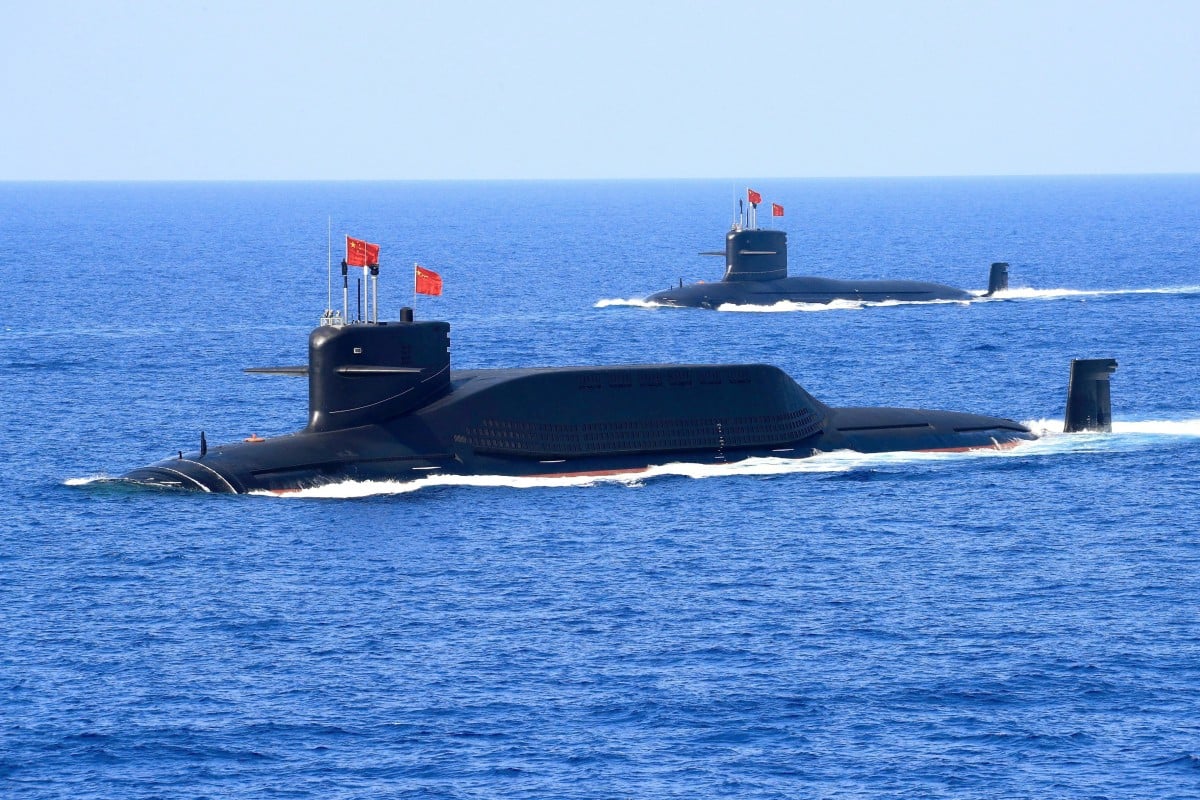
The People’s Liberation Army Navy has significantly invested in upgrading its submarine fleet. Photo: Reuters
The Andaman Sea is fast becoming the latest flashpoint of Sino-Indian maritime rivalry in the Indian Ocean. China’s increased interest in the region is evinced by the revelation earlier this month that the Indian Navy in September expelled a Chinese research vessel by the name of Shiyan 1 after it was found intruding into the exclusive economic zoneoff the coast of India’s Andaman and Nicobar Islands. As Indian Navy chief Admiral Karambir Singh argued in a press conference last week, the Chinese ship was operating in Indian waters without permission.
China’s presence in the Indian Ocean has increased dramatically in the past decade, along with its economic and military rise. While it barely had a footprint there in the late 2000s, today an average of eight to 10 People’s Liberation Army Navy (PLAN) ships, submarines and research vessels are operating in those waters annually. New Delhi has repeatedly expressed its concerns regarding increased Chinese naval activity in the Indian Ocean, which it considers its backyard – but naval intrusions in and around the Andaman Sea are particularly disturbing for the Indian Navy.

The Andaman and Nicobar Islands bestow upon New Delhi an immense geographical and military advantage. The Andaman Sea connects the Eastern Indian Ocean with the Pacific Ocean through the Strait of Malacca. Whoever controls the Andaman basin controls the Malacca strait. The islands also allow India to project military power across the Bay of Bengal and Southeast Asia; they are New Delhi’s unsinkable aircraft carrier.
Advertisement

In the case of a Sino-Indian maritime conflict, the islands would also constitute India’s first line of defence. A swift naval victory around the Andaman basin would result in significant degradation of the Chinese maritime threat in the rest of the Indian Ocean.

Indian navy sailors participate in a parade during Naval Day celebrations in 2013. New Delhi has steadily built up its naval capabilities in recent years, spurred by its rivalry with neighbouring China. Photo: AP
Advertisement

However, the PLAN is leaving no stone unturned in challenging India’s predominance in the Andaman Sea. Since at least 2012, the Chinese navy has conducted regular submarine patrols there. According to Indian Navy sources, an average of three to four Chinese submarine contacts have been identified every three months. The PLAN has been known to use its vast submarine fleet to conduct reconnaissance and surveillance missions in these waters. The Chinese navy’s interest in the Andaman Sea is a by-product of Beijing’s Strait of Malacca dilemma. China’s economy relies heavily on sea lanes of communication passing through the waterway; it therefore fears a situation where hostile powers could interdict these vital economic lifelines. Moreover, the geostrategic importance of these waters has increased dramatically under China’s Belt and Road Initiative.

Did Indian war hero Subhas Chandra Bose die in Taiwan?

Advertisement
Select Voice
Choose your listening speed
Get through articles 2x faster
1.25x
250 WPM
Slow
Average
Fast
1.25x