Advertisement
OpinionAfter Brexit, Britain’s future engagement in Southeast Asia is far from certain
- Britain’s upcoming strategic defence and security review may scale back UK ambition to uphold regional order in Southeast Asia
4-MIN READ4-MIN

British Prime Minister Boris Johnson and his cabinet have prioritised an Integrated Security, Defence and Foreign Policy Review, which will serve to reassess Britain’s place in the world. Expected by autumn and touted as the deepest review “since the end of the Cold War”, it also stands to impact the country’s relations in Southeast Asia, a region that London has sought to re-engage diplomatically, and economically, as China’s rise has led a global power shift towards the East.
As a former colonial power, British interests in Southeast Asia are already wide-ranging, from defence to educational links, trade and investment relations, and efforts to promote inclusive growth and democratic values, among others. These efforts to reinforce ties have only accelerated with Brexit. For instance, in 2018, London appointed a Trade Commissioner for the Asia-Pacific. Two years earlier, the British Defence Staff Asia-Pacific was set up to coordinate engagement with British defence attachés across eight Asean (Association of Southeast Asian Nations) members, and to support regional partners. Britain has also increased its contributions to the Five Power Defence Arrangements on the back of consolidating the arrangement’s momentum, while strengthening bilateral defence cooperation with countries such as Singapore and Vietnam, with Hanoi expressing willingness to allow Royal Navy ships to visit.
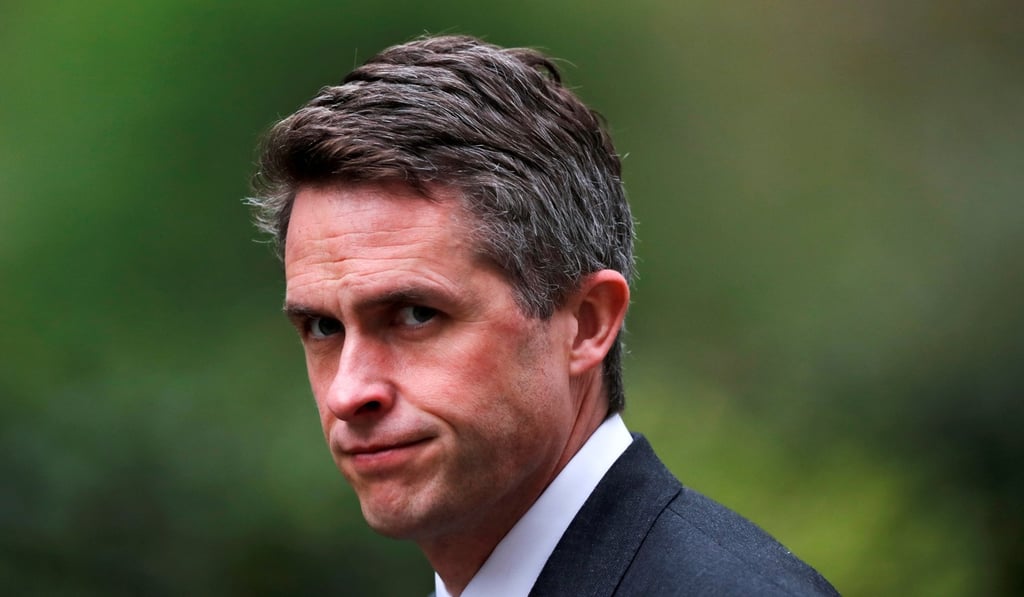
One of the more head-turning aspects of Britain’s increasing defence engagement has been the Royal Navy’s near-continuous presence around Southeast Asian sea lanes of communication throughout 2018 and beyond, alongside greater naval cooperation with regional states. This engagement preceded former defence secretary Gavin Williamson’s declaration in 2018 that Britain would look to increase its permanent future presence in the Southeast Asia region.
Advertisement
HMS Sutherland, HMS Albion, HMS Argyll and HMS Montrose were all deployed to demonstrate London’s commitment to building relationships, and maintaining stability and security, not only in Southeast Asia but also the wider Indo-Pacific. These naval deployments involved joint naval exercises with Australia, South Korea, Japan and America, including trilateral anti-submarine warfare drills with the latter two, and undertaking a freedom of navigation operation (FONOP) around the Paracel Islands in the South China Sea to express London’s legal concerns over China’s declared baselines. In Southeast Asia, HMS Argyll also participated in the Five Power Defence Arrangement’s Exercise Bersama Lima 2018, alongside armed forces from Malaysia, Singapore, Australia and New Zealand.
Advertisement
LIMITS
Advertisement
Select Voice
Select Speed
1.00x