OpinionAs India enters 2021, Narendra Modi’s Hindutva project is on a roll
- Putting aside the challenges it faced this year, Modi’s government is forging ahead to rescript the idea of India around the myth of a supreme Hindu race
- The resurgence of Chinese clout on the global stage has been a boon for India and Hindutva as other countries seek defence and economic ties with New Delhi

On the positive side for Modi’s Hindu nationalist party, the Bharatiya Janata Party (BJP), along with its mother organisation, the Rashtriya Swayamsevak Sangh (RSS), their Hindutva project is on a roll – allowing Modi to rescript the idea of India around the myths of a supreme Hindu race predating the arrival of Islamic and Western civilisations on its shores.
Galvanised by Nazi Germany and Mussolini’s Italy, Hindutva took root with the assassination of Mahatma Gandhi by an RSS disciple in 1948. The idea of a Hindu India bloomed with the 1992 destruction of a 16th-century mosque by Hindu mobs and the 2002 anti-Muslim pogrom, which enabled the party’s victory in 2014, with Modi as its CEO intent on remaking India into an authoritarian, Hindu nationalist state.
An interim progress report of the project would conclude that with two defining elections looming and muted international responses to India’s tenacious efforts to downgrade its 200 million Muslims into second-class citizens, the Modi government will accelerate the project in 2021.
The first phase (2014-19) relied heavily on vigilantism that included lynching, hate speech and bludgeoning of minorities. With a larger mandate in May 2019, Modi’s re-election has seen the project go into overdrive with a relentless series of legislative assaults against the Muslims, who comprise 15 per cent of its population. The revocation in August 2019 of the semi-autonomous status of Kashmir, the only Muslim-majority province, and isolating it through despotic means presaged the coming months. A legal victory enabling the construction of a Hindu temple at the site of the demolished mosque followed in November. Weeks later came the next assault – the Citizenship Amendment Act (CAA), which uses religion as a criterion for citizenship under Indian law.
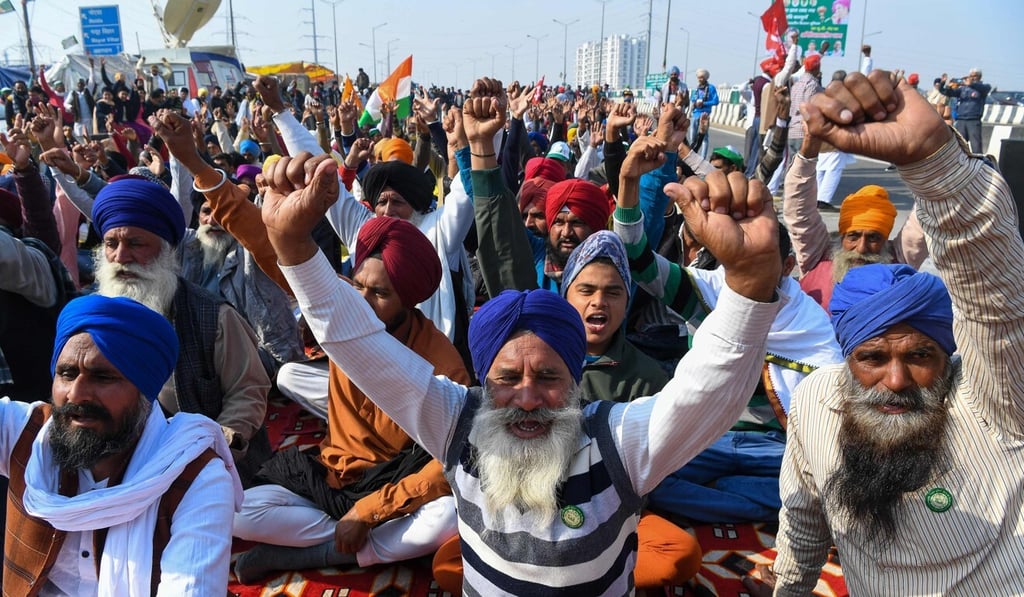
New Year’s Day 2020 in New Delhi began with the third week of peaceful sit-in protests, mostly led by women, against the CAA. The protesters were attacked by violent Hindu mobs on the eve of US President Donald Trump’s visit in February. The attacks drew comparisons to Kristallnacht, when Jewish homes and buildings were destroyed across Germany in 1938, and to the 2002 anti-Muslim pogrom in Gujarat, where Modi was the provincial chief.