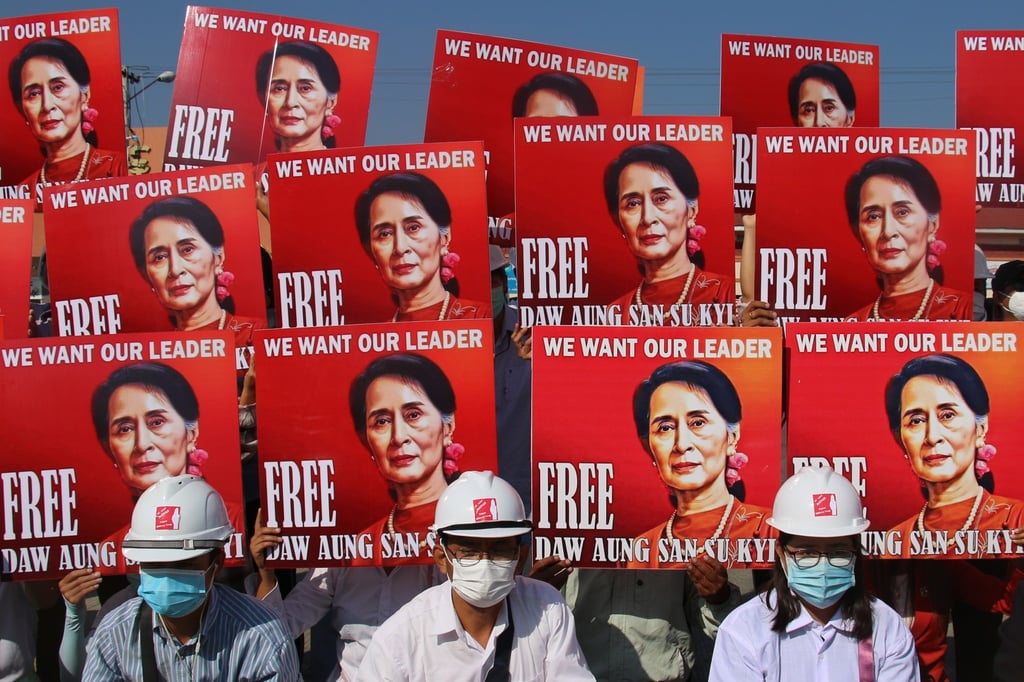
Opinion | Aung San Suu Kyi trial: how Myanmar’s judicial system is stacked against the deposed leader
- Deposed civilian leader now stands accused of various counts of corruption that, if she is found guilty, could result in what is effectively a life sentence
- The judiciary is nominally independent, but almost all of the lawyers, judges and court officials were trained under the military

Initially charged with the illegal possession of walkie-talkies, charges against the pro-democracy leader have escalated dramatically. She now stands accused of various counts of corruption that, if she is found guilty, could result in what is effectively a life sentence.
On February 1, at what should have been the opening of the new parliament, the military detained Aung San Suu Kyi alongside the leaders of her party, the National League for Democracy (NLD). The coup sparked outrage across the world – but curiously, the military claims the putsch was legal.
Sections of the 2008 constitution allow the military to declare a state of emergency if there is an insurgency or an attempt at taking over power unlawfully and by force.
If the coup can be legal, questions must be raised over the fairness of Aung San Suu Kyi’s trial.