Advertisement
Asian AngleCan Nato manage its ambitions in Southeast Asia, where memories of colonialism linger?
- Nato looks to venture into Indo-Pacific and deepen European involvement in Asia’s security but it remains widely distrusted in the non-Western world
- Asian governments want the US in the region to balance China’s power, but that does not mean they want a European military alliance in their region
3-MIN READ3-MIN
6

Nato’s incursion into the Indo-Pacific region is a move that will exacerbate regional conflicts and tensions. That is because Nato cannot be separated from the history of European colonialism and imperialism that shaped modern Asia – and plays a major role in Chinese nationalism today.
In 2022, Nato declared that China was a “challenge” to the alliance’s “interests, security and values”. Recently, Nato has argued that possible Chinese assistance to Russia in its war against Ukraine makes China a military threat to Europe.
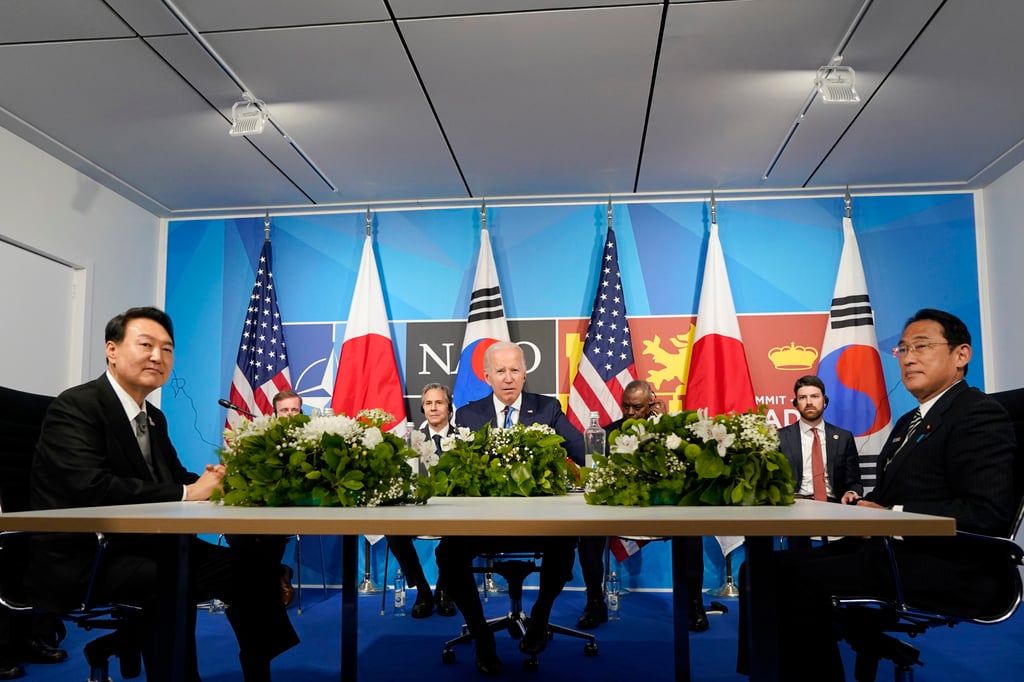
Nato is opening a liaison office in Japan and is partners with Japan, Australia, New Zealand and South Korea. This may be a first step to deeper European involvement in Asia’s security architecture.
Advertisement
Japan argues that the war in Ukraine has destabilised the world, and has invited Nato into the Indo-Pacific to deter China. However, Nato is widely distrusted in the non-Western world.
Nato: an American puppet?
Since the end of the Cold War, Nato has acted as an extension of American power. Nato’s bombing of Kosovo and Serbia in 1999 violated the United Nations Charter. Nato’s intervention in Afghanistan was authorised by the UN, but it assisted the illegal and devastating US invasion of Iraq by freeing American military resources.
Advertisement
Select Voice
Select Speed
1.00x