Advertisement
Malaysia
This Week in AsiaOpinion
Joseph Sipalan

As I see itTo beat Malaysia’s ‘green wave’, Anwar’s unity government must do more for struggling Malays

  • Anwar’s multiracial coalition government has shifted to the right in an effort to defend Malay conservative values
  • Facing external risks like the Ukraine war, and a slumping currency due to US rate hikes, many Malays believe Anwar’s government should be doing more to help them

3-MIN READ3-MIN
5
The flags of Perikatan Nasional party and Pakatan Harapan near a polling station in Selangor on August 12. Photo: Bloomberg
Following Malaysia’s recent state polls, there has been abundant analysis of how the country’s majority ethnic Malays are increasingly taken in by the Malay nationalist rhetoric peddled by the opposition Perikatan Nasional (PN) coalition, which made significant gains in stronghold areas of parties linked to Prime Minister Anwar Ibrahim’s unity government.
The argument for a more conservative tilt among the country’s Malay-Muslims – who account for more than 60 per cent of Malaysia’s 32 million population – appears to be backed by the election results.

PN, riding on ethno-religious posturing and promises of broad economic aid, won 146 of 245 seats across the six states in the peninsula that went to polls.
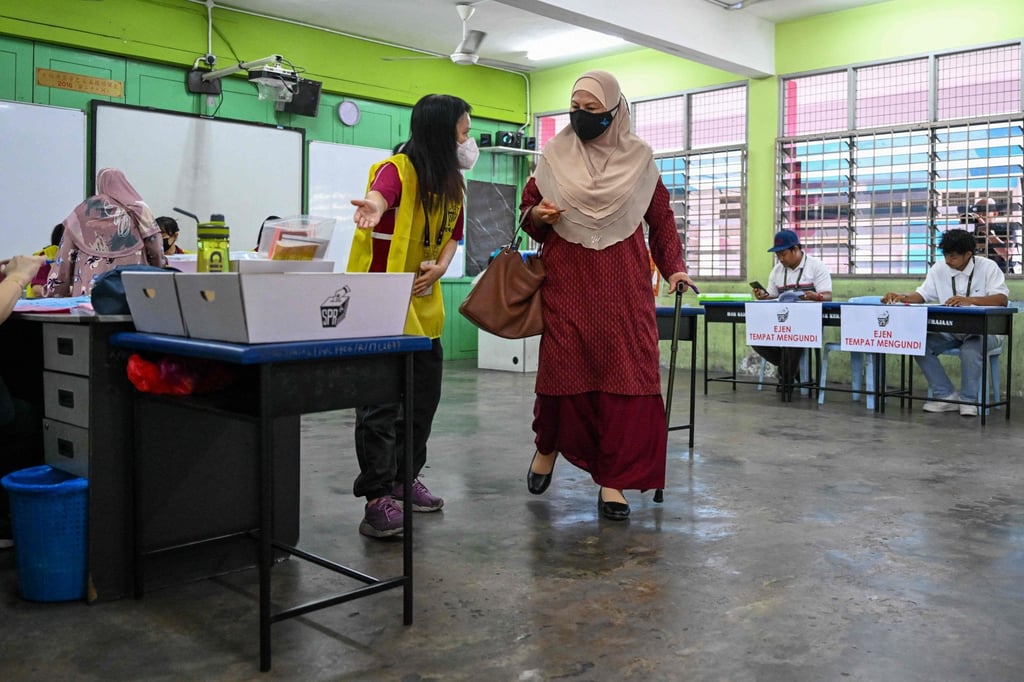
A woman carries her ballot before casting her vote during the state election at a polling station in Malaysia’s Selangor state on August 12. Photo: AFP

All but a handful of seats won by PN were Malay-majority seats, including in Selangor and Penang, which are long-time strongholds of Anwar’s Pakatan Harapan (PH) coalition.

Advertisement
PN chairman and former prime minister Muhyiddin Yassin said at a post-election news conference that this was a sign of the people’s rejection of Anwar’s unity government, and proof that his coalition had become the preferred choice among Malays seeking a political platform to represent their identity and rights.

But was it really a revolt by Malays against Anwar and his nine-month-old administration, which the opposition claim is being led by the nose by the prime minister’s Chinese-dominated partners in the DAP?

Advertisement

A closer look at the numbers shows a continuation of the trend seen in last November’s general election, when Malay voters in the peninsula triggered a “green wave” – the party colour of PN component PAS – that gave the opposition a formidable minority in parliament.
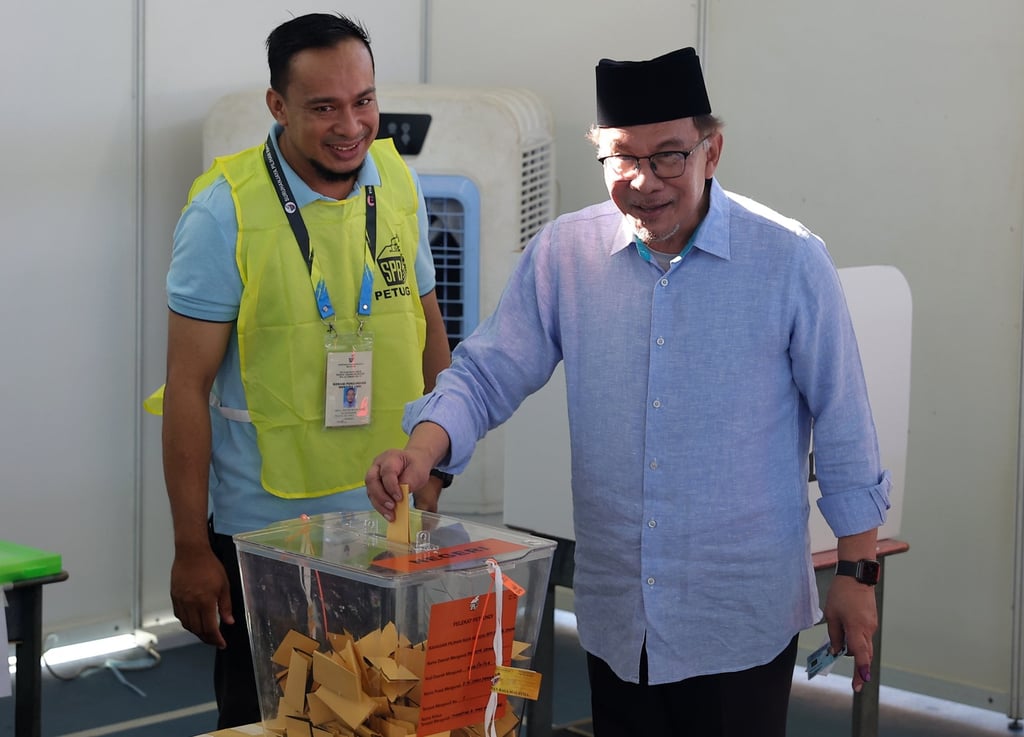
Malaysian Prime Minister Anwar Ibrahim casts his ballot at a polling station in the Penang State election on August 12. Photo: dpa
Advertisement
Select Voice
Select Speed
1.00x