Asian AngleMarcos Jnr’s Philippine presidency an exercise in redemption, but only if he avoids his father’s mistakes
- The new government slogan evokes memories of the president’s father Marcos Snr, whose regime was saddled by crony capitalism and a deep economic crisis
- Marcos Jnr has vowed to improve Filipinos’ lives, but his administration’s deficiencies show there is a wide gap between promise and reality

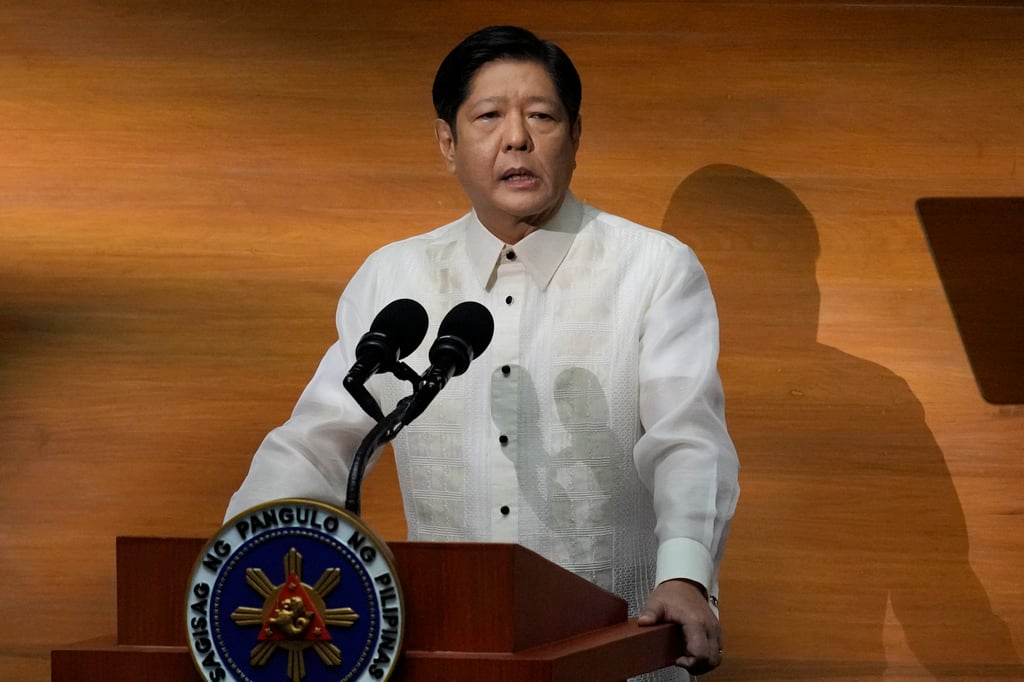
In his second State of the Nation address, Philippine President Ferdinand Marcos Jnr proudly trumpeted the dawn of Bagong Pilipinas (New Philippines).
“I have stated before that my confidence in our future was grounded in our world-class quality workforce,” he said. “I know that the state of the nation is sound and is improving. The New Philippines has arrived.”
The new government slogan eerily evokes memories of his father – former president Ferdinand Marcos Snr’s Bagong Lipunan (New Society). His vision of the New Society was anchored in strengthening the economic, finance and trade agencies, opening the economy to foreign investment and introducing agricultural development. Ultimately, his regime was saddled by structural deficiencies, external shocks and crony capitalism.
But public opinion on the late strongman’s legacy has shifted during the post-authoritarian years. For some Filipinos, Marcos Snr may have been the greatest politician the Philippines has ever produced. A firm believer in destiny and greatness, Marcos Snr carefully wove his rise to power with similar narratives about the destiny and greatness of the Filipino nation.
But Marcos Snr also represented the “original sin” of post-war Philippine politics – patronage politics inherited from the US colonisers coupled with the warlordism generated by the violence of the Japanese occupation during World War II. Marcos Snr masterfully used both to bolster his authoritarian regime.
Borrowing from his father’s play book, Marcos Jnr promises to deliver “a comfortable, resilient, and tranquil life for every Filipino”. But there seems to be a wide gap between promise and reality.
Marcos Jnr’s speech highlighted his administration’s key accomplishments in the past year. But he also unwittingly exposed its deficiencies.