For over a decade, Kazakhstan has been experiencing a brain drain of skilled and educated workers in many key industries. This may be starting to change.
Kazakhstan’s economic growth, propelled by oil and gas, has slowed in part from fluctuations in global commodity prices. The government has attempted to diversify the economy to promote sustainable growth. But inadequate tertiary education has left a massive skills deficit, while many skilled workers have sought greener pastures abroad.
Kazakh officials have attempted to stem the brain drain with policies like the Bolashak programme, which provided scholarships to Kazakhs to acquire skills at foreign universities. The programme had some success, but failed to fill gaps in key sectors like information technology. Some scholars also chose to not return to Kazakhstan for personal or professional reasons.
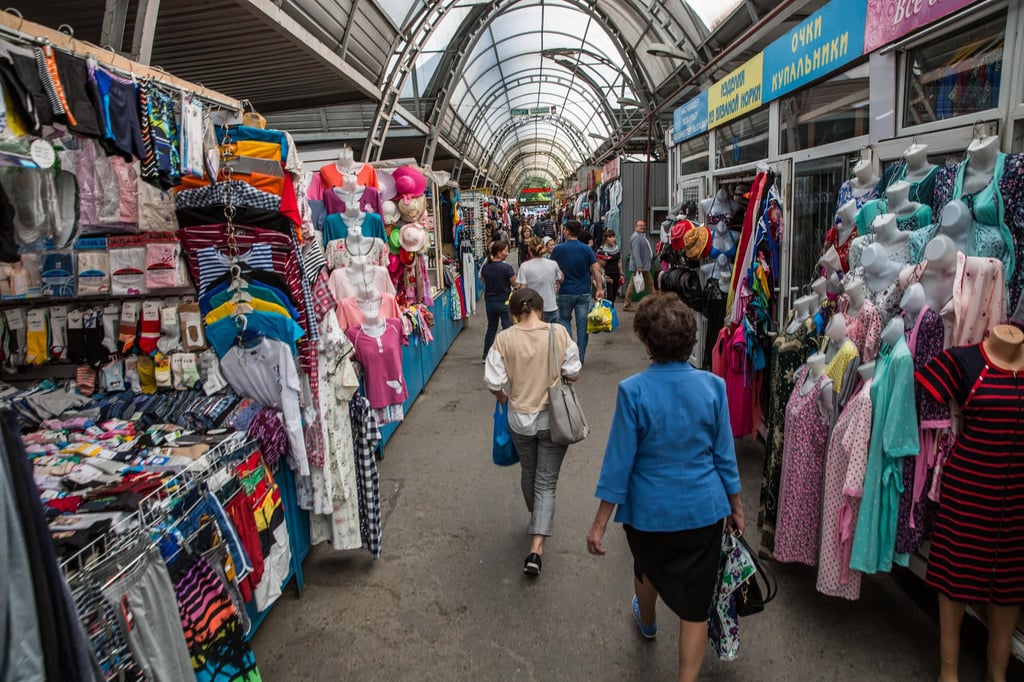
Shoppers walk past stalls in Almaty’s Green Bazaar. For over a decade, Kazakhstan has been experiencing a brain drain of skilled and educated workers in many key industries. Photo: Bloomberg
Unexpectedly, Russia’s invasion of Ukraine has resulted in massive individual and corporate migration from Russia to Kazakhstan. This is creating a new opportunity for a sustained “brain gain” and economic upgrade. But Kazakh policymakers risk missing this opportunity because of an overcautious balancing of conflicting policy goals.
Advertisement
Since its invasion of Ukraine on February 24 last year, Russia has experienced three large waves of emigration. The first wave included tech workers and vocal opponents of the war fleeing persecution. This began a trend of small and medium-sized Russian enterprises moving to Kazakhstan, with its largest city Almaty a favourite destination. Between January and September 2022, the number of Russian companies in Kazakhstan increased by around 4,000.
A second emigration wave occurred around July 2022. This mostly comprised those who had planned to leave at the outset of the war but required longer periods to prepare, such as people with businesses that were not easily moved and families with school-aged children.
Advertisement
A third wave came after Russian President Vladimir Putin’s partial mobilisation order on September 21 last year. Around 98,000 Russians fled to Kazakhstan the week following the mobilisation.
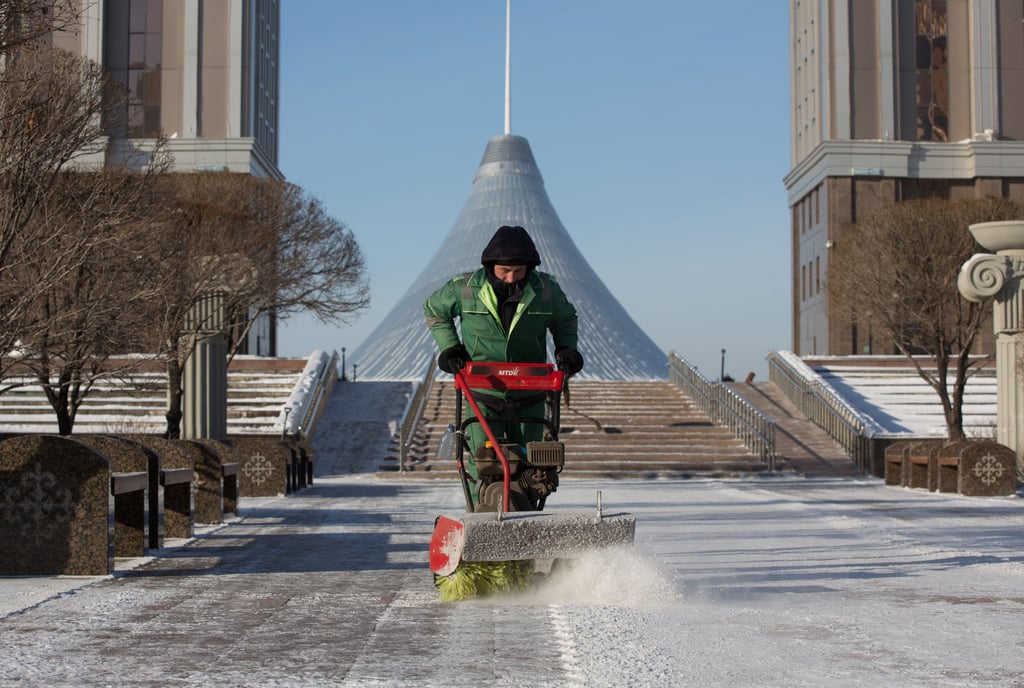
A municipal worker clears snow in Astana with the Khan Shatyr shopping centre in the background. Many migrants have flocked to Kazakhstan’s main cities, Almaty and Astana, contributing to a booming real-estate market. Photo: Bloomberg