Advertisement
Asian AngleHow to win an election in Thailand: stage a rebrand, rely on rural votes
Prime Minister Anutin Charnvirakul put Bhumjaithai’s technocrats centre stage, while letting provincial barons run the real campaign
4-MIN READ4-MIN
Listen

An iconic “Gang of Four” poster defined the Bhumjaithai Party’s 2026 rebrand.
Tailored to project an image of professionalism, signal managerial competence and court the votes of Thailand’s urban middle class, the poster featured party leader and current Prime Minister Anutin Charnvirakul fronted by three recently recruited technocrats: Foreign Minister Sihasak Phuangketkeow, Commerce Minister Suphajee Suthumpun and Finance Minister Ekniti Nitithanprapas – all of whom Anutin pledged to reinstate should he return to office.
None had been associated with the party before Anutin’s surprise ascent to the premiership, following the collapse of the previous Pheu Thai-led government coalition in September 2025.
Advertisement
During Bhumjaithai’s final evening rally at Bangkok’s Queen Sirikit Convention Centre on February 6, these three ministers were not just centre stage: they were the stage.
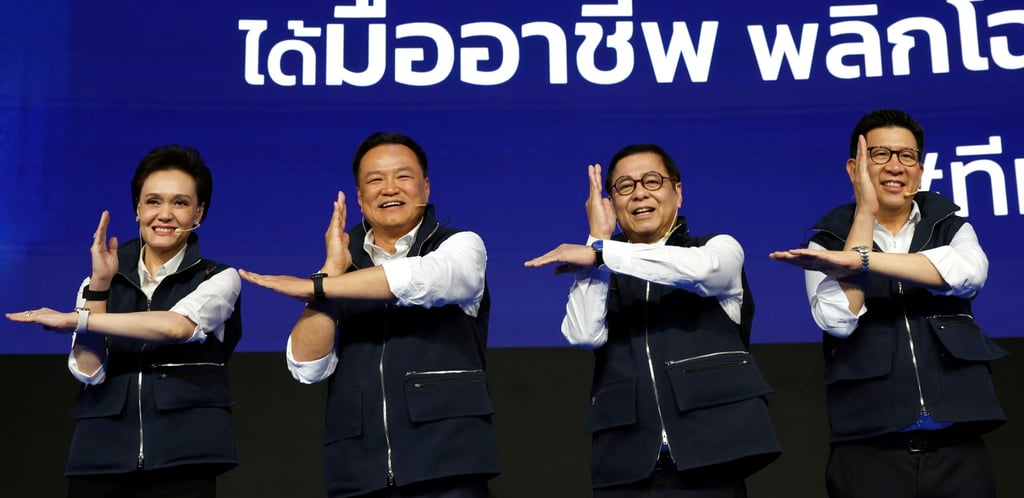
Bhumjaithai had previously placed little emphasis on political rallies or showcasing technocrats. Its default mode was to cultivate and mobilise support through strong patronage networks maintained by a group of in-house provincial barons.
Advertisement
Advertisement
Select Voice
Select Speed
1.00x