OpinionCan Malaysia’s unity government survive a state poll fight?
Pakatan Harapan and Barisan Nasional might find it easier to compete locally and maintain a lukewarm federal alliance

National PH leaders have stated that the unity government will remain intact “until the end of its term”. BN supremo Zahid Hamidi, for his part, has been more equivocal, affirming that his coalition is comfortable working with unity government members while also stating it is “almost certain” to contest the next general election alone.
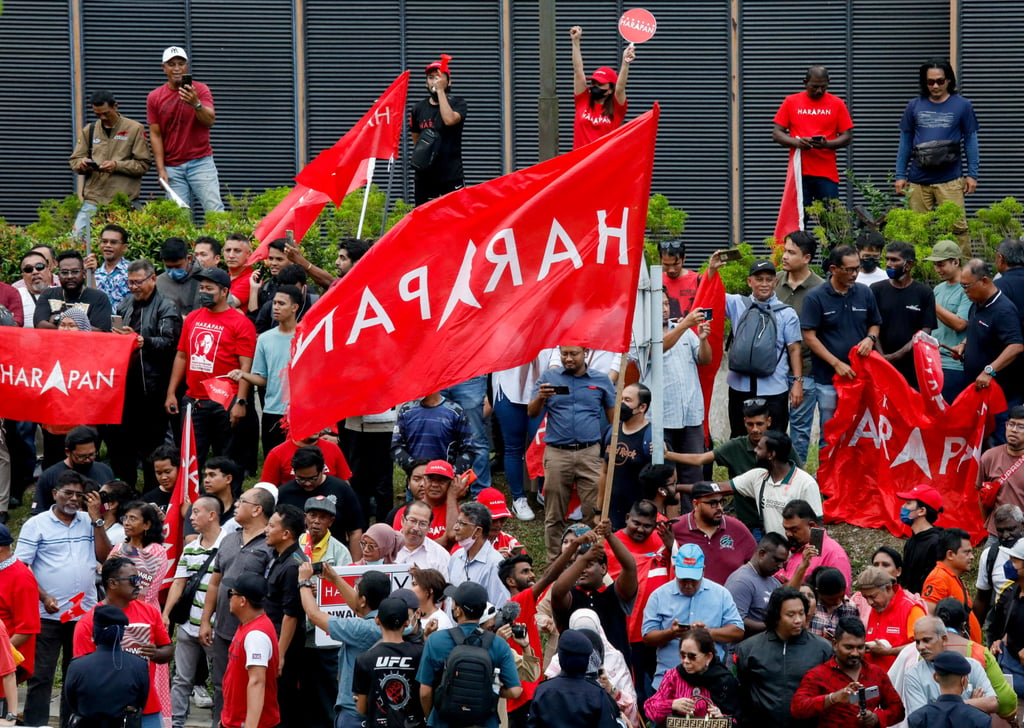
This indicates that a rupture is unlikely in the next few weeks. Yet there is an underlying strategic conundrum straining the PH-BN partnership: the Melaka and Johor state elections. A poll is due in Melaka by late 2026 and in Johor within the next two months, after the state legislature was dissolved on Monday. The crux of the matter is whether the two coalitions should contest jointly – as they did in a cluster of state elections in August 2023 – or separately, as in the 2022 general election. Contesting together means yielding seats to each other. Contesting apart makes cohabitation at the national level awkward and state-level campaigning schizophrenic.
Both states are historic bastions for the two coalitions, each having governed them in the past. At present, BN is in the ascendant. In Melaka’s 2021 state election, BN netted 21 of 28 seats; in Johor’s 2022 election, 40 of 56. PH won just five seats in Melaka and 12 in Johor.
BN has confirmed it will go it alone in Johor’s state poll, but should it partner up with PH in Melaka and adopt the standard incumbency principle, under which each coalition defends its existing seats, with only lost seats open for negotiation, a mere two seats in the state would be up for discussion. Even in the unlikely event that PH were awarded both, this number would still be unacceptably low.

Yet this is only part of the story. Both state elections were last held independently of national polls. When state and national elections are held concurrently, PH’s performance improves markedly. In 2018, for example – excluding Parti Pribumi Bersatu Malaysia (Bersatu), which left PH in 2020 – the coalition won 13 seats in Melaka and 28 in Johor. This is because PH lacks the extensive grass-roots machinery needed to mobilise voters for standalone state contests. Its supporters turn out more readily for national elections, and are happy to use state and by-elections to vote strategically and register protest votes. In Johor, meanwhile, many of the state’s voters live and work in Singapore and are unlikely to make the trip back for a state election alone. In short, PH’s chances of bagging more seats in both states are substantially higher if the polls are held at the same time as the next general election.