Meet Laxmi Narayan Tripathi, the transgender Indian demigod ‘bringing Hinduism back’
- Trans people in India today often live on the margins, banished from their homes and forced to sell their bodies for sex
- Yet once they were considered divine – and if this former reality TV star has her way, they will be again

When Lord Rama, hero of the ancient Hindu epic Ramayana, returned to the city of Ayodhya after 14 years in exile, he found a crowd of transgender people waiting for him on the banks of the river Tamsa. They had ignored Lord Rama’s order to his male and female followers not to wait, as they considered themselves neither. Taken by their devotion, he blessed them, elevating them to demigods.
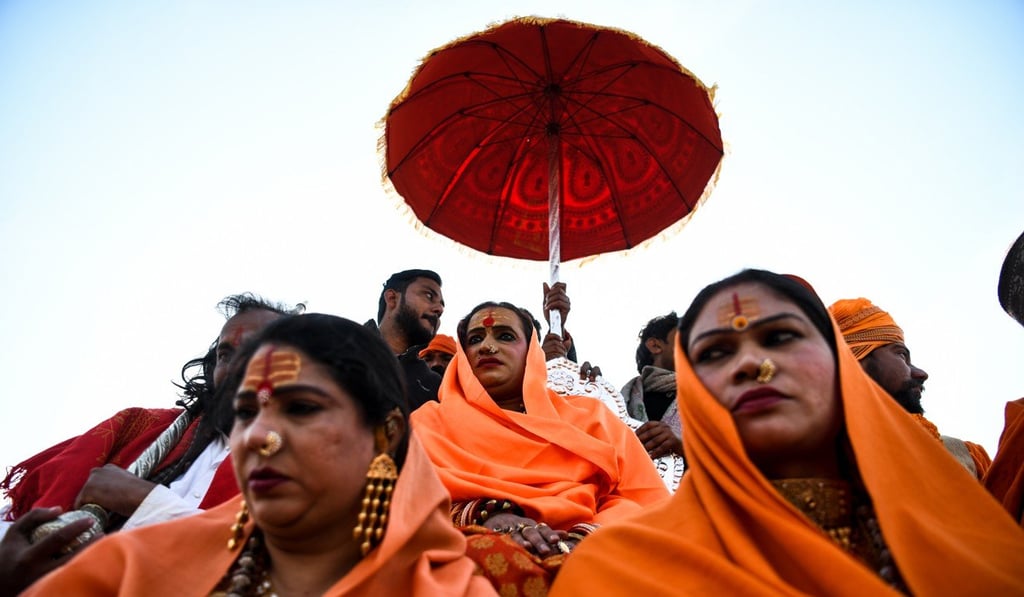
Today, after centuries of ostracism, India’s transgender community is challenging the Hindu religious establishment in an effort to reclaim that status. The face of their struggle is the trans activist Laxmi Narayan Tripathi, who at this year’s Kumbh Mela in Allahabad, Uttar Pradesh, commanded her followers to bathe at the confluence of the three holy rivers of the Ganges, Yamuna and Saraswati. Hindus believe doing so during the Kumbh – the world’s largest religious gathering – absolves one of sins and aids in salvation. For Tripathi’s newly established order, the Kinnar Akhara, the act took on added significance – it was the first time a trans group had done so.
Tripathi, 40, knows her powers well. Draped in a radiant red sari, the former reality television star is seated on a pedestal in her tent guarded by policemen and bouncers when This Week in Asia meets her at the Kumbh, which runs until March 4.
Businessmen and politicians pour in to pay tribute and members of the press jostle for a sound bite. Hundreds of devotees seeking her blessings queue outside. “Our souls have done penance for thousands of years to become a part of the mainstream again,” she says as the crowds dissipate late in the night.
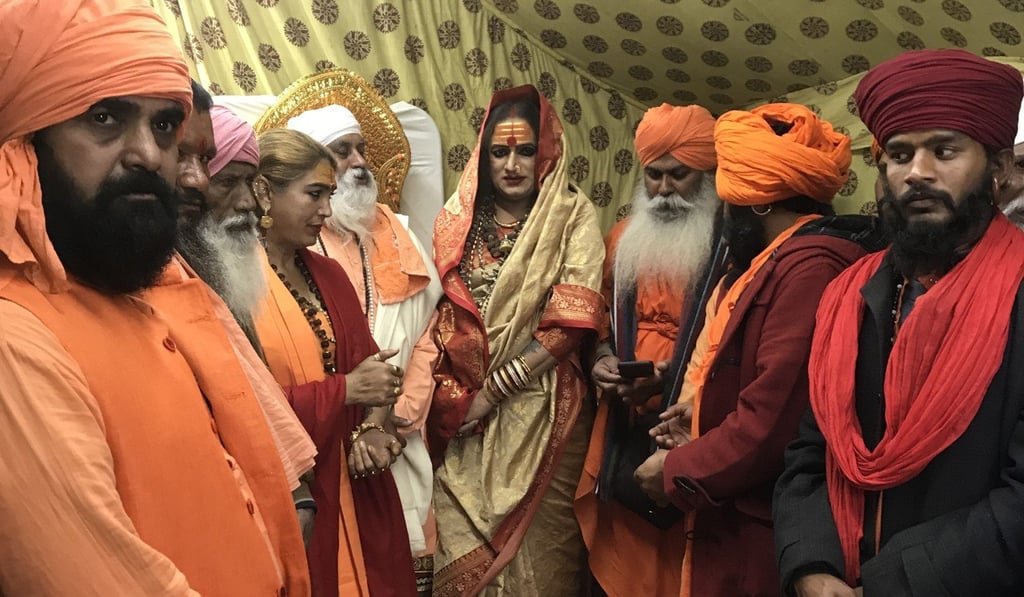
Tripathi wasn’t always the demigoddess she is today. Rather, she was queen of a world far removed from the monasticism that characterises the lives of Hindu ascetics. A showbiz celebrity and businessperson, Tripathi is the author of two books detailing her painful childhood that entailed sex abuse and social discrimination, her personal and professional struggle, and her open sexuality. Eloquent and educated, she is the first transgender woman to have represented the Asia-Pacific at the United Nations and is regarded as one of the key influences behind new laws that have formed in India around transgender rights.
LIFE ON THE MARGINS