Amelia Earhart’s disappearance: a tiny Pacific atoll and its smoking gun
- Earhart, the first woman to fly across the Atlantic Ocean, vanished on a 1937 attempt to fly around the globe
- Theories have abounded as to her fate, but an American organisation believes it has found the answer hidden in decades-old 16mm film footage

“We already have several ‘smoking guns’, but the public wants what we jokingly call an ‘any-idiot artefact’ – something that any idiot can look at and see its authenticity,” he told the South China Morning Post.
It is Gillespie’s hope that bringing together a battered patch of aircraft aluminium measuring 48cm by 58cm with a few seconds of footage on a brittle acetate film might serve as just that evidence.
This week, TIGHAR announced that it had raised the US$2,000 required to scan and digitise the film. In 2008, the Delaware-based organisation was contacted by a woman who said she had still images and some footage taken at the airfield in Lae, New Guinea, on July 1, 1937 – the day before Earhart and her navigator Fred Noonan took off on the leg of their flight that was due to take them to the Pacific island of Howland.
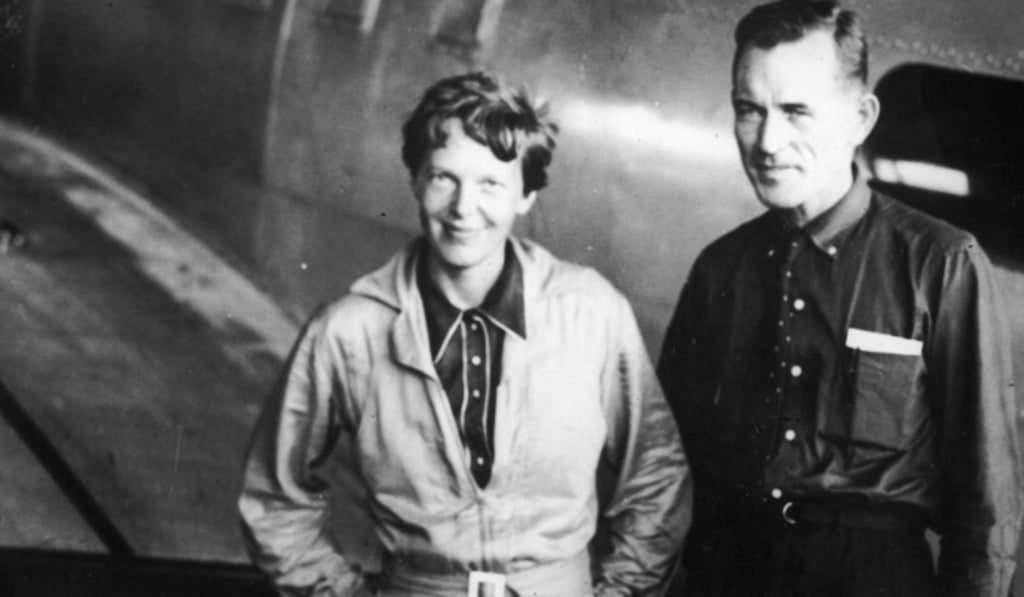
The woman, who has not been named, said the footage and stills were taken by a mining engineer who was a relative of her husband, and she had acquired them as part of a divorce settlement. The authenticity of the film was proved by an accompanying letter from the engineer, who described having dinner with Earhart and Noonan before their departure and subsequent disappearance.