‘It is modern-day slavery’: migrant workers from Indonesia’s East Nusa Tenggara face trafficking, abuse
- The impoverished province is a recruiting ground for many migrant workers, including those who are moved illegally within Indonesia’s borders
- Those seeking to return as they flee violence or exploitation turn to Antonious Remigius Abi, an ethics professor who also calls East Nusa Tenggara home

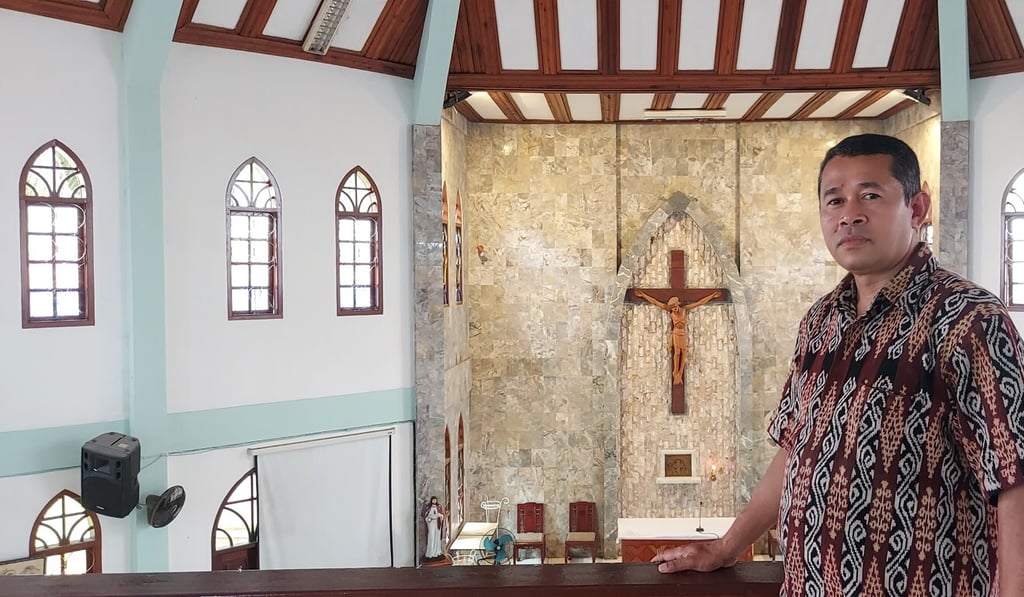
It was around 3am when Antonious Remigius Abi, an ethics professor at the Faculty of Law at Santo Thomas Catholic University in Medan, North Sumatra, was awoken by frantic knocking on his front door. When he opened it, he found six young women carrying what seemed like all their worldly possessions.
While their arrival on that night almost two years ago was dramatic, it was not particularly surprising. The softly spoken lecturer has become known in Medan over the past few years as the main source of support for migrant workers from NTT fleeing abuse from their employers and wanting to return home.
NTT is one of the main recruiting grounds for migrant workers from Indonesia. Domestic work is seen as a lucrative profession for many young women from the province, due in part to widespread poverty and the lack of other options. As of September 2019, NTT had a poverty rate of 20.62 compared with the national average of 9.22, according to the Indonesian Bureau of Statistics.
The exact numbers of migrant workers from NTT are difficult to source, because many of them are recruited illegally or using forged documents, but the Indonesian Migrant Workers Placement, Protection and Monitoring Agency (BP3TKI) in the province said 119 migrant workers from NTT had died in 2019 alone.