The bird men of Delhi, saving sparrows, black kites and ‘All That Breathes’ one nest at a time
- The world record-breaking ‘Nest Man’ Rakesh Khatri has made and installed more than 250,000 bird nests to save the Indian house sparrow
- Wildlife Rescue’s Nadeem Shehzad and Mohammad Saud star in a Sundance prize-winning documentary. They treat 2,500 birds a year, including the maligned black kite
Delhi is home to 253 bird species, and almost all of them are at risk. Rapid industrialisation, construction, shrinking wetlands and human practices such as kite flying are the main reasons. But hope remains. Three men in India’s capital city work tirelessly to remedy the damage done by humans.
Saving sparrows
“People always ask me: birds make their own nests so why are you doing it?” Khatri says. To this his reply is, “What space have we left for birds to nest? All old and indigenous trees and bushes in Delhi have been replaced by ornamental and foreign species and we’ve paved every open area to make room for tall buildings.”
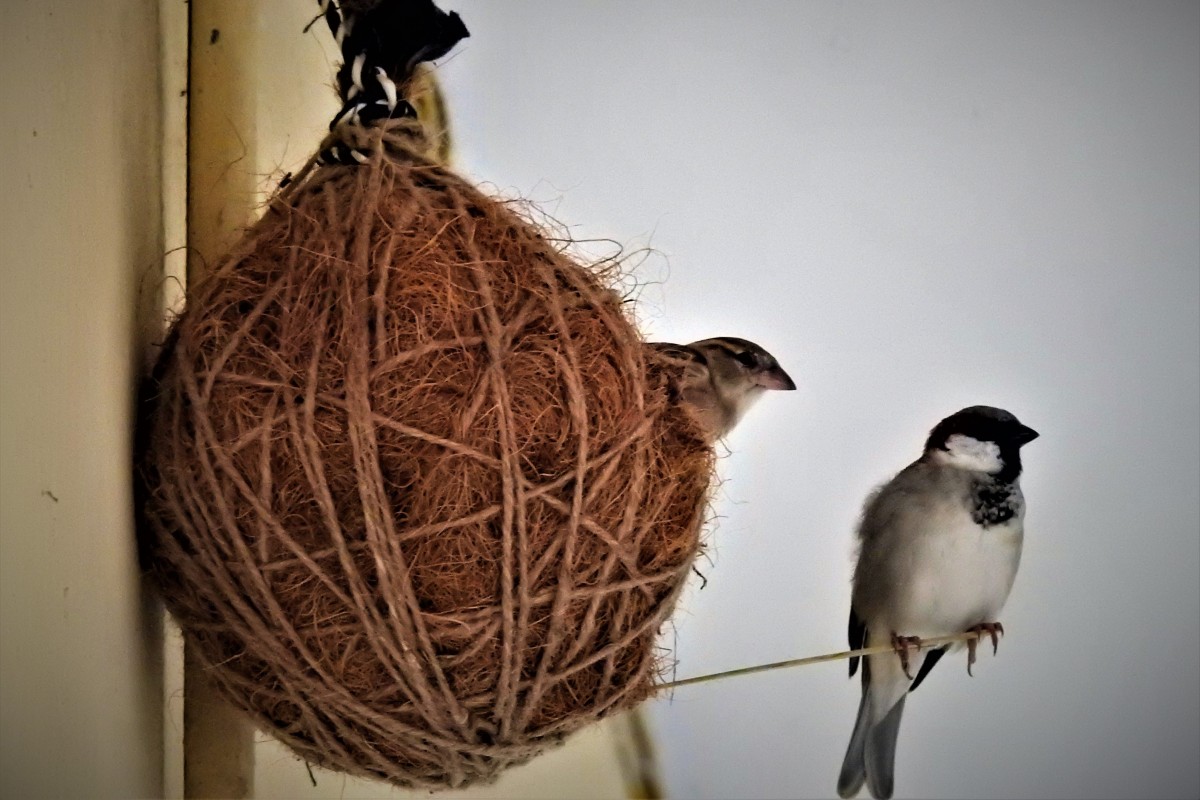
The Indian house sparrow, Delhi’s state bird that was once ubiquitous across India’s capital city, has been particularly hit by a lack of nesting spots. “Sparrows need cavities to nest in, which new houses simply do not have,” Khatri explains.

Khatri is known as India’s Nest Man. There is a chapter on him in Indian textbooks; he has won the International Green Apple Award for “Best practice on Sparrow Conservation in India”, and the Indian National Award. He has also appeared in the Limca Book of Records twice and in the London World Book of Records.
The environmentalist grew up in Old Delhi in the 1960s and 1970s. For him, birds, especially the sparrow, were synonymous with the idea of home. “I remember how excited I would be to come back from school and play with the birds,” he recalls. In the 1980s and 1990s, as he moved towards New Delhi, Khatri noticed the city was becoming “pure concrete”. With each passing year, sparrow sightings became rarer. He could not stop thinking about the birds’ plight.
He made nests out of coconut shells and hung them wherever he could. The initial results were disheartening. “Squirrels would break those and blue rock pigeons, which have now become the most common avian species in Delhi, would usurp the nests from sparrows,” he recalls. The environmentalist now makes nests with much smaller holes so that the pigeons cannot use them. “[Pigeons] are one of the biggest reasons for the decline of the sparrow population because they have increased exponentially in number and compete for resources.”
Khatri might have abandoned his quest to save the sparrows had it not been for a stranger he met in a local forest where he had gone to install bird nests. The old man asked him what he was doing, and the two had a long conversation. At the end, the old man told Khatri to never give up because he was providing homes for a species whose habitat humans had snatched away. Khatri never saw the old man again, but credits him as a divine messenger.