Advertisement
Japan’s armed forces to rethink tattoo ban in bid to attract young recruits amid low birth rate
- Politicians urge the government to relax the rules against body art and not discriminate against those with ‘fashionable’ tattoos
- Lack of awareness about security issues, reports of bullying of recruits are among possible factors deterring young people from joining the armed forces
3-MIN READ3-MIN
2

Japan is inching closer to breaking a long-standing taboo to allow men and women with tattoos to serve in the Self-Defence Forces (SDF), underlining once again the crisis in personnel levels that is afflicting the nation’s armed forces.
Despite becoming common in many other countries, tattoos are still considered by many in Japan – particularly older generations – to be a symbol of membership of “yakuza” organised crime groups.
Tattoos began to be used in the early 1700s to mark out people who had committed a crime, ranging from a band on the wrist to a “kanji” character on the forehead.
Advertisement
The stigma attached to tattoos continued when they became a mark of membership worn by underworld groups, but were shunned in the rest of Japanese society.
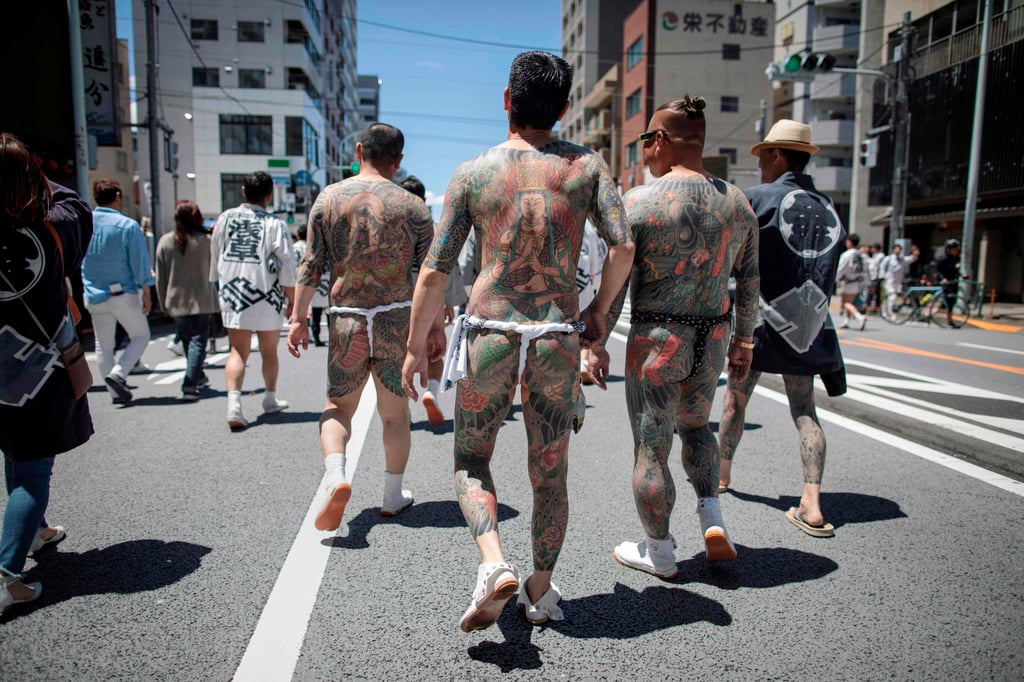
While some young people have braved social stigma to get the fashion-inspired tattoos that are common overseas, numbers are still extremely low.
Advertisement
Advertisement
Select Voice
Select Speed
1.00x