Philippine raid on Chinese firm spotlights human trafficking issues in online gaming industry
- More than 2,700 people were rescued, and computer data and safety box vaults seized, in a police raid on Xinchuang Network Technology, Inc in late June
- Police raided Xinchuang after receiving complaints from employees about unpaid salaries and ‘cybercrime incidents’, but justice chief slams the operation as ‘fishing for evidence’

A Chinese-run gambling company is under investigation following claims by employees of delayed salaries, prostitution activities and love scams, in a case that has highlighted the complex issues surrounding the Philippine online gaming industry.
A 2,000-strong team from the Philippine police force raided Xinchuang Network Technology, Inc – a vast Chinese-run online gaming complex in southern Manila – on June 26, seizing computer data and safety box vaults allegedly in connection with human trafficking and “love scam” activities inside the complex.
More than 2,700 people, including 1,534 Filipinos and 1,190 foreigners, were rescued. Of the foreigners, 604 were from China and the rest from countries as far as Sudan and Nigeria.
Five Chinese nationals were charged with human trafficking and linked to operations at Xinchuang.
The number of victims rescued from seven buildings in Las Pinas city, metropolitan Manila, and the scale of the raid were the largest so far this year and indicate how the Philippines has become a key base of operations for cybercrime syndicates.
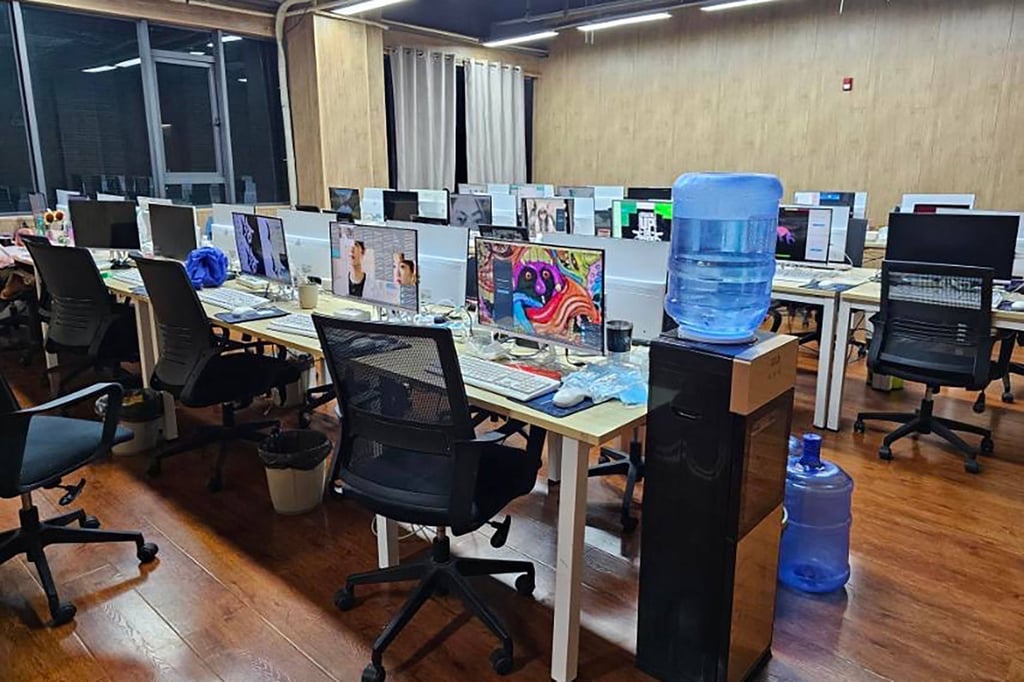
The complex, referred to locally as the “Hongtai” compound, housed thousands of computers, nearly 3,000 employees and dozens of large safety box vaults. It also included a nightclub, a “romance room”, and service apartments with a host of amenities including eateries and a private swimming pool.