In Bangladesh, climate dangers menace ‘extremely vulnerable’ Rohingya refugee camps
- Refugee camps in Cox’s Bazar that house nearly a million Rohingya Muslims are struggling to cope with the effects of supercharged weather events
- Cyclones and fires have torn through the camps’ non-permanent shelters, as aid cuts mean refugees now receive just US$8 of food rations per month
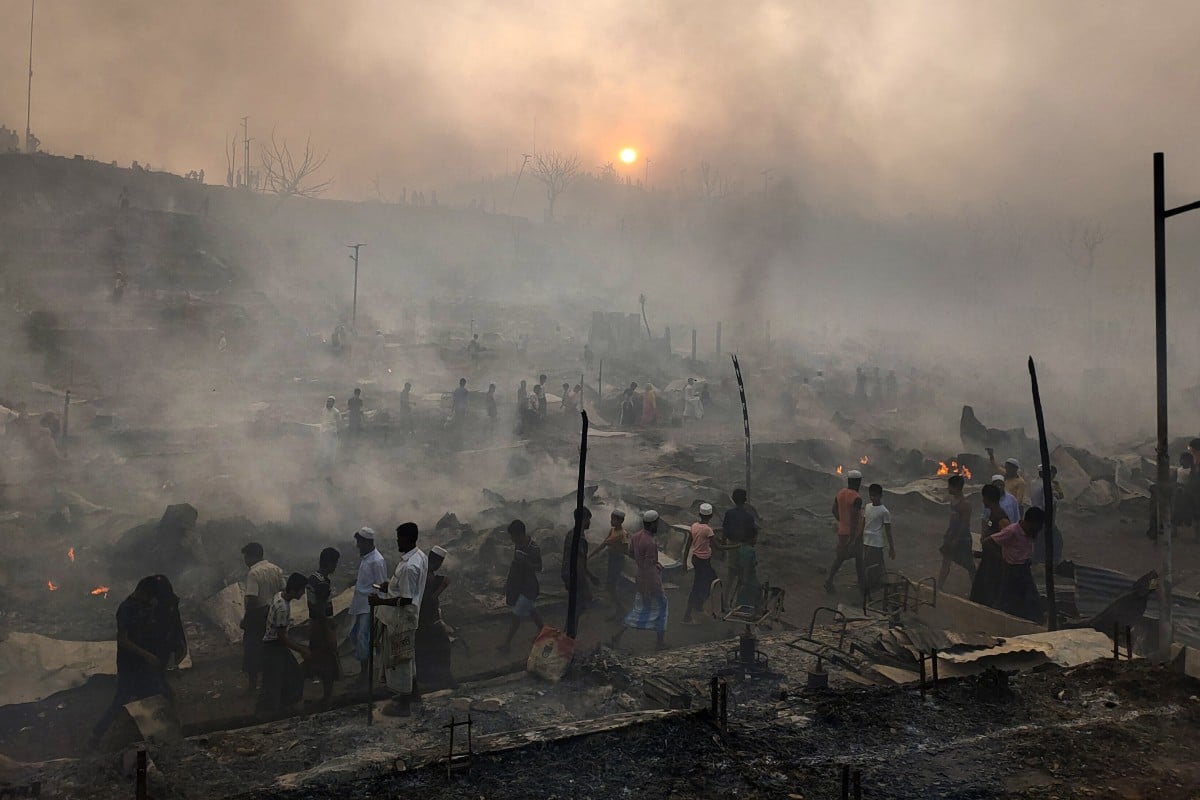
Bangladesh has opened its borders to the refugees, but policies including the requirement that they live in temporary shelters means they are less protected from monsoons and cyclones, Jing Song, senior operations coordinator for the UN High Commissioner for Refugees (UNHCR), told This Week in Asia.
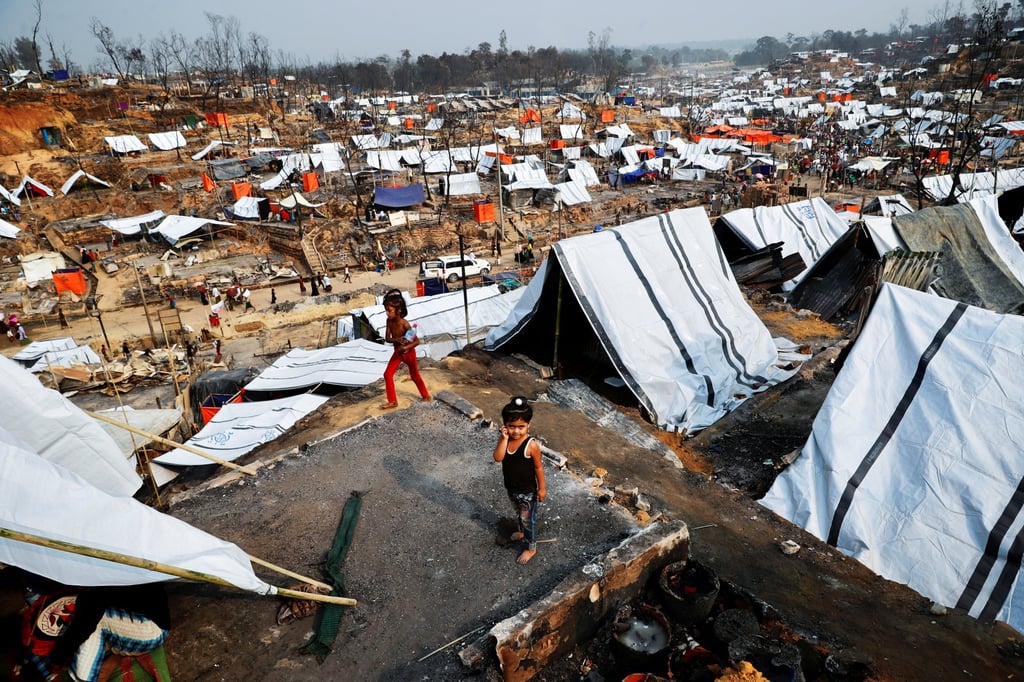
“The Bangladesh government’s position is that the only solution for the Rohingya crisis is that they have to return to Myanmar, so all the infrastructure in the camps has to remain temporary,” Song said in an interview last month.
Some 40,000 refugees’ shelters were either damaged or completely destroyed by the cyclone. Song said many large fires had also broke out in the camps, with almost 3,000 shelters wiped out by a blaze in March that resulted in the displacement of around 16,000 refugees.