Japan bombing fugitive may have been found after 50 years as police track his life on the run
- Police are confirming whether a man who died in a hospital near Tokyo is indeed Satoshi Kirishima, who was allegedly responsible for a series of deadly bombings in the 1970s
- Kirishima was believed to have remained in Kanagawa as ‘Hiroshi Uchida’ after evading capture, with locals describing him as quiet and gentle, and ‘well-liked’ by colleagues

Four days before he died, hospital staff in Japan were shocked when the man they knew as Hiroshi Uchida claimed that he had been using a pseudonym and was, in fact, Satoshi Kirishima – a radical wanted in connection with a series of deadly bombings in Tokyo during the 1970s.
Police were reportedly still conducting DNA tests to confirm whether the man was indeed Kirishima when he died on Monday morning. But one police source was quoted by the Asahi newspaper as saying “there is a very high possibility that this individual is actually Kirishima”.
Since the man’s death, police have been trying to piece together a timeline of Kirishima’s life for the last 49 years and asking how he could have managed to evade both a nationwide dragnet and a bureaucracy with a reputation for maintaining meticulous records on Japanese citizens.
Analysts were surprised that Kirishima could have managed to avoid arrest for such a long time, although they agreed it was possible, given that a number of other criminal suspects managed to avoid Japanese law enforcement for many years, including some who are still on national wanted lists.
Kirishima was likely to have maintained his freedom by severing links to family and friends as soon as he went on the run, they said, although he would almost certainly have to have been aided by individuals who shared his radical political beliefs; maintained a low profile by taking on a new name; and stayed out of official records by taking steps such as working cash-in-hand construction jobs, never getting a driving licence and paying cash whenever he visited a doctor.
If testing confirms that the man was Kirishima, it would prove that it is possible to beat the bureaucracy and disappear into one of Japan’s teeming cities, serving as encouragement to the 12 other men who are currently listed alongside Kirishima on the National Police Agency’s most wanted list.
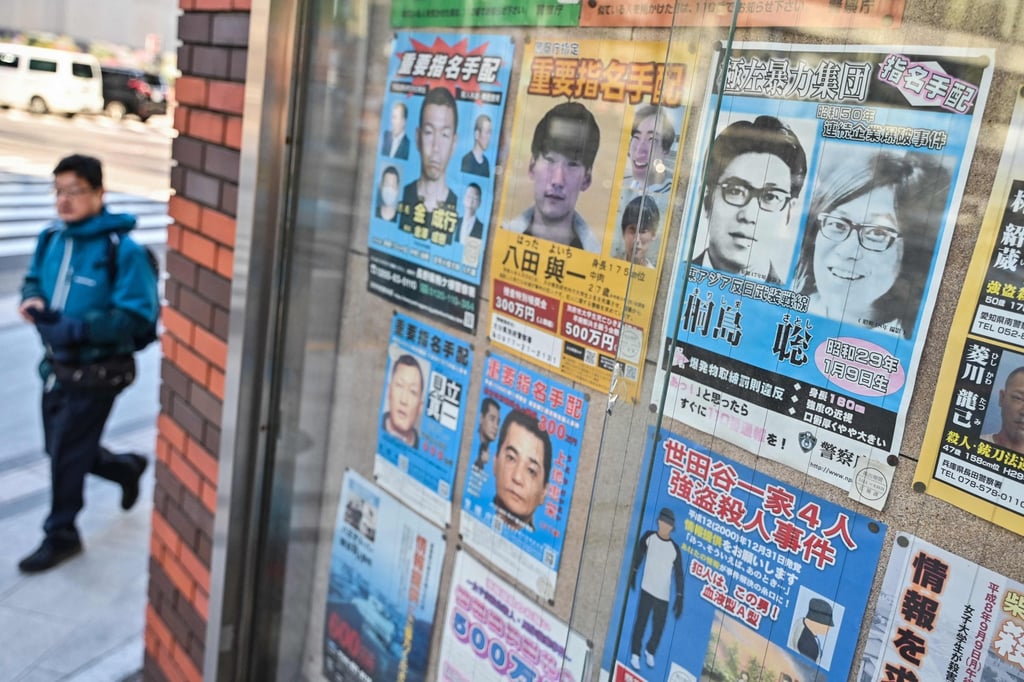
Shinichi Ishizuka, founder of the Tokyo-based Criminal Justice Future think tank, said many aspects of the case would be shocking if the man turned out to be Kirishima, not only in how he was able to avoid the police for so long, “but also that he decided to stay in Kanagawa prefecture, which is only an hour by train from where the bomb attacks took place in 1974”.