Indonesia’s Widodo vowed to ‘erase stigma’ in Papua. Tell that to the separatists
The troubled region is once again convulsed by violence

Oktovianus Warnares gathered with five other men outside a government building on the picturesque island of Biak, just off the coast of the Indonesian province of Papua.
It was May 1, 2013, the 50th anniversary of Indonesia assuming control of Papua from the United Nations. Warnares and his crew had gathered to raise the outlawed Morning Star flag of independence to protest against the rule of Jakarta – a distant city not only in kilometres but ethnicity and religion. Warnares estimates that within an hour more than 100 police and soldiers had descended, hurling rocks and demanding the men remove the flag. When Warnares and his men refused, police carted them to jail. He will remain in prison until 2019. Warnares, a Christian, says his father died while in military custody.
Could anti-Chinese violence flare again in Indonesia?
“I have been in jail for four years for raising a flag. But I will keep fighting after they release me,” the farmer and father of three says during a phone call from prison in Biak. “I cannot erase this cause from my heart. I’m Papuan. We’re a different race. We have a different faith.”
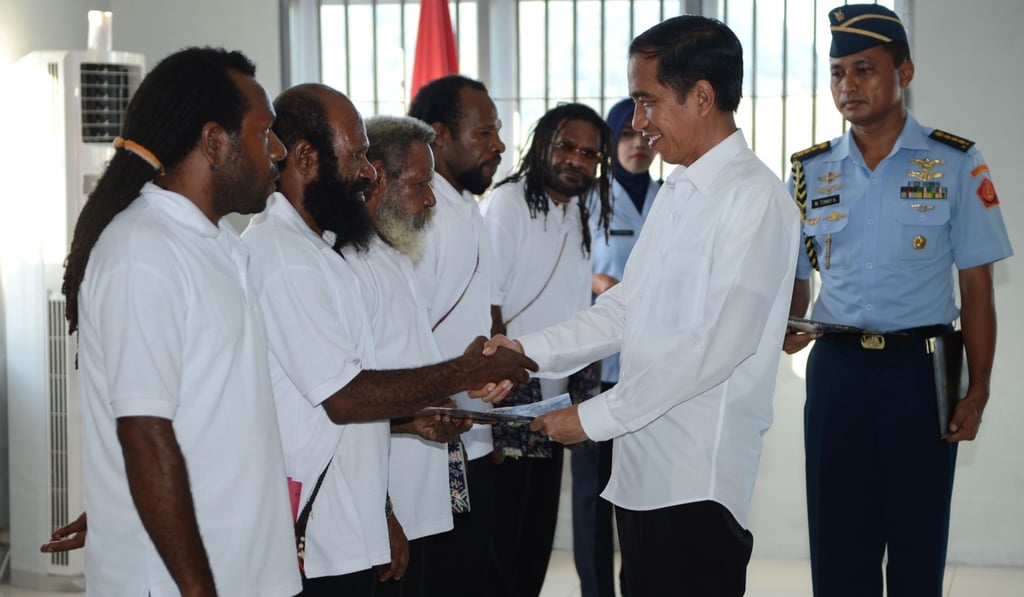
Three years after President Joko Widodo swept to power, in part, on promises to ease historic tensions and “erase the stigma” of the country’s easternmost provinces, the region is once again convulsed by violence. Despite progress, many still favour separatism, no matter the cost.
Earlier this month, police said about 1,000 people in five villages near the Grasberg copper and gold mine operated by the Indonesian unit of US mining giant Freeport McMoRan were held captive by separatists linked to the outlawed Free Papua Movement (OPM).