India’s Sikkim airport borders China in sign of Modi’s intent
The Pakyong airport in the northeastern state provides strategic advantage in the region – but also underlines the Modi administration’s desire to cement its bond with the rest of the country

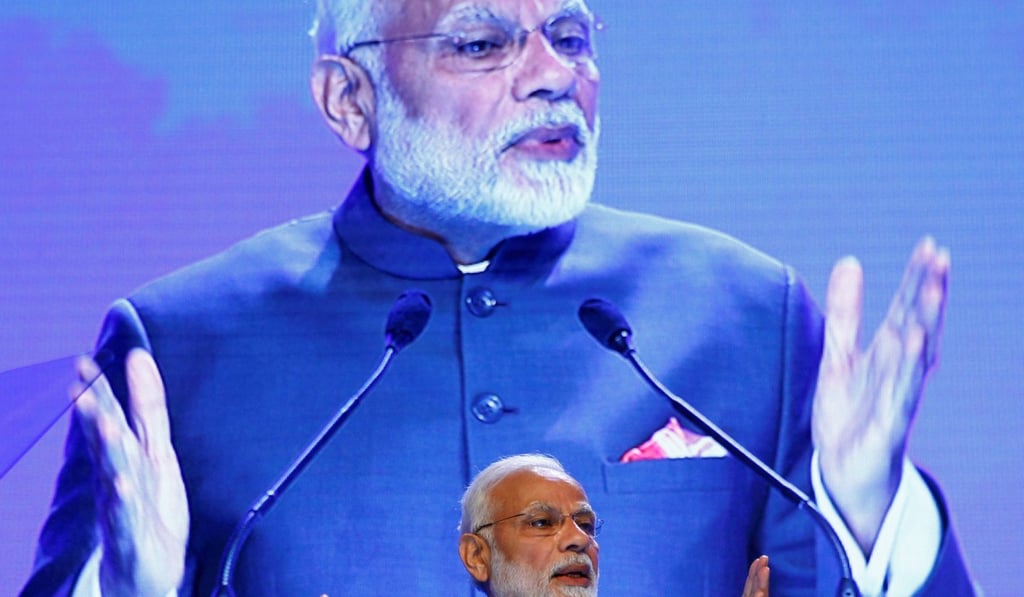
“Work is progressing at a high pace to strengthen both infrastructural and emotional connectivity to Sikkim and [India’s] northeast,” said Modi, who has placed a special focus on India’s north-eastern states to prevent them from slipping out of political control.
Though Modi did not openly mention China in his inaugural address, the premier peppered his remarks with the importance of boosting connectivity with Sikkim. The state, which is on the Chinese border, became part of India in 1975 through a referendum. Though China rejected the referendum’s outcome at the time, it notably scaled down its territorial claims over Sikkim in the mid-2000s.
The stated purpose of the Pakyong airport, built at a cost of US$68.7 million, is to boost tourism, give impetus to trade and kick-start fresh economic activity in the region – but it is also firmly aligned with New Delhi’s aim of bolstering the federal government’s grip on the state. The Modi administration has also been focusing on improving infrastructure ventures in areas bordering China as a broader policy initiative.
“This will offer a symbolic message to China that India’s neighbouring states are getting empowered and developed. Any developments in Sikkim will undoubtedly pass a message to China,” said Dr Jagannath Panda, a research fellow with the Institute for Defence Studies and Analyses think tank and an expert on East Asia region.
“The Pakyong airport is for civilian use and aims to connect Sikkim and northeast India better with the rest of India. Yet, having an airport in Sikkim will certainly provide a strategic advantage,” he added.
With the absence of any rail link, landlocked Sikkim, which also shares borders with Nepal and Bhutan, is heavily dependent on road transport. Unveiled as a civilian installation, the Pakyong airfield is perched 1,400 metres (4,500ft) above sea level with the 1.7km-long runway offering a spectacular view of the picturesque Himalayan landscape.