‘Kashmiri body bags sell well in India for gaining votes’
- India has toughened its stance against Pakistan and Kashmiri separatists with policies experts say aim to project New Delhi as strong and uncompromising

Fighting in the disputed territory of Kashmir has intensified since Indian Prime Minister Narendra Modi came to power in 2014 amid rising attacks by Hindu hardliners against minorities in the country, further deepening frustration with New Delhi’s rule in Muslim-majority Kashmir.
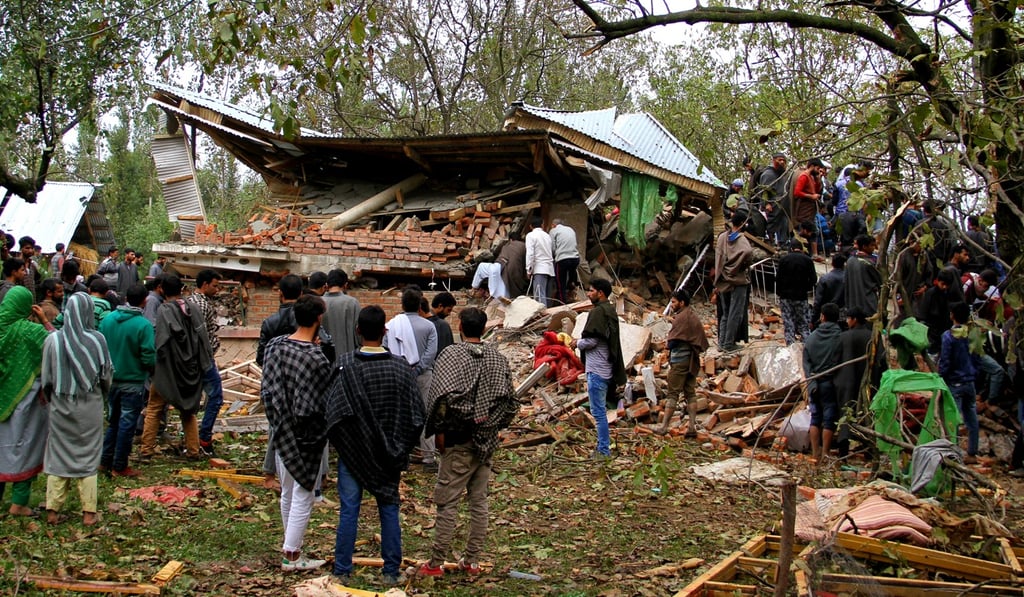
Violence has spiked in the past 18 months as Indian troops have cracked down on local militants, prompting the militants to seek shelter among the civilian population. In response, Indian troops have destroyed many of the houses used to harbour the fighters.
Manzoor Ahmad, a 55-year-old military veteran, invested his life’s savings of about US$70,000 in constructing a house after retiring in 2012. Last September, militants came to his house and sought shelter. Security forces became aware and Ahmad’s family was asked to leave in the dead of the night. A fierce gunfight ensued and by morning, the three-storey house had been reduced to rubble. As a result, Ahmad’s family of five were until recently living in a makeshift shelter with a tin roof, even as temperatures began to plummet below zero. Ahmad is in jail for allegedly giving shelter to the militants.
“We had been cooking and sleeping in this until recently when temperatures came down in Kashmir, after which our relatives insisted we sleep in their house,” said Aadil Ahmad, Manzoor’s son. “So we go during the night and return in the morning. People came after the encounter. They donated money, but that’s too little to build a new house.”
Kashmir has known little other than conflict since 1947, when India and Pakistan gained independence but were unable to resolve their rival claims on the mountain territory. Since then, the arch-rivals have fought two wars over those claims. On the ground, there is a common resentment of India in Kashmir as a violent occupying force.