Thai election: for voters, any policy you like, as long as it’s Thaksinomics
- Images of Thaksin and Yingluck Shinawatra are banned on the campaign trail, but their legacy lives on
- The populist economic policies that swept them to power are being copied by all sides in this election – even the royal-military bloc that deposed them

The election posters that line the streets of Bangkok ahead of the March 24 general election are a sign of just how much Thai politics has changed since 2001 – and how much of it is stuck in the past.
Most conspicuous is the absence of any images of former prime ministers Thaksin and Yingluck Shinawatra. In their heyday, images of the siblings beaming and offering wai greetings would be plastered across the billboards that sprout up across this country of 69 million people come election time. That ubiquity reflected their immense political clout, especially among the country’s rural citizens who welcomed the Shinawatras’ expansionary – critics would say populist – economic policies known as “Thaksinomics”.
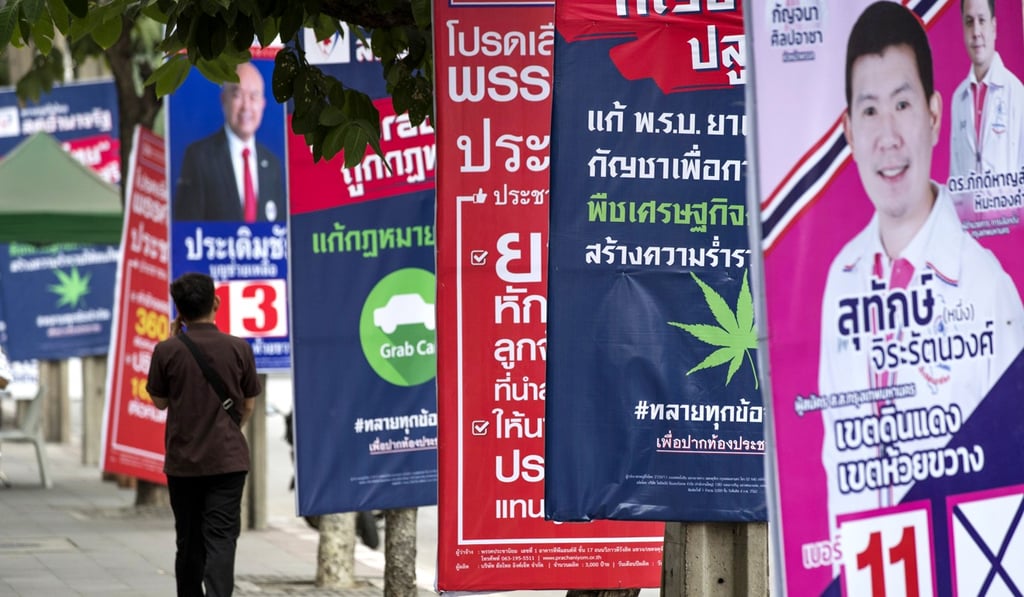
Today, 19 years since Thaksin kick-started that rural mass movement with his 2001 election victory, the siblings are the kingdom’s best known political outcasts. Both were ousted by coups – Thaksin in 2006 and Yingluck in 2014 – and now live in exile. The use of their images and names for campaigning purposes has been barred under laws drawn up by the ruling junta led by Prayuth Chan-Ocha.
But the Shinawatras are by no means spent political forces. If anything, as shown by This Week in Asia interviews with voters, candidates, analysts and Bangkok-based diplomats, their footprint on Thai politics may be increasing. And the reason has to do with the populist economic path on which Thaksin set the country during his 2001-2006 stint as prime minister.
Economists say the political parties of today are hooked on using their own versions of “Thaksinomics” – the promise of ever more government spending – to gain support in a crowded political landscape.