India election: economic slowdown looms even as Narendra Modi celebrates resounding victory
- Win marks the first time since 1971 an incumbent leader is re-elected with a majority, domestic issues will keep his second term busy with tough times ahead
- Modi will have to steer the country through an inevitable economic slowdown, address youth employment and deal with national security issues such as terrorism
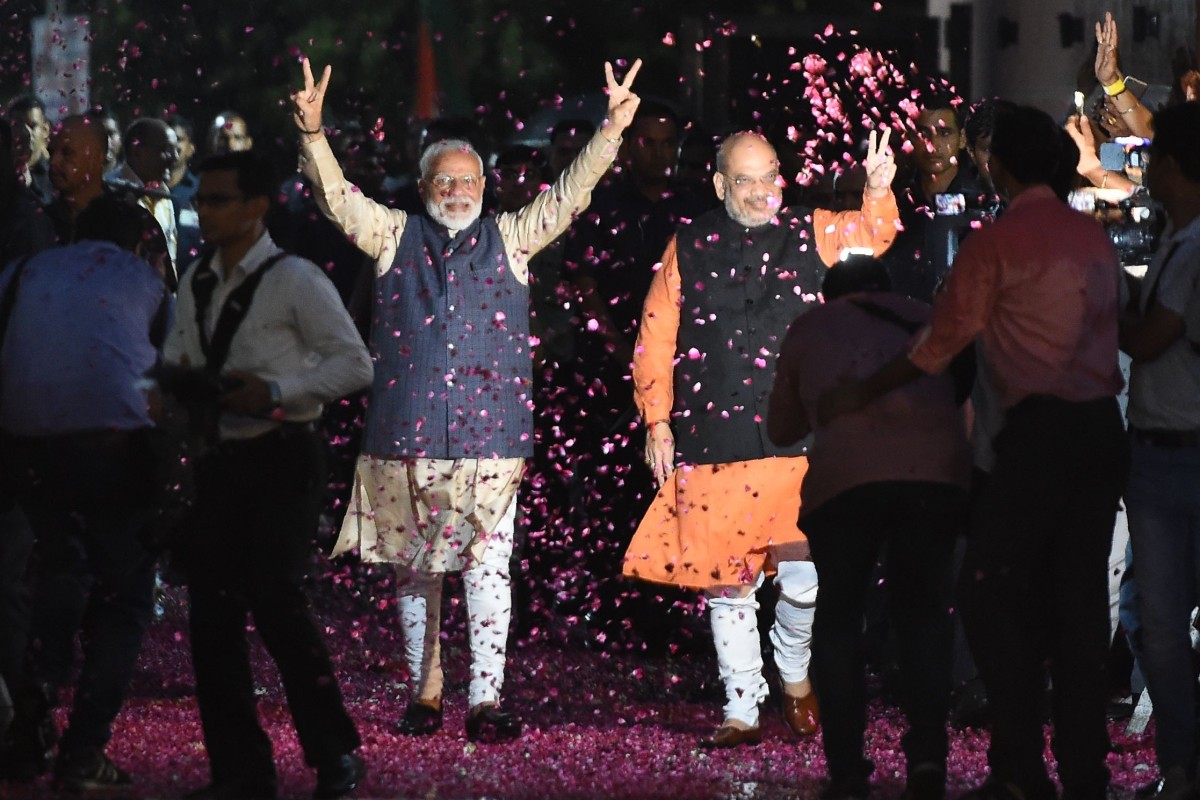
The BJP, together with its allies, is expected to win more than 330 of 542 lower house seats, inflicting a humiliating loss on the opposition, the Indian National Congress. Rahul Gandhi, Congress’ chief, has conceded defeat in Amethi, which is one of two seats he was contesting and a constituency in Uttar Pradesh that has long been his famous family’s stronghold.
As vote-counting continued into the night, Congress looked to have won just 50 seats. It was decimated in most of India’s electorally significant states such as Uttar Pradesh and Tamil Nadu, putting a question mark over the resistance that Modi’s government will face when it rolls out its policies.
For instance, the Modi government had brought in a controversial law that amended rules around refugees obtaining citizenship. The law proposed to only grant citizenship to non-Muslim refugees, triggering a political storm. While the law was put on hold amid protests, the BJP has promised to bring the law back, if re-elected.
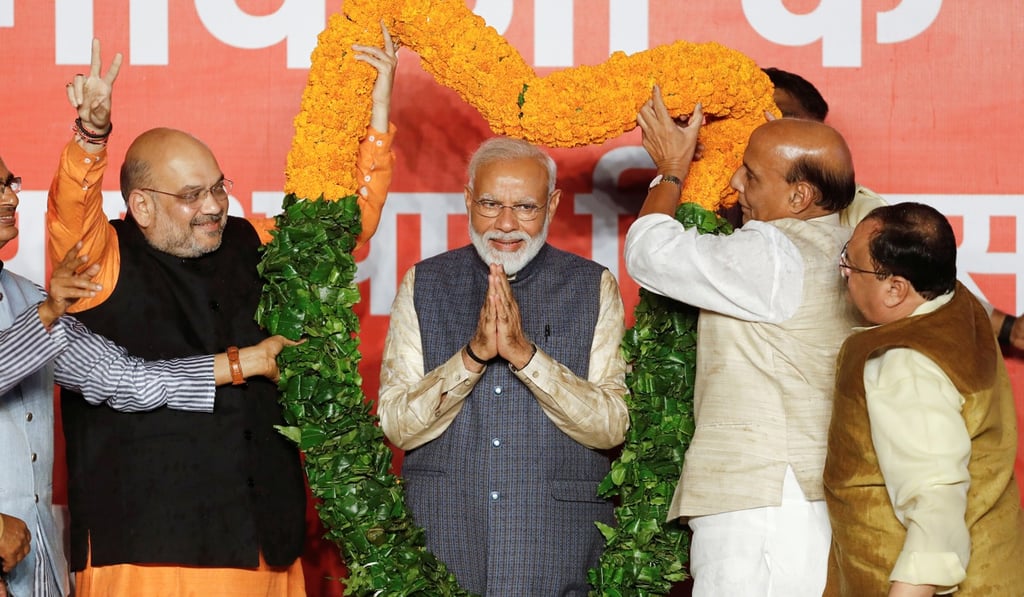
Indeed, since Modi’s performance on the economic front has been questionable, many wonder if his results seem like a validation of the BJP’s politics over the last five years – from routinely engaging in communally polarising rhetoric to often backing those accused of inciting violence against minorities.
The BJP retained its grip on its strongholds and made fresh inroads across the country in areas where the party has had little organisational strength so far, from West Bengal, where it was slated to win up to 18 of the total 42 seats, to Odisha, where it is set to win nine of the 21 seats.