Singapore opposition should not use ‘coalition’ of losing parties to challenge PAP: author
- Loke Hoe Yeong, speaking at the launch of his new book, said any coalition should include the party that had already won seats in parliament
- Other speakers discussed the challenges facing opposition parties in an electoral landscape dominated by the ruling party

Instead, a successful coalition would have to include the sole opposition party whose members have been elected to the Singapore parliament, which currently has 89 members.
Of these, 83 are from the PAP and six from the opposition Workers’ Party (WP). In addition, three WP members who were the best losers among the opposition in the 2015 election sit as non-constituency members of parliament (NCMP).
Loke Hoe Yeong, a London-based political analyst, made the comments on Saturday at the launch of his new book, The First Wave: JBJ, Chiam and the Opposition in Singapore , which examines the rise and fall of the opposition between 1981 and 2011.
The 34-year-old former assistant secretary of the Singapore People’s Party focused on this period in his book to explain why Singapore’s opposition, despite making some gains in 1981 and subsequent elections, took 30 years before it saw a substantial victory in 2011. That was when the Workers’ Party, led by then secretary general Low Thia Khiang, won five seats in a multi-seat constituency for the first time.
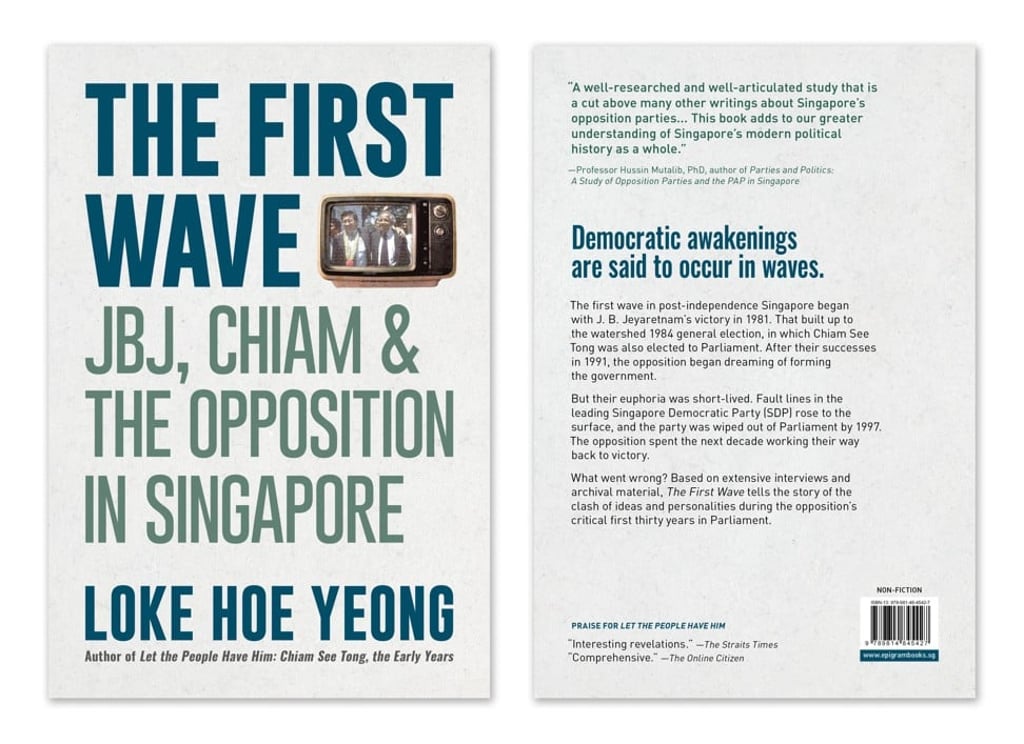
In the 410-page book, Loke describes how the 1981 Anson by-election win by the late J.B. Jeyaretnam of the WP marked the first time the PAP had lost a poll since the country’s independence in 1965. Other opposition politicians went on to win seats in subsequent elections and one of them, Chiam See Tong, even formed a coalition of opposition parties before the 2001 poll to better compete against the PAP in multi-seat constituencies. But the Singapore Democratic Alliance made little progress and only won two single seats in 2001 and 2006.