Hong Kong expects democracy, the Chinese don’t want it. It was clear from the start: historian Wang Gungwu
- The renowned academic Wang Gungwu reflects on unresolved tensions that have endured ever since the formulation of ‘one country, two systems’
- These span from Tiananmen Square to China’s failed attempt to make Shanghai its new financial centre

Historian Wang Gungwu said yes to becoming vice-chancellor of the University of Hong Kong in 1985 partly because he wanted to see for himself the British colony’s transition into a special administrative region of China operating under the principle of “one country, two systems”.
He knew people in Hong Kong at the time, and understood that implementing the formula would prove difficult.
“Among those I knew, some were full of expectation and hope, yet also uncertainty and anxiety,” he recalled. “And some feared that things would go wrong.”
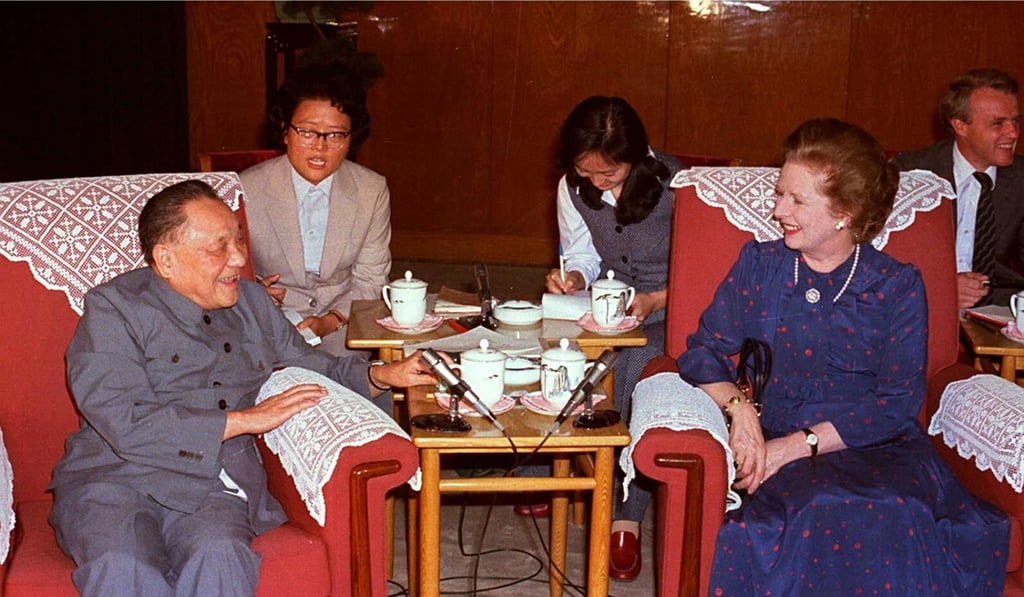
Under the framework devised by China’s paramount leader Deng Xiaoping in the early 1980s for Hong Kong after its handover by the British in 1997, the city was promised certain freedoms not allowed on the mainland.
But Wang said it was difficult to know at the time exactly what the balance between “one country” and “two systems” should be.
But, over the years, the handling of difficult issues – including legislation to enact Article 23 of the Basic Law, the city’s mini-constitution, to safeguard national security – had made the two sides increasingly distrustful of each other.