Jakarta governor Anies Baswedan: Islamism’s new hope for Indonesian presidency?
- Anies fuels speculation of tilt at the presidency by addressing rally of the 212 Islamist movement that orchestrated fall of his Christian predecessor Ahok
- Analysts say he is now a favoured pick among Islamists for the 2024 election
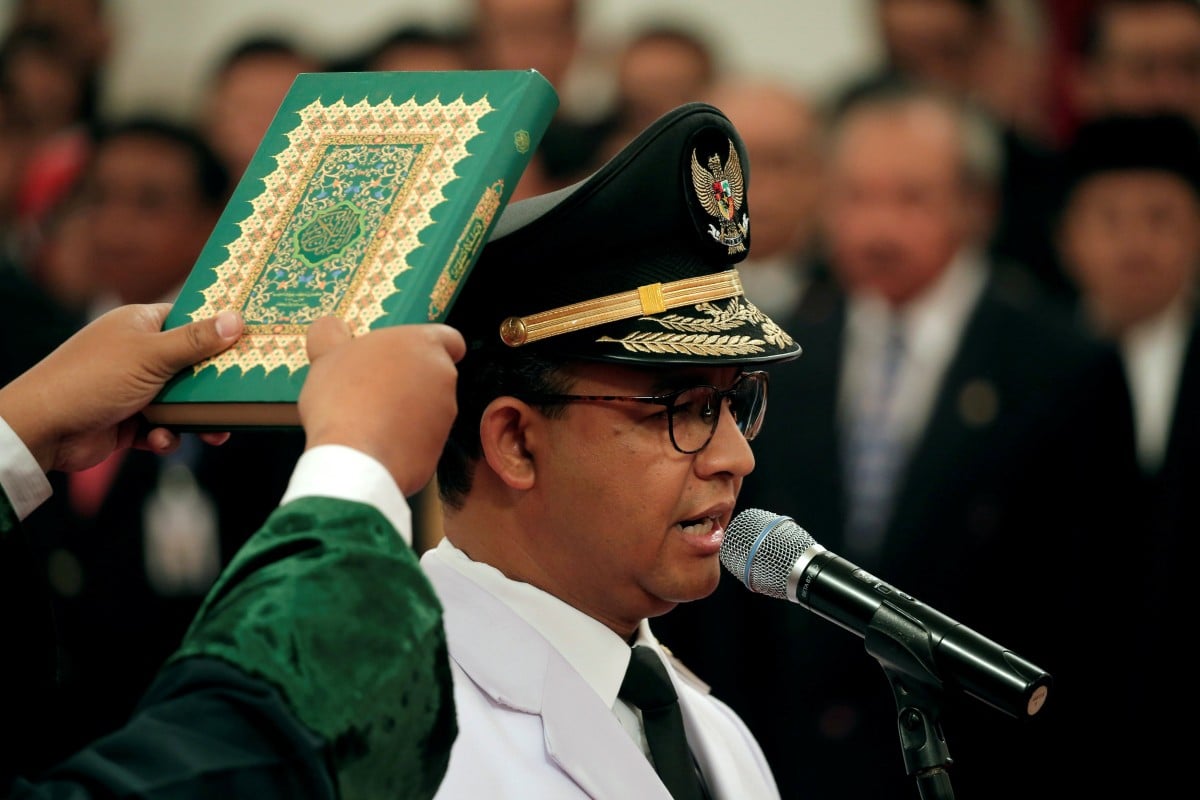
Jakarta Governor Anies Baswedan has fuelled speculation that he plans a tilt at the presidency by speaking at a rally held by the Islamist movement that helped orchestrate the fall of his Christian predecessor.
As Anies took to the stage on Monday for the 212 movement’s reunion rally, a crowd of tens of thousands greeted him with chants of “President! President”, while one of the organisers gushed that Indonesia would “succeed when its leader is Anies Baswedan”.
The 212 movement is named after the date – December 2, 2016 – of the Islamist group’s first protest against the former governor Basuki “Ahok” Tjahaja Purnama, which helped lead to the downfall of the ethnic Chinese leader and his jailing on charges of blasphemy.
Anies’ attendance on the third anniversary of that rally and the reception he received have raised eyebrows, fuelling suspicions that he is lining himself up as a contender for the 2024 presidential election and prompting critics to suggest he is willing to shed his image as a moderate to court the Islamist vote.
Indonesia, a country of over 260 million people, is officially secular but has the world’s largest Muslim-majority population. A growing tide of conservatism across age groups has led to deepening divisions in society.