Advertisement
South Korea
This Week in AsiaPolitics

The ‘comfort women’ of South Korea: pawns in a political game?

  • Lee Yong-soo, 91, shocked South Korea by saying she and fellow survivors of Japanese wartime brothels were being exploited for political ends
  • Her bombshell claim fuels concerns the women are being used for a nationalistic, domestic agenda
5-MIN READ5-MIN
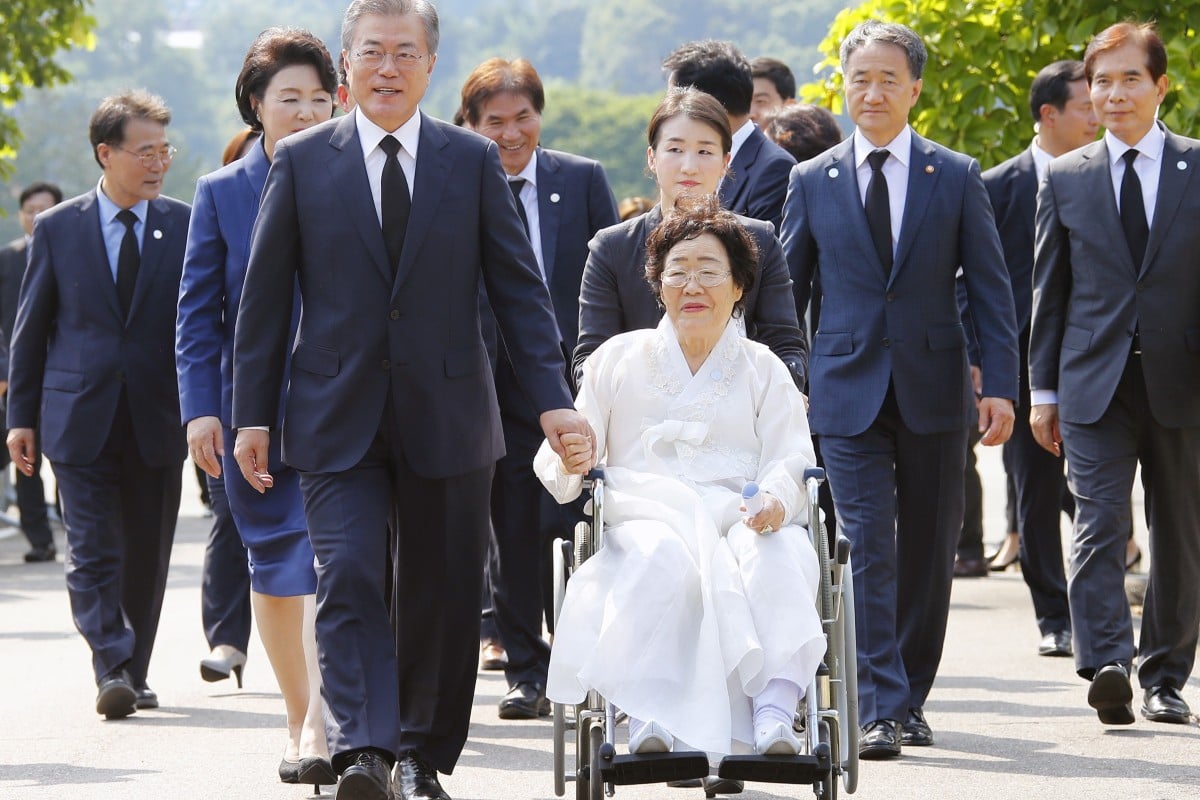
South Korean President Moon Jae-in holds the hand of Lee Yong-soo during a trip to a comfort women's cemetery in Cheonan, South Chungcheong Province, South Korea. Photo: EPA
John Power
For three decades, South Korea’s Lee Yong-soo campaigned for Japan to atone for its imperial past. One of thousands of “comfort women” coerced into working in brothels for Japanese soldiers during World War II, Lee, 91, joined a rally every Wednesday outside Tokyo’s embassy in Seoul, come rain or shine, to demand a sincere apology and compensation from Japan.
Then, in an ironic twist, the veteran campaigner levelled accusations of exploitation at figures much closer to home: the leadership of South Korea’s largest advocacy group established to ensure the welfare of surviving comfort women and seek restitution from Japan, which colonised the Korean peninsula from 1910-1945.

At a shock press conference this month, Lee accused the Korean Council for Justice and Remembrance for the Issues of Military Sexual Slavery by Japan (Korean Council) of misappropriating public donations and exploiting the surviving women for political ends.

Advertisement

Lee announced she would no longer attend the weekly rallies, which typically draw large numbers of supporters, particularly students, as they taught the younger generations “hatred” when South Koreans and Japanese should befriend each other and resolve outstanding issues together.

“Wednesday demonstrations must be put to an end,” Lee said at the May 7 press conference, according to a report in the Joongang newspaper, while stressing she would continue to press Japan for a sincere apology. “It helps no one. You don’t even know where the contributions of the participants are being spent.”
Advertisement
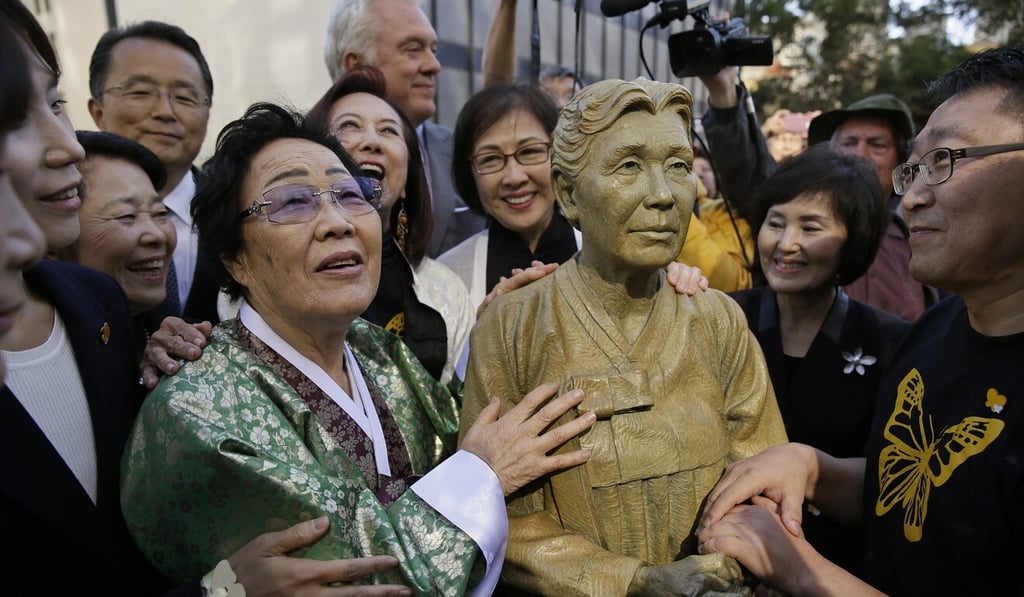
Lee Yong-soo next to a statue of Haksoon Kim in San Francisco. Haksoon Kim was the first to break the silence about comfort women in 1991. Photo: AP
The Korean Council and its former chief, ruling party lawmaker-elect Yoon Mee-hyang, have strongly denied any wrongdoing, insisting all donations have been spent supporting victims and advocacy and the group’s finances are transparent and audited regularly. Amid a flurry of subsequent reports in conservative media about her financial dealings and facing investigation by prosecutors, Yoon, who is affiliated with President Moon Jae-in’s centre-left Democratic Party, has claimed to be a victim of a “political offensive”. Yoon and the Korean Council did not respond to requests for comment.
Advertisement
Select Voice
Select Speed
1.00x