-
Advertisement
South Korea
This Week in AsiaPolitics

In South Korea, history and free speech collide in a battle to define democracy

  • A North Korean defector has been convicted for spreading ‘false facts’ about a seminal moment in the South’s struggle for democracy
  • The case has shone a light on both the limits of free speech and the bitter fights to interpret history that continue to rage in South Korea

Reading Time:5 minutes
Why you can trust SCMP
South Korean President Moon Jae-in, second left, and his wife Kim Jung-sook, second right, salute the national flag during an annual ceremony to mark the 40th anniversary of the Gwangju Uprising last month. Photo: DPA
John Power
When North Korean defector Lee Ju-seong published a book questioning the official history of the Gwangju Uprising, a seminal moment in South Korea’s struggle for democracy, its controversial claims provoked an outcry.
In The Purple Lake, he alleged that mass protests which erupted on May 18, 1980 before a bloody crackdown by the military dictator Chun Doo-hwan had been infiltrated by North Korean agents in a communist plot to subvert the US-allied South. Not only that, the book claimed, the scheme was the result of a conspiracy between the North and a leading light of South Korean democracy, the late Kim Dae-jung, a once-exiled opposition leader who would go on to become the country’s first liberal president.

After weathering a storm of controversy and popular outrage, Lee has now also found himself facing trouble with the law. On Wednesday, a South Korean court ruled Lee had defamed the former president, who died in 2009, by spreading “false facts” and handed him a six-month prison sentence, suspended for three years.

Advertisement

Handing down his verdict, Seoul Western District Court Judge Jin Jae-kyeong said Lee, who fled the authoritarian North in 2006, had not only caused the former president’s family hurt and distress, but “inflicted a significant wound on the Korean people”.
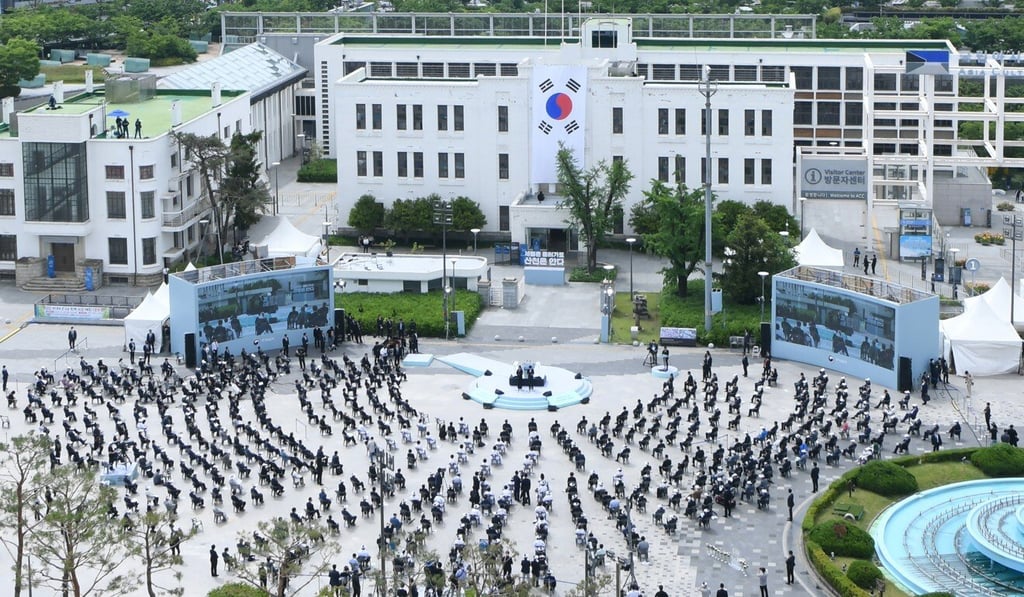
A ceremony to mark the 40th anniversary of the Gwangju Uprising last month. Photo: DPA
Advertisement

The May 18 Memorial Foundation, which took Lee to court on behalf of Kim’s late widow, hailed the ruling as an example that those “who hurt the bereaved families, the victims, and the people who aspire to democracy through distortion and denunciation of the May 18 Democratic Uprising would be judged legally,” said Park Jin-woo, the foundation’s director of research.

Advertisement
Select Voice
Choose your listening speed
Get through articles 2x faster
1.25x
250 WPM
Slow
Average
Fast
1.25x