Advertisement
Why are overseas Filipinos worried about Duterte’s anti-terror law?
- Migrant leaders fear a vague definition of terrorism could be used to stifle criticism and curtail freedom of speech
- Manila’s envoy to Hong Kong says there is nothing to worry about
5-MIN READ5-MIN

On April 12, a Filipino carer in Taiwan took to Facebook to vent her frustrations over how the Philippine government was handling the coronavirus pandemic.
Little did she know her video would go viral and spark a diplomatic spat between Taipei and Manila.
The Philippine Department of Labour and Employment accused the worker of “cyber libel” for intending “to cause hatred” by sharing content on social media that was critical of Philippine President Rodrigo Duterte. But the Taiwanese administration intervened, saying it was not up to the office to deport the woman because the island had full jurisdiction.
Advertisement
Union leaders say this case has had a chilling effect and that many now fear their freedom of expression and other rights may be further curtailed if the Philippine government enacts its anti-terrorism bill.
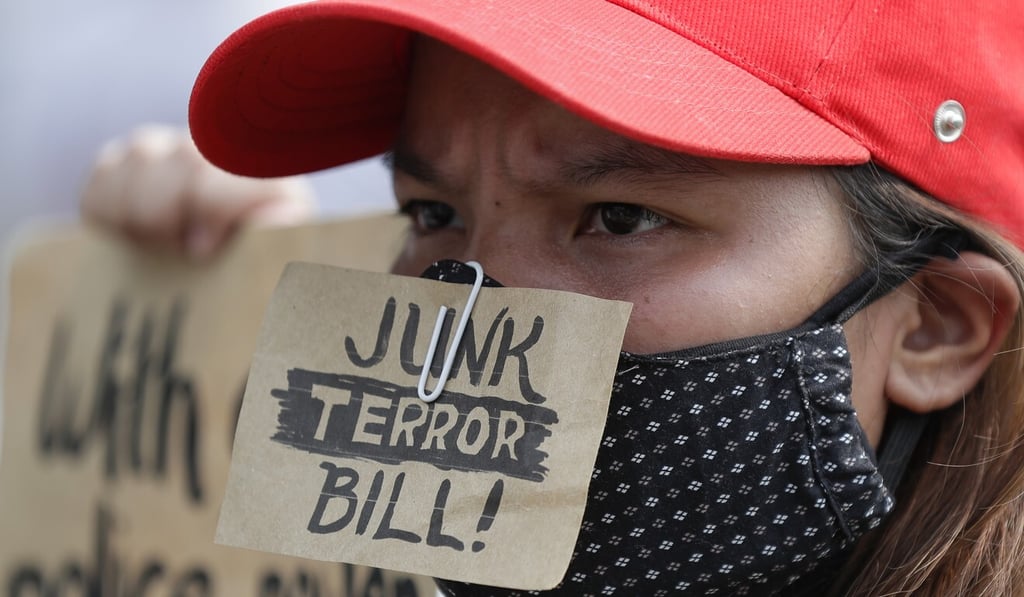
Protests have been held in the Philippines under the campaign #JunkTerrorBillNow, while smaller actions have been organised in cities including Hong Kong.
Advertisement
Activists, who predict an escalation of human rights abuses, question the timing of the legislation, which comes as the nation grapples with the coronavirus. More than 24,100 people have been infected in the country, and more than 1,030 killed.
Advertisement
Select Voice
Select Speed
1.00x