A deadly turn on China’s Belt and Road raises the stakes in Pakistan
- A surge of lethal attacks by Baloch separatists has sent the risks and costs of China’s Belt and Road projects in Pakistan soaring
- At the same time, a web of espionage and proxy warfare involving Iran has tangled up Beijing’s interests in Gwadar

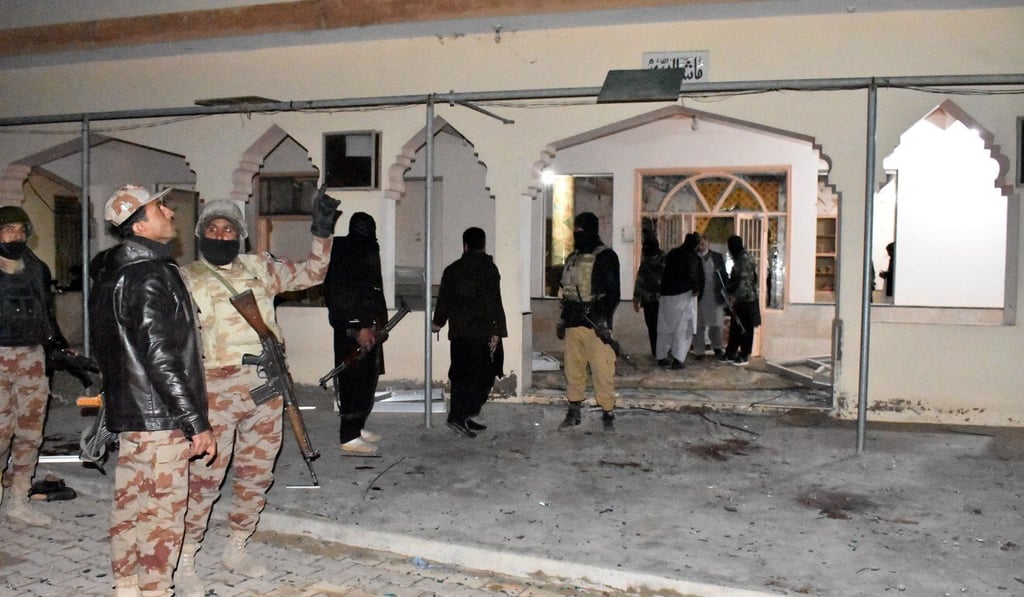
In the third such attack since May, militant separatists opened fire on a patrolling paramilitary convoy in Panjgur district on Tuesday, killing three soldiers and wounding eight others, including an army colonel, the military said.
Militant ethnic Baloch factions have also recently expanded their range of operations to adjoining Sindh province and its port city of Karachi.
Beijing’s stakes in Sindh are as high as they are in Balochistan. Its state-owned enterprises run container terminals at Karachi port, Pakistan’s busiest, and are invested in nuclear and coal power projects established both under the umbrella of the US$60 billion China-Pakistan Economic Corridor (CPEC) and in partnership with local corporations.
On June 29, four militants were killed by police commandos when they tried to shoot their way into the Karachi Stock Exchange, which is 40 per cent owned by a consortium of three Chinese bourses.
“Baloch groups have not only intensified their attacks but also expanded the outreach of their terrorist violence beyond Balochistan, but it is hard to predict whether this trend will persist,” said Mohammad Amir Rana, director of the Pakistan Institute for Peace Studies, an Islamabad-based think tank.
He said Baloch insurgent factions had historically preferred to conduct low-intensity attacks, while their high-intensity attacks had tended to come in waves lasting “only for a few weeks”.