Advertisement
South Korea
This Week in AsiaPolitics

South Korea’s plans to reform National Intelligence Service highlight ideological divisions

  • President Moon Jae-in’s Democratic Party wants to overhaul the NIS, which has faced scandals like forced confessions and plotting to rig the 2012 election
  • But opponents say a spy agency shake-up would put national security at risk amid ongoing threats from Kim Jong-un’s North Korea

Reading Time:4 minutes
Why you can trust SCMP
South Korean President Moon Jae-in, who campaigned on reforming the NIS, said it will never be tainted by politics again. Photo: DPA
John Power
During the height of South Korea’s Cold War-era tensions with North Korea, Seoul’s intelligence agents extracted forced confessions and fabricated evidence to frame ordinary citizens as spies for its rival. More recently, the powerful spy agency plotted to rig the 2012 presidential election in favour of the conservative candidate, who advocated more hawkish policies toward Pyongyang.

After decades of weathering scandals related to the abuse of its authority, the National Intelligence Service (NIS) now faces the most dramatic shake-up in decades, amid a push for reform that has highlighted deep ideological divisions in the US-allied country over how to manage security threats from its unpredictable neighbour to the North.

Under reforms touted by President Moon Jae-in’s centre-left Democratic Party, the NIS would be barred from carrying out surveillance and investigating “anti-state activities” in South Korea, with the agency’s role constrained to intelligence gathering overseas, including information about the secretive North. The police would take over responsibility for probing alleged North Korean spies at home.
Advertisement

The spy agency’s operations and budget would also come under greater oversight by the legislature and the Board of Audit and Inspection, while agents who illegally meddled in domestic politics would face tougher penalties.
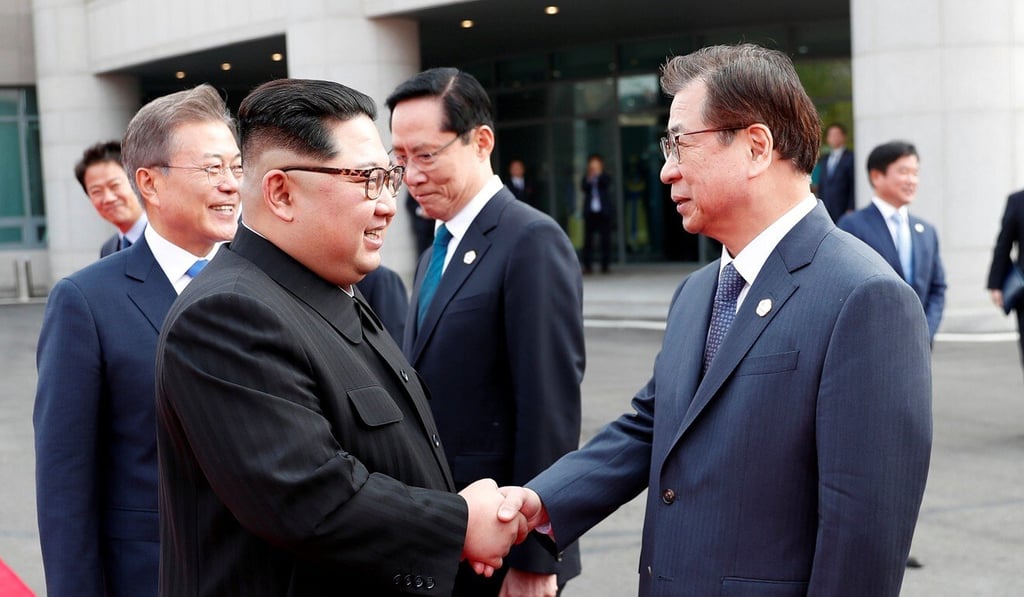
North Korean leader Kim Jong-un shakes hands with Suh-hoon, at the time the head of South Korea's National Intelligence Service, in 2018. Photo: Reuters
Advertisement

The Democratic Party, which commands a supermajority in the National Assembly following a thumping victory in legislative elections in April, introduced a related reform bill earlier this month, following unsuccessful efforts to overhaul the spy agency during previous parliamentary sessions.

Advertisement
Select Voice
Choose your listening speed
Get through articles 2x faster
1.25x
250 WPM
Slow
Average
Fast
1.25x