As New Zealand votes, Jacinda Ardern’s Labour government walks fine line on China ties
- China has barely registered a mention as a major issue before the October 17 election – a reflection of how harmonious relations with Beijing have been
- This less-confrontational approach contrasts with that of Wellington’s Five Eyes intelligence partners, whose contentious dealings with China have led to frayed ties
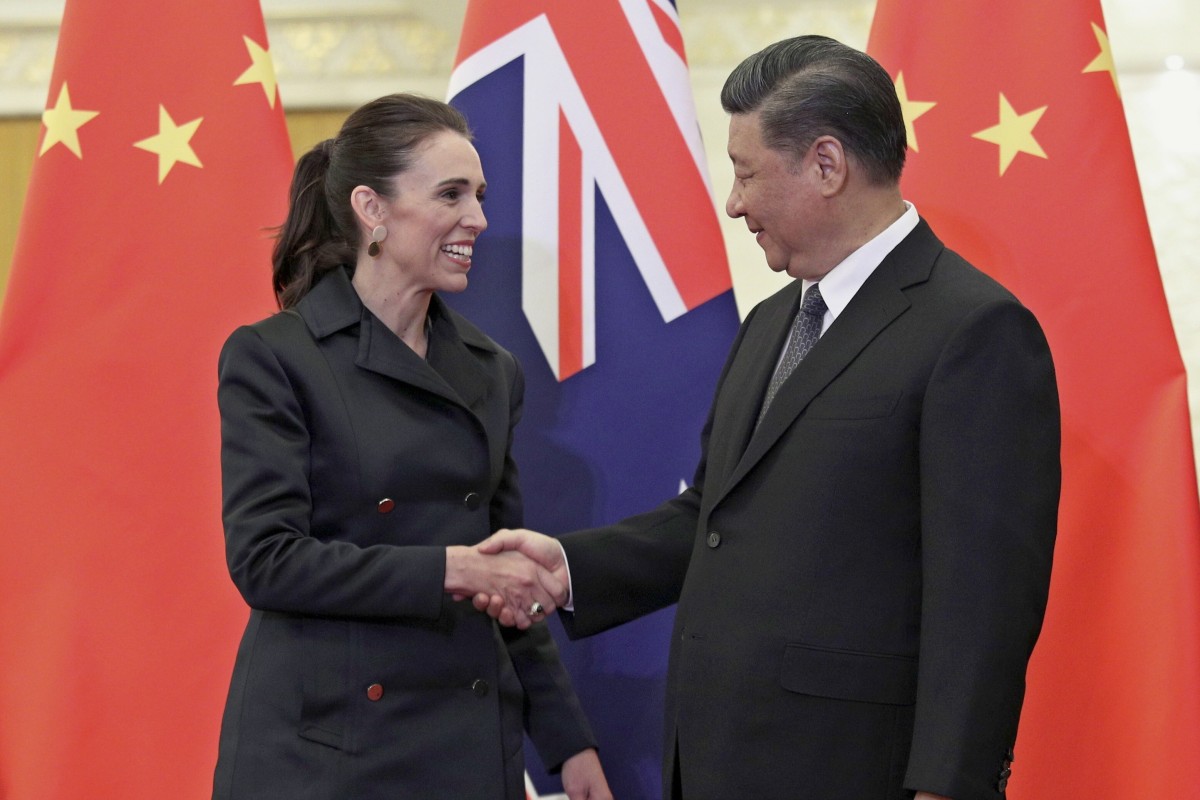
On paper, China should loom large in New Zealand’s parliamentary elections later this month.

01:01
New Zealand Prime Minister Jacinda Ardern casts her vote ahead of general elections
But in an election that is widely expected to return Jacinda Ardern as prime minister on October 17, China has barely registered a mention – a reflection, in part, of how harmonious Wellington has managed to keep relations with Beijing, compared with its anglophone peers.
While Australia and New Zealand’s other Five Eyes alliance partners – the Britain, Canada and the United States – wrestle with their most acrimonious relations with China in decades, New Zealand is walking a fine line that has allowed it to largely avoid blowback from its biggest trading partner, even while upholding many of the same policies and positions as its Western allies.
“New Zealand is more diplomatic and probably makes much better use of behind-closed-door channels to convey its displeasure over matters in dispute,” said Alexander Gillespie, a professor of international law at the University of Waikato. “I would not say New Zealand is afraid, but I would say it is aware of how much is at risk if it pushes too hard.”
Despite often emulating her Western counterparts on substantive policy, Ardern, whose centre-left Labour Party has been leading the rival National Party by double digits for weeks, has taken a distinct, less confrontational tack towards Beijing.