Advertisement
A year after New Delhi’s controversial citizenship law, India and Bangladesh look to refresh ties
- Analysts were impressed by how the virtual summit between prime ministers Modi and Hasina sidestepped past irritants in the bilateral relationship
- Trade and cultural agreements featured prominently on the agenda, 12 months after Hasina slammed a law fast-tracking Indian citizenship for only non-Muslims
4-MIN READ4-MIN

A year after political ties between India and Bangladesh took a plunge following the passage of New Delhi’s controversial citizenship law, the neighbours took steps towards refreshing relations with a meeting between their leaders.
The virtual summit between Indian Prime Minister Narendra Modi and his Bangladeshi counterpart Sheikh Hasina saw the signing of seven agreements in areas such as agriculture and textiles, a slew of statements over economic and cultural measures as well as Modi’s announcement he would visit Dhaka next March.
But what caught the eye of most analysts was how some of the irritants in the bilateral relationship were successfully sidestepped.
Advertisement
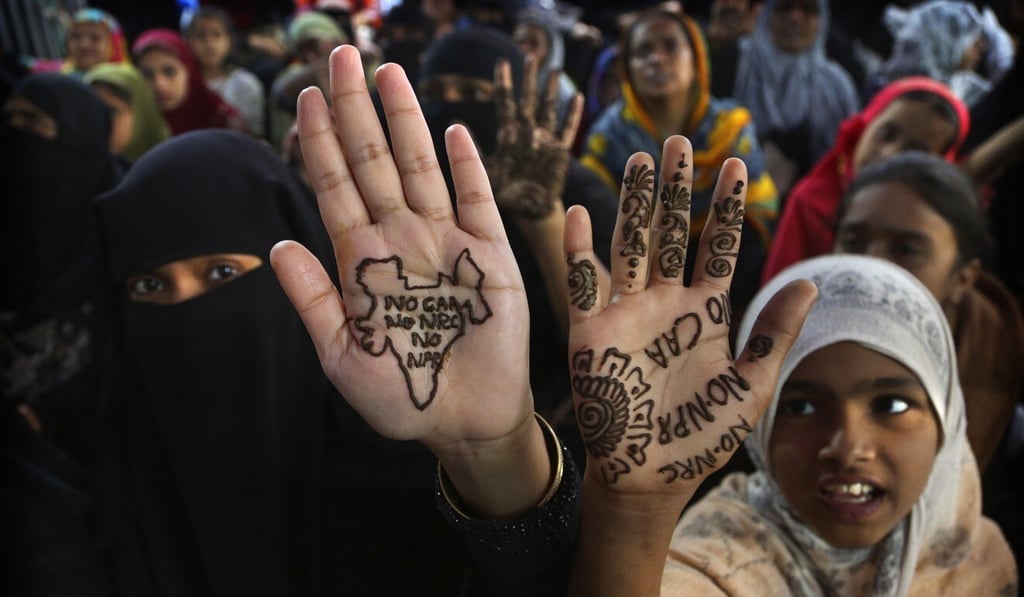
In December last year, Dhaka reacted sharply to the Indian government’s move to amend its citizenship laws to fast track refugee status for only non-Muslims from Bangladesh, Pakistan and Afghanistan.
Advertisement
Speaking to press at the time, Hasina said she did not understand the rationale behind the amendment and said it “was not necessary”, while her foreign minister A.K. Abdul Momen said the move could weaken India’s secular character.
Advertisement
Select Voice
Select Speed
1.00x