Advertisement
India-China border dispute: as both sides withdraw troops, did New Delhi get a poor deal?
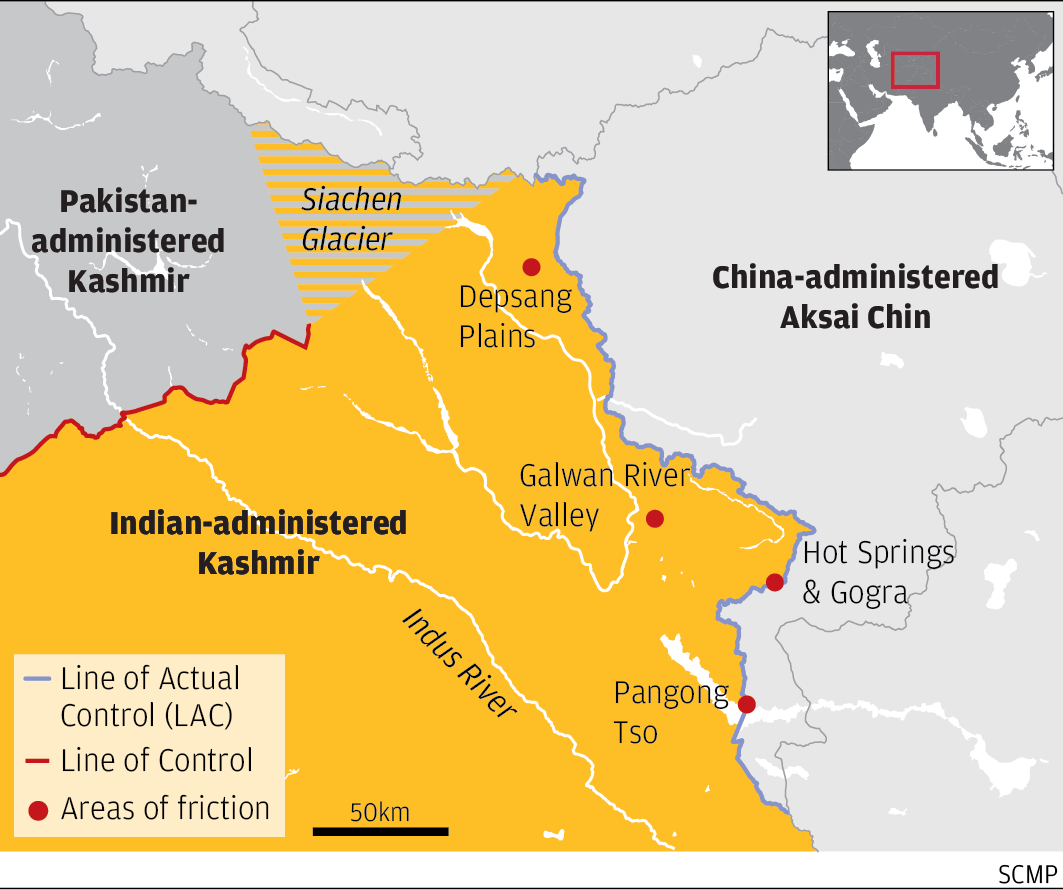
- As tanks and soldiers turn away from Pangong Tso, some analysts are questioning the ‘piecemeal’ disengagement that does not cover areas of friction such as Hot Springs and Gogra
- Of particular concern is the Depsang Plains, a strategically located area that borders Pakistan and China and is close to a vital all-weather highway
4-MIN READ4-MIN
68

After nine tense months, India and China’s border stand-off might now be inching towards a resolution. Since last week, both sides have agreed to withdraw thousands of their troops from the Pangong Tso glacial lake high in the Himalayas.
Footage supplied by the Indian government shows Chinese tanks turning away from the lake’s north bank and heading towards their base camps, followed by Indian tanks doing the same.
These images have flooded television screens and social media timelines, with an Indian official on Monday telling local media the disengagement process is set to be complete as soon as the end of this week, although sources had earlier said it could take weeks or months. On Indian news channels, many are hailing this as a victory for the administration of Prime Minister Narendra Modi.
Advertisement
But within some analyst circles in New Delhi, scepticism and criticism are prevailing rather than collective relief at a conflict averted between two nuclear-armed neighbours.
At the heart of their disquiet is India’s acceptance of what experts say is a “piecemeal” disengagement process, rather than holding the line at a “comprehensive and complete” withdrawal of troops “in all friction areas” as per statements issued on the border dispute between July and October last year by the country’s Ministry of External Affairs.
Advertisement
Advertisement
Select Voice
Select Speed
1.00x