Advertisement
Japan
This Week in AsiaPolitics

Tokyo slams Beijing’s revamp of electoral system in Hong Kong, with Japanese firms wary of legislation changes

  • While there are few direct options for pressure on Beijing, analysts say Japan could encourage companies to relocate their operations from mainland China
  • Japanese media has also criticised the new laws, with one editorial saying polls held under Tokyo’s WWII military dictatorship were more democratic than elections Beijing is imposing upon the city

Reading Time:4 minutes
Why you can trust SCMP
69
China’s national flag is displayed at a stall in Hong Kong where residents can sign in favour of changes to the local electoral system. Photo: AFP
Julian Ryall
Japan “cannot overlook” the resolution passed by China’s National People’s Congress on Thursday to change the electoral system in Hong Kong, with Tokyo describing new laws requiring all political candidates to be “patriots” as a major setback to the city’s autonomy.

“The decision this time will further undermine the confidence in the ‘one country, two systems’ framework, as provided for in the Hong Kong Basic Law and the 1984 Sino-British Joint Declaration,” Japan’s foreign ministry said in a Friday statement.

The ministry said Japan’s concerns were growing due to the recent arrest and prosecution of a number of opposition politicians and activists. It also called on Beijing to hold elections in Hong Kong that were open to candidates “representing a variety of political opinions”.

There appear to few direct steps Tokyo can take to more forcefully pressure Beijing to change tack, just as when the central government passed the national security law for Hong Kong last year – but analysts say Japan is not completely toothless, particularly if it works in close concert with other concerned players.
Advertisement

“From the [Japanese] government, I expect similar comments to last year after the security law was passed, talking about the importance of personal liberties and freedoms and how curtailing those freedoms will impact the city’s commercial activities and, as a consequence, harm China’s interests,” said Go Ito, a professor of international relations at Tokyo’s Meiji University. “But it is not possible to impose direct sanctions on China, so Tokyo is limited in what it can do.”

One possible card that Tokyo might play could be encouraging or incentivising companies to shut down manufacturing facilities in mainland China and transfer them to countries in Southeast Asia, or even to repatriate them to Japan.
Advertisement
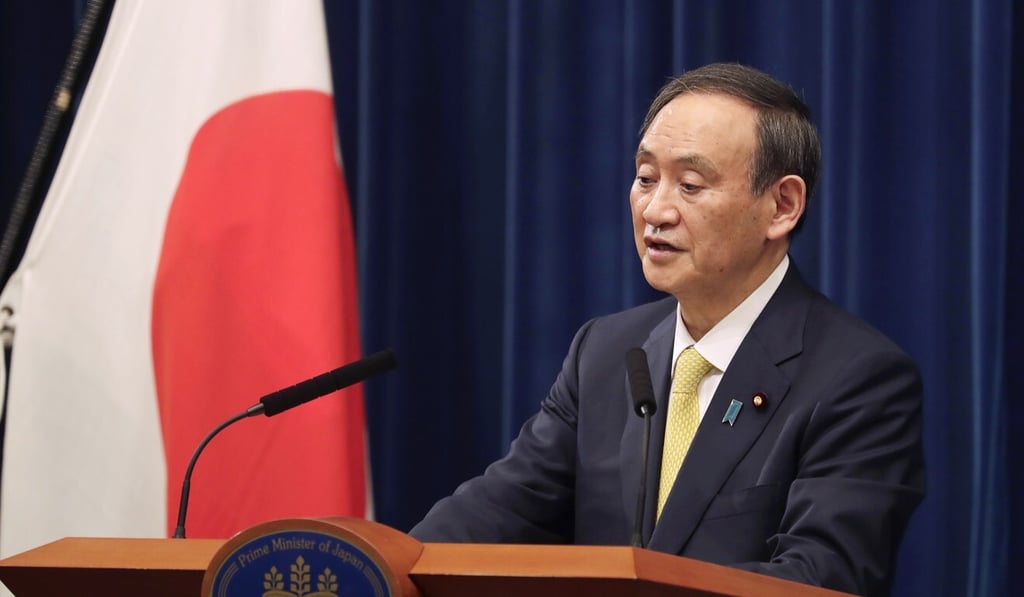
Japanese Prime Minister Yoshihide Suga is set to meet US President Joe Biden in Washington next month. Photo: AP
Advertisement
Select Voice
Choose your listening speed
Get through articles 2x faster
1.25x
250 WPM
Slow
Average
Fast
1.25x