China-India border dispute: was New Delhi’s pull-out from Pangong Tso lake a mistake?
- Two months after the first step towards full withdrawal of troops at the Line of Actual Control, troops are still locked in confrontation in at least two areas
- There is a growing belief that India withdrew too early and New Delhi has remained silent on Beijing’s offer for help with its Covid-19 surge

Such statements were made after senior military commanders from both countries met on April 9 to discuss the disengagement process at Hot Springs and Gogra – located along their undemarcated border known as the Line of Actual Control between India’s Ladakh region and the Chinese-administered Aksai Chin.
As part of the early-February agreement for both sides to withdraw troops, tanks and artillery from the glacial lake, Indian forces had given up its positions on the strategically-located Kailash range in the region.
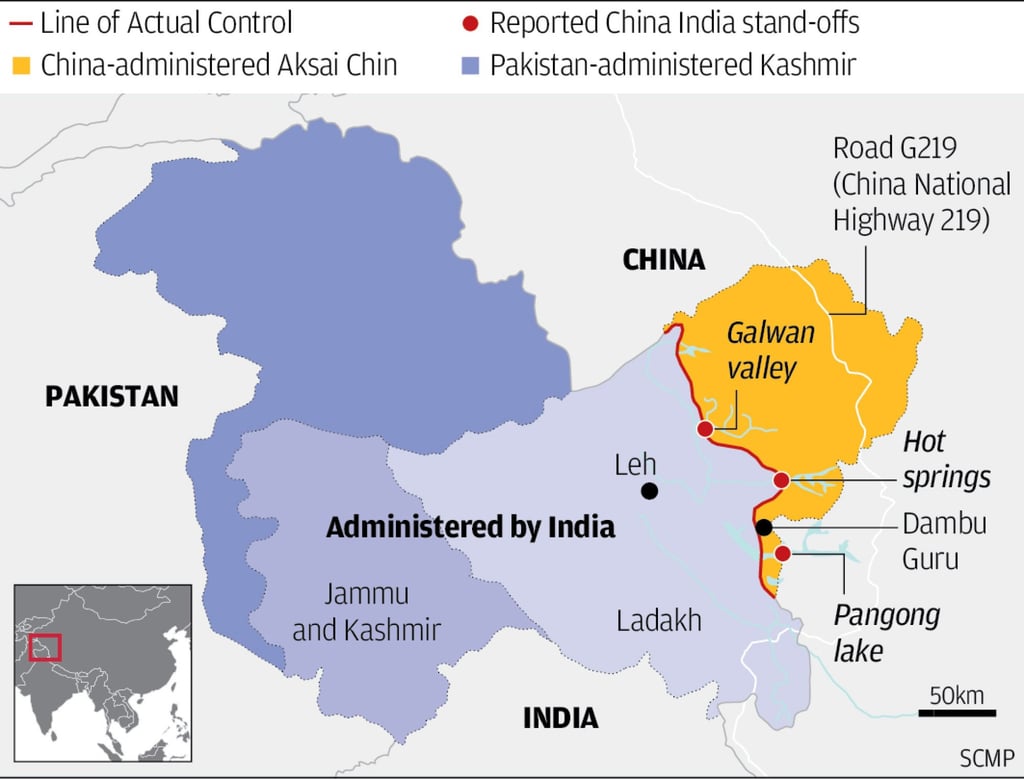
“It appears India was in a hurry to declare ‘victory’ by making China ‘withdraw’ from the finger areas [of Pangong Tso],” said BR Deepak, a professor of Chinese and China Studies at New Delhi’s Jawaharlal Nehru University.
According to Deepak, Beijing’s goal “was to vacate India from the Kailash range” to wrest back the tactical advantage that New Delhi had, but it did so by “changing the status quo” on the northern banks of the Pangong Tso.