Could the colour pink swing the Philippine presidential election for Leni Robredo?
- VP Robredo’s ‘masterstroke’ choice of campaign colour – a departure from the traditional pro-democracy yellow – has mobilised supporters across the country
- Pink is ‘a metaphor of resistance against toxic masculinity’ – and may help her beating her chief rival, Ferdinand Marcos Jnr, son of the brutal dictator

What seemed like an innocuous palette choice has turned out to be a masterstroke, galvanising and mobilising thousands of supporters, and creating a wave of fuchsia that’s sweeping the country.
Over the past few weeks, Robredo’s rallies and provincial sorties have been marked by massed crowds dressed in pink, wearing pink masks, waving pink signs and flags, and riding pink vehicles.
Companies and schools have indicated their political choices by bathing their buildings in soft rosy coloured lighting. Even lugaw, the yellow rice porridge associated with Robredo – currently the vice-president – has turned up in a pink version.
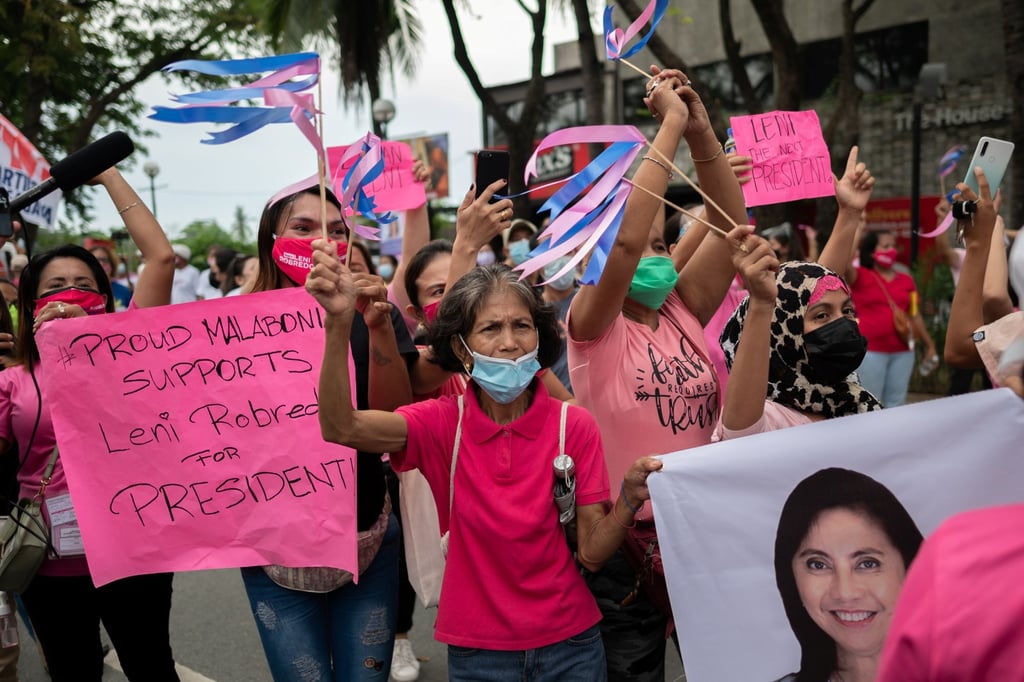
A new word has even entered the political lexicon: the Tagalog word for ally, kakampi, has become kakampink.
On November 21, megastar television host Kris Aquino said on Instagram she would be supporting one presidential candidate but didn’t say who. However, she told her millions of fans: “You all know what my favourite colour is: pink.”
When her campaign started, Robredo was the underdog among the major candidates, but now one opinion survey – by the Social Weather Stations – puts her as second after Ferdinand Marcos Jnr, son of the late brutal dictator who ruled the country under martial law in the 1970s. The colour may well have played a role in energising her support.
Robredo’s spokesperson, Barry Gutierrez, said the campaign had picked pink as its signature colour after being urged to do so by volunteer groups.
When she announced her decision to run, Robredo wore a blue dress with a pink ribbon.
It was a way of moving away from a colour that has acquired too much baggage. Yellow – dilaw – has long been the traditional colour of pro-democracy groups in the Philippines, and in her successful campaign for the vice-presidency in 2016, Robredo ran as a dilawan.
However, yellow has lost its potency of late, having been appropriated by so many parties that it has become easy for critics to mock, and dilawan is now a derogatory term.