-
Advertisement
China-India relations
This Week in AsiaPolitics

China-India relations: Does Wang Yi’s visit offer hope for better ties, as New Delhi faces pressure on Russia-Ukraine war?

  • Indian observers are split over the outcome of the Chinese foreign minister’s visit, where there was no proposal to resolve the bilateral border stand-off
  • With Beijing seeing an alignment with New Delhi on Russia and the BRICS summit coming up, some see a glimmer of hope for de-escalation

Reading Time:4 minutes
Why you can trust SCMP
11
Indian foreign minister S. Jaishankar and his Chinese counterpart Wang Yi greet the media before their meeting in New Delhi, on Friday. Photo: Twitter/@DrSJaishankar via AP
Kunal Purohitin Mumbai
Days after Chinese Foreign Minister Wang Yi visited India as part of his whistle-stop tour across South Asia, his day-long trip has left many in New Delhi scratching their heads, with observers divided over its purpose and outcome.

Wang’s trip was the first high-level bilateral visit between the two countries since December 2019. With relations souring since a deadly clash along their shared Himalayan border in June 2020 – the worst military conflict between the two in decades – there were hopes of a diplomatic breakthrough. Military commanders from both sides have met 15 times but made only incremental progress in easing the stand-off, with troops pulled back from three friction points.

Yet Wang’s meetings with India’s national security adviser Ajit Doval and foreign minister S. Jaishankar did not yield any agreement on the issue. Wang suggested a “three point approach” to improve ties, according to a Chinese foreign ministry readout. But the Indian foreign ministry did not mention the proposal nor suggest in its readout that there was a road map towards resolution.
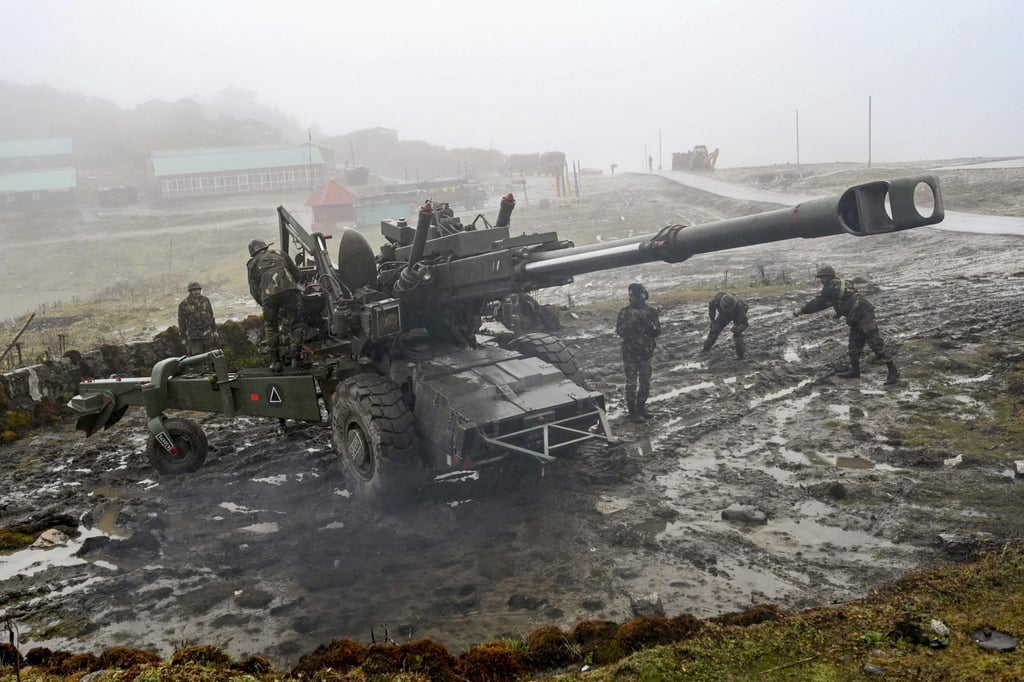
Indian soldiers position an anti-aircraft gun in Arunachal Pradesh state last year near the Line of Actual Control with neighbouring China. Photo: AFP
Wang told Jaishankar that “the boundary issue”, referring to the stand-off, “should be put in proper place in bilateral relations” and that both countries should not allow it to “define or even affect” the overall ties. Jaishankar, speaking to the media after the meeting, said that ties had been “disturbed as a result of Chinese actions” and called the India-China relationship “not normal”, adding that improving ties would “obviously require a restoration of peace and tranquillity” at the border.
Advertisement
The visit was cloaked in intrigue and subtle hostility from the beginning. Neither side announced it, leaving reporters in Delhi to track incoming flights for Wang’s arrival. When he did arrive it was under a cloud, after comments he made in Pakistan about China’s support for the “freedom struggles” of Kashmir.
There were no senior officials or fanfare to greet him, and no sooner had he left than Indian media, acting on a tip-off from government sources, reported how Wang’s request for a meeting with Prime Minister Narendra Modi had been denied.

Many within Delhi’s community of strategic and geopolitical thinkers are split over the visit’s outcome.

Advertisement
Select Voice
Choose your listening speed
Get through articles 2x faster
1.25x
250 WPM
Slow
Average
Fast
1.25x