-
Advertisement
Japan
This Week in AsiaPolitics

50 years after Okinawa’s return to Japan from post-World War II US occupation, locals have no appetite to celebrate

  • Locals say the US military presence has been the cause of numerous incidents of crime, environmental pollution and damage to the people of Okinawa
  • 80 years since the end of World War II, locals say its time for the US to leave, stop work of a new base, and reduce the amount of American bases in Okinawa
Reading Time:4 minutes
Why you can trust SCMP
49
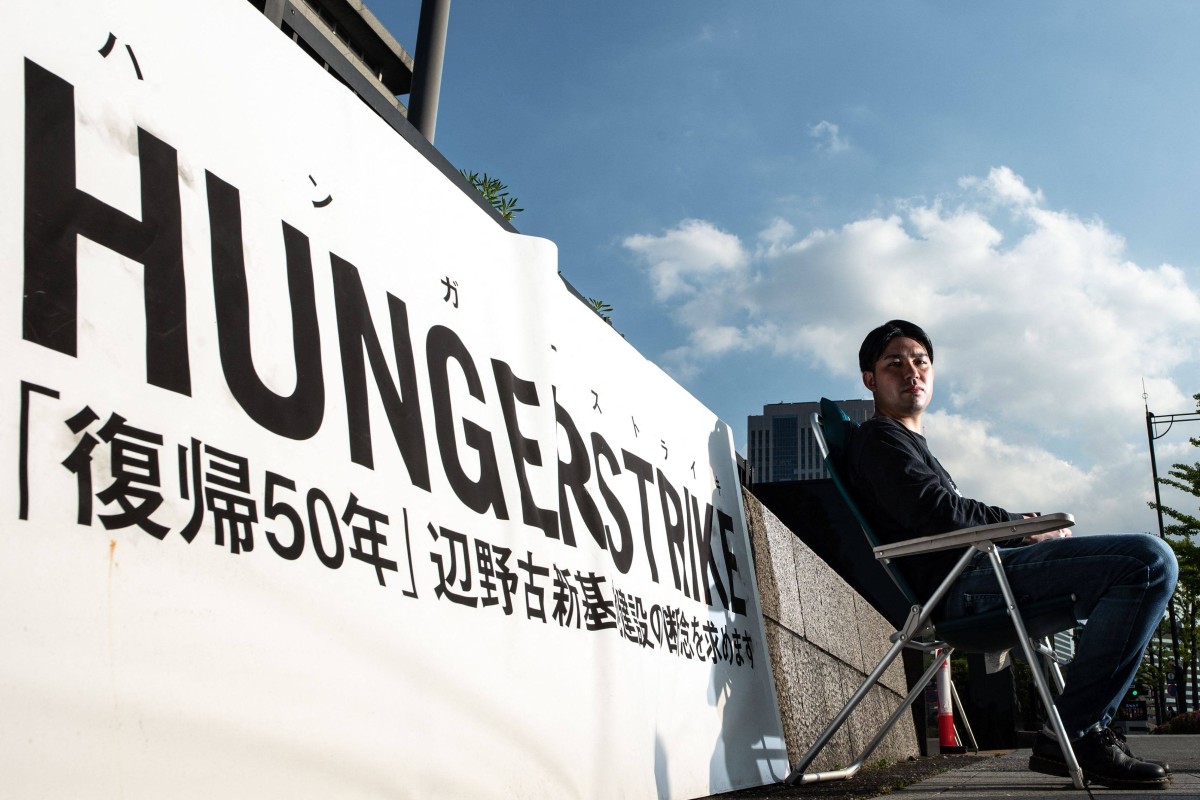
Anti-US military base activist and native Okinawan Jinshiro Motoyama sits during the third day of his hunger strike outside the Ministry of Land, Infrastructure, Transport and Tourism in Tokyo on Wednesday, ahead of the 50th anniversary of the US return of Okinawa to Japan. AFP: Photo
Julian Ryall
As preparations are made in Okinawa to mark Sunday’s 50th anniversary of the reversion of the prefecture to Japanese rule, there are plenty of islanders who say they have no reason to celebrate.
They believe official events to mark the 1972 handover from the US military of Japan’s most southerly prefecture should be a time to reflect on the damage to their culture over the last five decades, the loss of their language and heritage, the environmental degradation of their lands and what they perceive as the ongoing colonial occupation of the islands.
Much of the simmering resentment can be traced back to the large US military presence across Okinawa, which accounts for just 0.6 per cent of Japan’s total land mass, but is home to 70.3 per cent of the US military facilities in the entire country. That may be an accident of geography, as the Allies invaded the islands in the closing days of World War II and opted to remain after the conflict was over as a bulwark against the perceived threats posed by Cold War rivals in the Asia-Pacific region, but nearly 80 years after the end of the war, many locals say it is time for the Americans to go.

Jinshiro Motoyama is so incensed at how the voices of Okinawans have simply been ignored by political leaders in Tokyo and Washington that he began a hunger strike outside the Diet building in central Tokyo on May 9.

Advertisement

Motoyama has countless concerns about the plight of Okinawans but his one-man protest has one initial demand; a halt to the construction of a new military base on reclaimed land off the community of Henoko, in the north-east of the prefecture, to take over the functions of the US Marine Corps’ Futenma Air Station.

“My basic demand is the immediate termination of work on the new base at Henoko and a reduction in the total number of US bases in Okinawa,” said 30-year-old Motoyama, who is originally from the city of Ginowan in the prefecture but is presently completing a PhD at Hitotsubashi University in Tokyo.
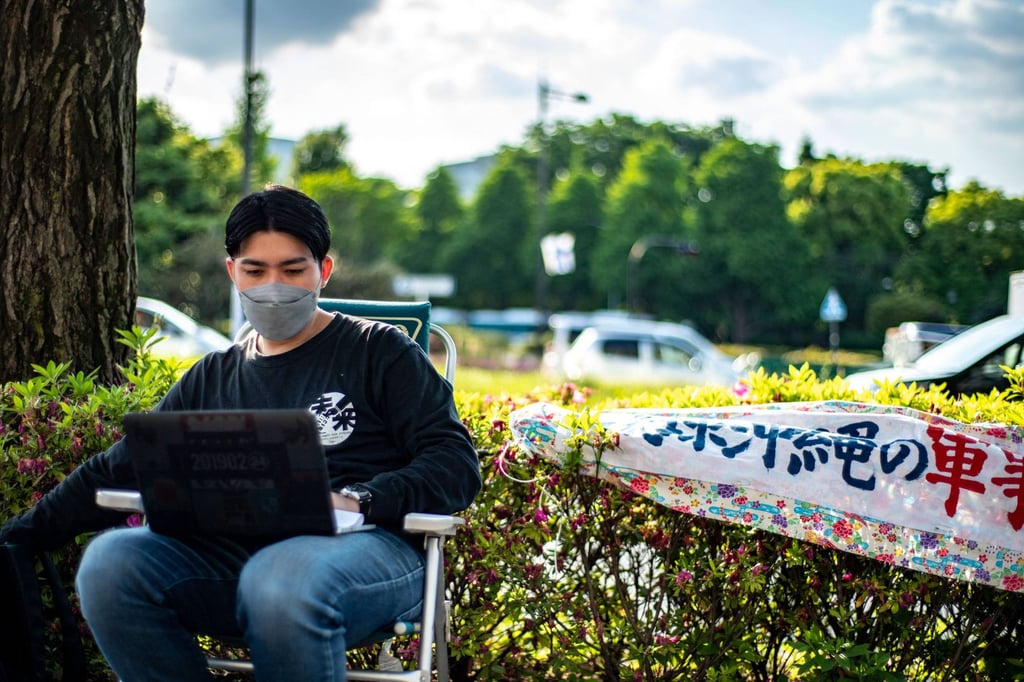
Anti-US military base activist and native Okinawan Jinshiro Motoyama sits during the third day of his hunger strike outside the Ministry of Land, Infrastructure, Transport and Tourism in Tokyo on Wednesday, ahead of the 50th anniversary of the US return of Okinawa to Japan on May 15. Photo: AFP

“May 15 might mark the anniversary of the return of Okinawa to Japanese control, but local people do not see that as a reason to celebrate,” he told The Post. “The US military presence has been the cause of numerous incidents of crime, environmental pollution and damage to the people of Okinawa, yet the governments of Japan and the US have made no efforts to improve the situation.”

Advertisement
Advertisement
Select Voice
Select Speed
1.00x