From Singapore to Malaysia and Philippines, Asean’s interest in Biden’s IPEF a signal to China it wants better ‘balance of power’ in region
- After Trump withdrew the US from the TPP, Washington’s economic disengagement from the region had enabled China to ‘grow its economic footprint in Asia unhindered’
- The Indo-Pacific Economic Framework is being viewed by the region as a chance for the US to ‘regain a foothold in the region’, both economically and politically

The move by seven Asean states to sign up for Washington’s new trade pact, even as few details about the deal are known, is not only a signal of support for US re-engagement with the region but a bid to better ensure the balance of power in the neighbourhood, analysts say.
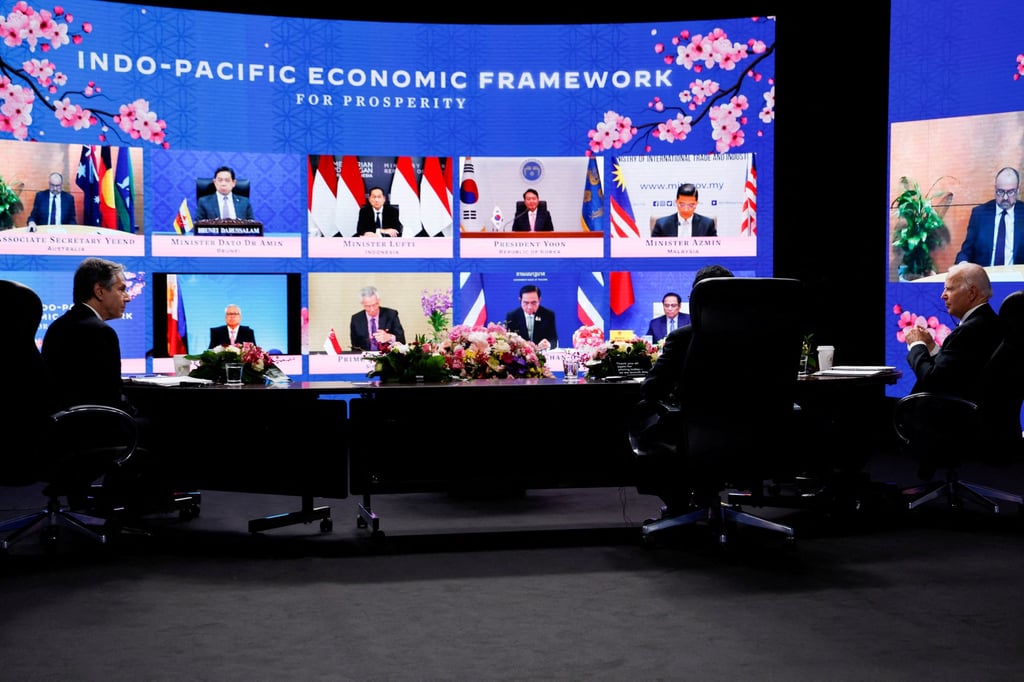
Last week, US President Joe Biden launched the Indo-Pacific Economic Framework for Prosperity (IPEF), a pact that covers supply chains, digital trade, clean energy and anti-corruption efforts.
Twelve economies in the Asia-Pacific signed up at its launch, with the participating countries saying in a joint statement that the IPEF would help prepare them for the future following disruptions caused by the pandemic and Russia’s invasion of Ukraine.
Of Asean’s 10 members, Brunei, Indonesia, Malaysia, the Philippines, Singapore, Thailand and Vietnam came on board. The others who joined were Australia, India, Japan, South Korea and New Zealand, with all participating economies accounting for 40 per cent of the world’s GDP, according to the White House.
Jayant Menon, a senior fellow at the ISEAS-Yusof Ishak Institute in Singapore, said many Association of Southeast Asian Nations members had signed on even though the proposed deal was “less than what they might have hoped for”.