Advertisement
Can Sri Lanka’s Ranil Wickremesinghe steer the country out of its crisis?
- The interim president has to work quickly to restore stability and seal a rescue deal with the IMF as the country runs out of cash and demonstrations continue
- But while a critic says Wickremesinghe will practise ‘the same politics’ of the ousted Rajapaksa regime, some protesters are choosing to wait and see what his next moves are
4-MIN READ4-MIN
1

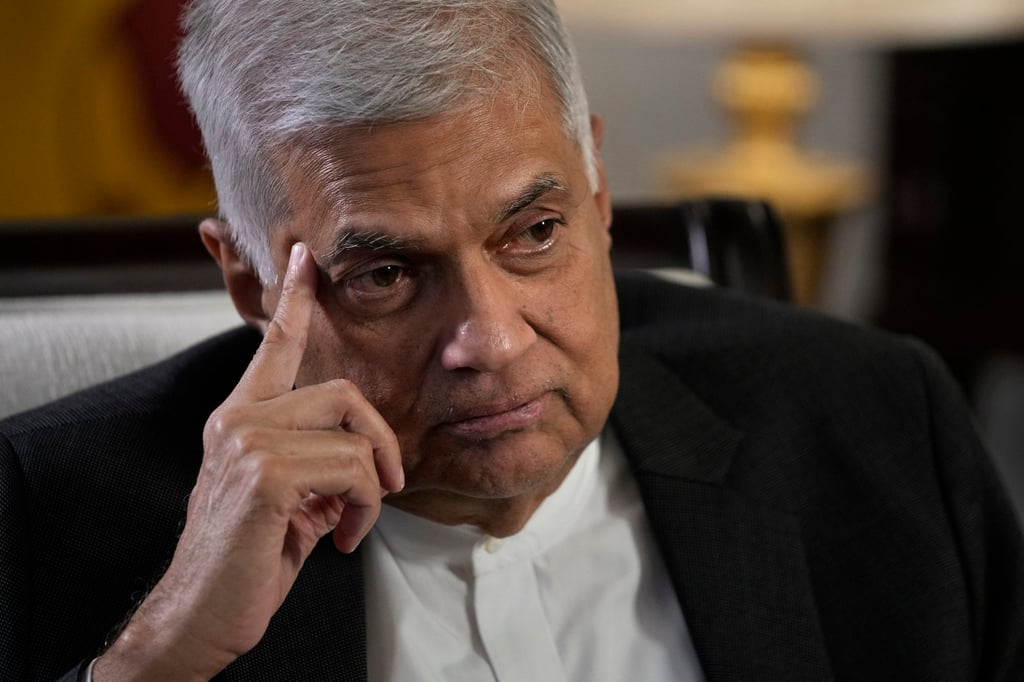
Ranil Wickremesinghe, a Sri Lankan political veteran who is currently serving as acting president after the toppling of the previous leader, will remain in that position for the longer term after winning a secret vote among lawmakers on Wednesday.
Earlier, protesters who forced the resignation of ex-president Gotabaya Rajapaksa warned that demonstrations would continue if Wickremesinghe was selected, owing to widespread perceptions that he has close links with the ousted leader.
Wednesday’s vote in favour of Wickremesinghe means he can continue as interim president until 2024, serving the remainder of Rajapaksa’s term. He took over as acting president after Rajapaksa fled the country last week.
Advertisement
Wickremesinghe, a six-time prime minister described by commentators as one of Sri Lanka’s most wily political operators, said his victory was an “honour and a privilege”.
Ahilan Kadirgamar, a political economist from the University of Jaffna, said the vote outcome signified a continuation “of the same politics of the Rajapaksa regime”.
Advertisement
Advertisement
Select Voice
Select Speed
1.00x