Advertisement
Belt and Road Initiative
This Week in AsiaPolitics

Southeast Asian borrowers could ‘feel pressure’ over belt and road debts to China amid IMF scrutiny

  • Revelation of debt details could attract criticism, result in project delays in countries such as Laos, Malaysia and Indonesia, analysts note
  • IMF scrutiny could result in greater caution in belt and road projects among Southeast Asian borrowers, given ‘austere’ regional economic forecast in short term

5-MIN READ5-MIN
27
A bullet train runs through a bridge on the China-Laos Railway in southwest China’s Yunnan Province. Photo: Xinhua
Maria Siow
China’s more cautious approach towards its infrastructure projects under the Belt and Road Initiative in Southeast Asia could dissuade borrowers from taking in excessive loans over fears of the difficulty of securing international help in the event of default, analysts have said.

The growing conservatism around such projects – which are now evolving towards greater economic and environmental sustainability – follows new transparency demands from global financial institutions aimed at preventing sovereign debt distress.

Organisations such as the International Monetary Fund (IMF) and World Bank have been pushing for tougher debt monitoring and more sustainability due to rising global interest rates and growing concerns about debt risk in developing countries, which has become more pressing following the economic shock of the Covid-19 pandemic.

Lucio Blanco Pitlo III, a research fellow at the Asia-Pacific Pathways to Progress Foundation, said the increased IMF scrutiny could aid disclosure requirements and “give IMF deep insights into how Chinese lending operates”.

Advertisement

This could help in devising countermeasures or needed reforms, especially with China’s rise as a global credit powerhouse, he added.

According to a World Bank report last year, China has emerged as the largest to low- and middle-income countries where their combined debt to China stood at US$170 billion at the end of 2020, more than triple the level in 2011. Much of the funding is used for large infrastructure development projects.
Advertisement

“China compensated its late entry into the credit market by taking in more risk, funding projects that most established lenders will not,” Pitlo said, adding that economic contraction due to the pandemic, inflation and energy and food crises linked to the war in Ukraine “exposed the perils of aggressive lending”.
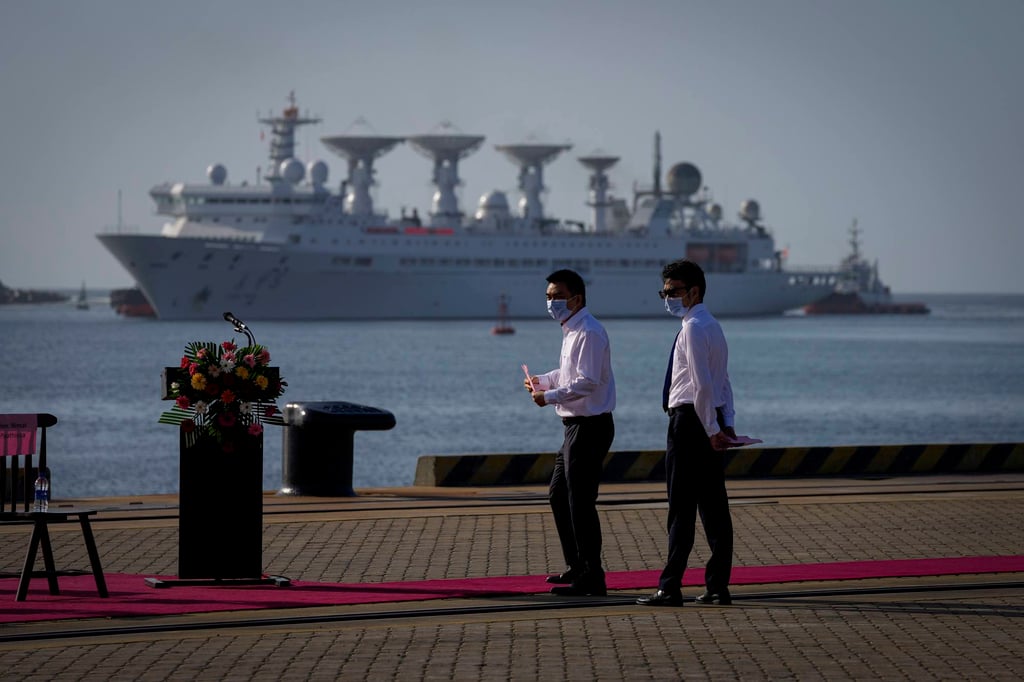
Chinese expatriates in Hambantota International Port, Sri Lanka in August 2022. Photo: AP
Advertisement
Select Voice
Select Speed
1.00x