Advertisement
Laos’ fast train to China brings connection at a cost, with big promises but uneven progress
- ‘Special economic zones’ are flourishing in a sign of growing Chinese influence in Laos, as people await the reopening of the border to boost income and investment
- But amid signs of progress, thousands of people have been displaced and forests have been cleared to make way for a new train line
6-MIN READ6-MIN
25

Aidan Jonesin Laos
Under a rail bridge that cuts across his languid northern Laos town, Boonxay takes a beat to weigh up what connection means to a country isolated for decades.
“When I look at the railway, I see prosperity,” the father of five eventually says. “Do you know, some of the older people here have never even been to the capital in their whole life? Now for the first time they are travelling.”
The US$6 billion track hooks the fate of Laos, one of Asia’s poorest countries, onto China, the world’s second-biggest economy.
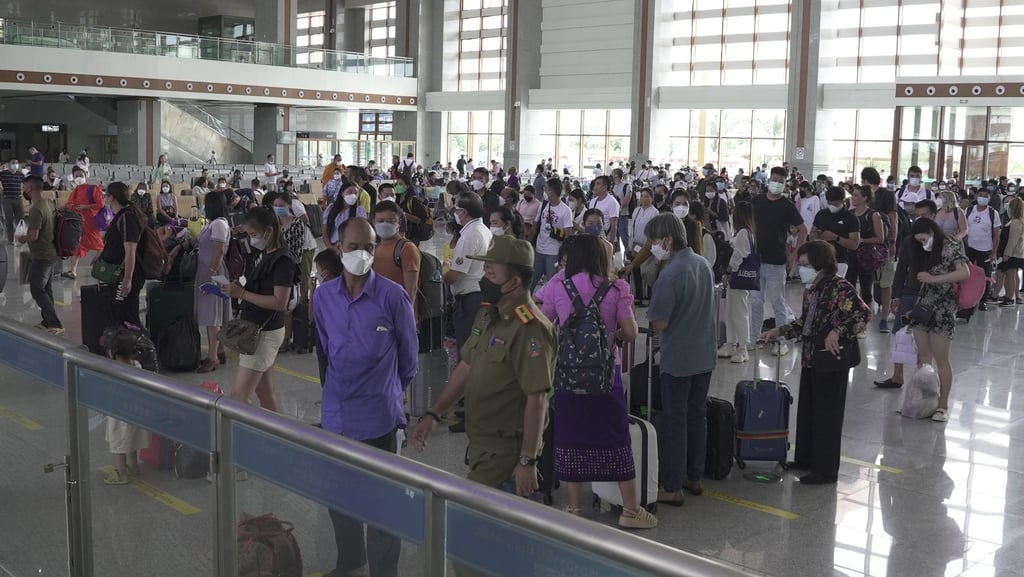
It is integral to the plans of Laos’ communist leadership to plug Southeast Asia’s only landlocked country into the global economy and to fast-track its seven million people away from poverty.
Advertisement
For China, the 422km line through Laos’ rugged neck of land is the first step towards an ambitious high-speed railway lassoing the Mekong – and eventually the Malay Peninsula – into the orbit of Beijing’s belt and road plan.
But the journey through Laos and the progress appears uneven.
Advertisement
Land prices – and farmers’ wages – are rising, as “special economic zones” along the railway begin to take shape and Chinese investors inject energy, and a new tier of economic hierarchy, into remote, forgotten towns.
Advertisement
Select Voice
Select Speed
1.00x