Advertisement
Advertisement
Indonesia
Get more with myNEWS
A personalised news feed of stories that matter to you
Learn more
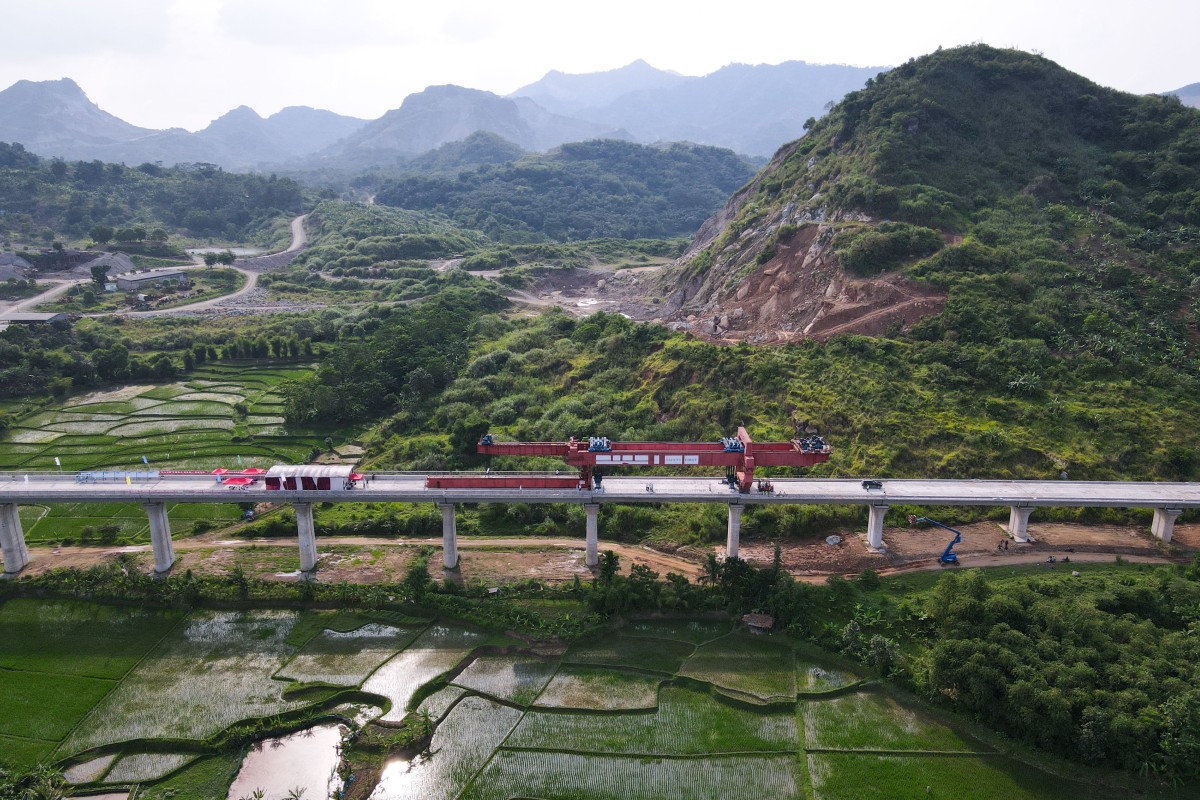
One of the construction sites on the Jakarta-Bandung High-Speed Railway in Purwakarta, Indonesia. The line is slated to open in June 2023. Photo: Xinhua

Chinese worker deaths on Indonesia rail site raise fresh safety concerns of belt and road project

  • Latest safety lapse to hit construction of Jakarta-Bandung high-speed railway, which has suffered delays, massive cost overruns and series of accidents
  • Incident under investigation but it is unclear whether construction on the line will be suspended pending the probe
Indonesia
The deaths of two Chinese workers during construction of the Jakarta-Bandung high-speed railway have revived worker safety concerns over a track which China and Indonesia insist is primed to drive growth across Southeast Asia’s largest economy despite delays, massive cost overruns and a litany of accidents.

The line, slated for opening in June 2023, will slash the travel time between the capital and the fourth-largest city Bandung, West Java, to 40 minutes.

It is the centrepiece in China’s Belt and Road Initiative strategy for Indonesia, and a test was witnessed by Chinese President Xi Jinping and his Indonesian counterpart Joko Widodo on the sidelines of last month’s G20 summit.

But questions over the safety standards on the line reared up once more on Sunday after Indonesian police said a derailment had killed two Chinese workers and injured four others.
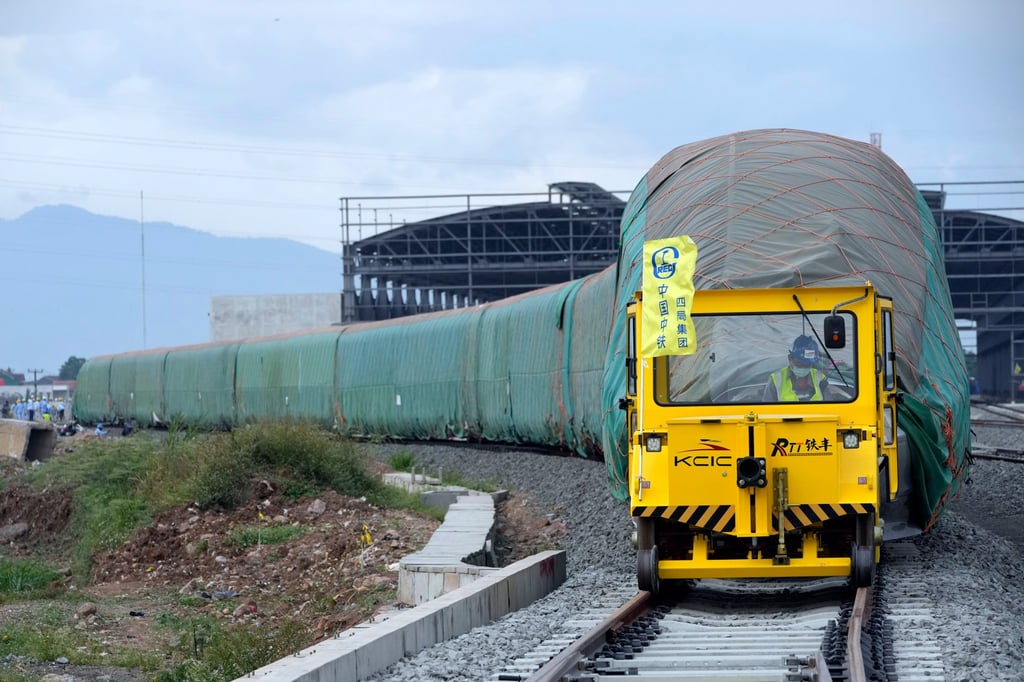
A high-speed passenger train at the construction site of the main depot for the Jakarta-Bandung railway in Bandung, Indonesia in October 2022. Photo: AP

The trains involved in the accident were not high-speed “but a series of working trains in the form of work locomotives and rail installation machine”, according to a statement released by PT Kereta Cepat Indonesia-China (KCIC), the joint venture between Indonesian and Chinese consortiums behind the project.

Inspector General Dedi Prasetyo, spokesperson with Indonesian national police, said on Monday the incident was under investigation, although there was conflicting information over whether construction on the line would be suspended pending the probe.

It was the latest safety lapse to strike the near-US$8 billion project, which will see trains hustle between the capital Jakarta and Bandung, the provincial capital of West Java, at a top speed of 350kph once complete.

In August 2020, a Chinese worker fell and died while installing an elevated pole in West Bandung regency. A year earlier, a misunderstanding contractors attributed to the language barrier between Indonesian and Chinese workers led to an explosion of pipes operated by state-owned oil firm Pertamina that run under some parts of the rail route.

Then, in December last year, a pier to support the railway collapsed onto an excavator in Karawang due to “negligence on the contractor’s side in following the standard operating procedure”, KCIC said at that time.

Indonesia’s plan to build another railway with China raises debt trap fears

The line has also spectacularly overshot its budget since construction began in June 2018 in part due to the rocketing cost of acquiring land for the line.

The project currently faces a US$1.4 billion cost overrun, down from a feared US$1.9 billion overspend, but still a vast funding gap which will mainly be paid by state money and foreign debt.

Suryadi Jaya Purnama, member of the House of Representatives from opposition Prosperous Justice Party, called for a thorough investigation into the accident and safety along the high-speed railway project.

“Don’t be negligent, especially later when the high-speed railway is already operating commercially. At speeds of up to 350kph, it has the potential to cause a lot of casualties if an accident occurs,” he said, urging KCIC to “really ensure the feasibility and safety of the railway”.

A train runs on the Jakarta-Bandung High-Speed Railway trial section in Bandung, Indonesia during an inspection in November 2022. Photo: Xinhua

Critics of the project point to the burgeoning cost to the government, which in November said it would allocate 3.2 trillion rupiah (US$205.4 million) from the state budget to fund the project’s cost overrun.

“We ask for a thorough evaluation of the project because carelessness in planning the high-speed train has been proven to cause cost overruns to rise to US$1.449 billion,” Suryadi added.

As of February 2022, there were 2,010 Chinese and nearly 13,500 Indonesian workers engaged in the project.

Who will pay extra US$2 billion for Indonesia’s China-backed high-speed rail?

Bhima Yudhistira, executive director at Jakarta-based think tank Center for Economic and Law Studies, said Sunday’s incident underlined the risk of safety being compromised in the rush to complete a scheme running well over budget.

“Now if the project is postponed, the cost overrun will be even more swollen,” Bhima said.

“To fund the cost overrun, the government is now looking to get a loan from China Development Bank. But one of the loan’s requirements is that Jakarta must spend more money to fund the project, I fear that we are going to fall into a debt trap.”

According to Bhima, Jakarta is keen to finish the project next year to promote Widodo’s infrastructure legacy, which may help his political party’s claims in the 2024 elections. Indonesia is also trying to portray itself on the global stage as a country able to finish a mega project amid the threat of global recession, so that “we can assure foreign investors that bigger infrastructure projects in the future, such as the new capital, will be completed”, Bhima added.

China-funded Indonesian rail link may take 40 years to become profitable

However, the plan to move the capital from Jakarta to Borneo island in 2024 has already affected the railway, with the operator nearly halving its forecast for daily passenger numbers to 31,215 warning profitability may be several decades away.

Beijing touts the 142km line as an example of Chinese advanced railway technology that uses state-of-the-art sensing technology which includes earthquake monitoring and early warning systems in a country with a highly active seismology.

China is Indonesia’s biggest trade partner and a major source of foreign investment, while China relies on Southeast Asia’s largest economy for mineral resources and sees it as a key partner in the Belt and Road Initiative, its globe-spanning trade and infrastructure project.

4