Japan-India’s ‘symbolic’ drills complicate China’s calculus for Indo-Pacific, analysts say
- Analysts say the Japan-India air drills are mostly ‘symbolic’ but send an ‘important deterrence message to China and North Korea’
- The drill is likely ‘an opportunity for both’ countries to evaluate the limitations and potential for military cooperation, say experts

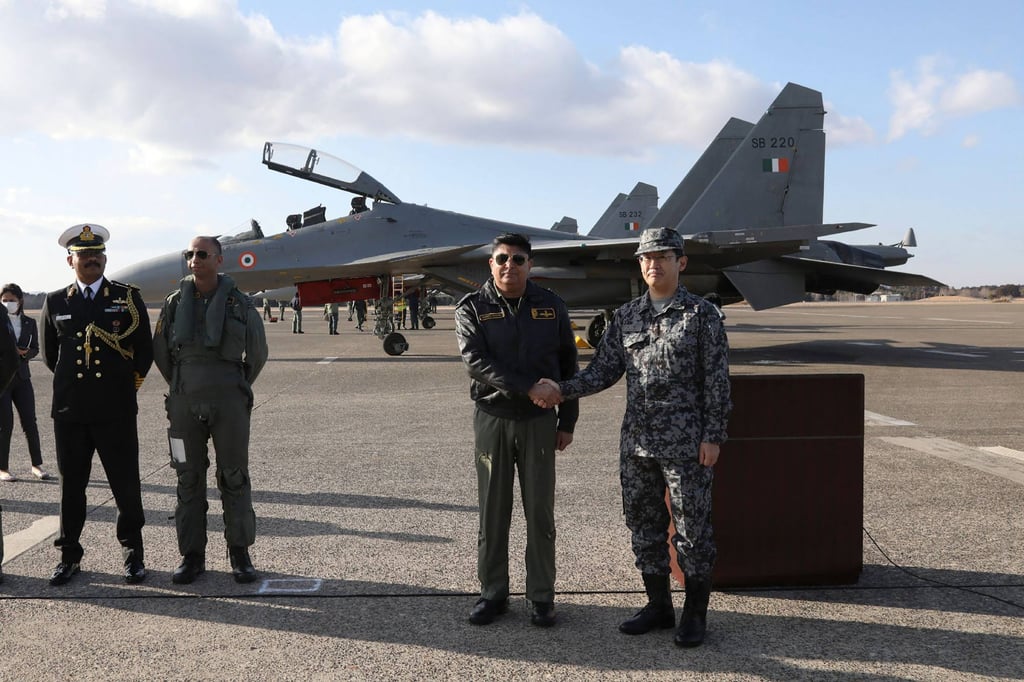
The maiden Veer Guardian exercises are being held at an airbase in Ibaraki prefecture, northeast of Tokyo until next Thursday, with four F-2 and four F-15 fighters taking part, Japan’s Defence Ministry said.
It is the first one-on-one training of its kind, the ministry added, although Japan and India have conducted joint maritime exercises since 2012 and army training since 2018.
“The more the status-quo militaries hold exercises, the safer the Indo-Pacific is,” said Masafumi Iida, a security studies fellow at the National Institute for Defense Studies in Japan.
The term Indo-Pacific, promoted by the US and adopted by its strategic partners, has been used to reflect the importance of India – along with Australia and Japan – in Washington’s strategy to deal with China’s assertiveness in the Pacific and tensions on the Taiwan Strait.
Veer Guardian “is the first step to higher levels of drills and exercises between both the air forces in the coming years”, Iida said, adding that it is “indispensable” for “status-quo countries” to jointly strengthen deterrence so as to keep the regional peace.