South Korea’s Yoon Suk-yeol backtracks on 69-hour work week plan amid widespread backlash
- The president has called for the bill to be revised and to incorporate the opinions of the younger generation, barely a week after it was put up for public consultation
- Women’s groups, employees lash out at the bill, raise concerns of plunging fertility rates and abuse of proposed scheme by companies

Yoon on Tuesday ordered the labour ministry to redraft a bill to better reflect public opinion, barely a week after it was put up for a 40-day public consultation period before being voted into law.
The bill, if passed, would raise the weekly maximum work hours from the current 52 to 69, nearly twice that of France’s 35-hour work week.
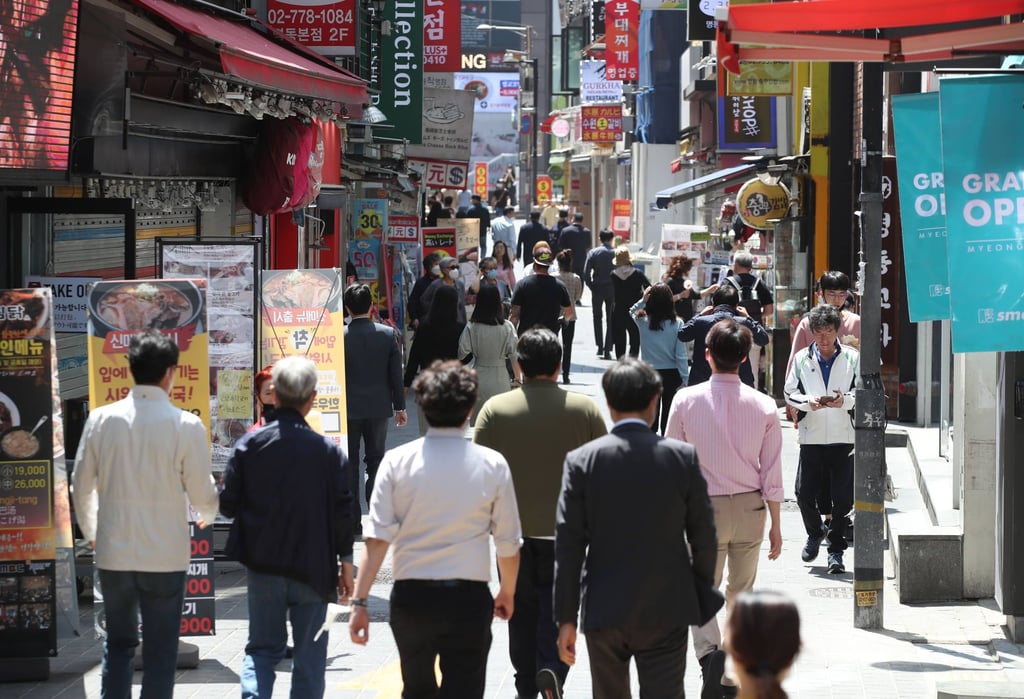
“Review areas that need to be fixed [are] in the details of the bill and in communicating with the public by listening closely to the various opinions of workers, especially the opinions of the ‘MZ generation’,” Yoon said, using a Korean term for the country’s millennials and Generation Z.
Yoon’s directive came as his support rate among voters in their 20s fell 5 percentage points to 19 per cent and plunged 10 percentage points to 13 per cent in their 30s following the announcement of the labour bill.
Koreans already have some of the longest working weeks among members of the Organisation for Economic Cooperation and Development (OECD).
According to the liberal opposition Democratic Party of Korea (DPK), the country’s workers put in 1,900 hours per employee annually, 300 more than the OECD average. While they are legally entitled to 15 days of annual leave, they reportedly manage to consume only 10 days.