Advertisement
‘Drink it if it’s safe’: South Korean lawmaker challenges Japan officials to consume treated Fukushima water
- Opposition leader Lee Jae-myung wants South Korea to reconsider sending experts to inspect the plant, which some say could help justify release plans
- South Korea’s ruling party has accused the opposition of stirring up anti-Japanese sentiment with ‘unscientific’ and ‘senseless’ claims
3-MIN READ3-MIN
11

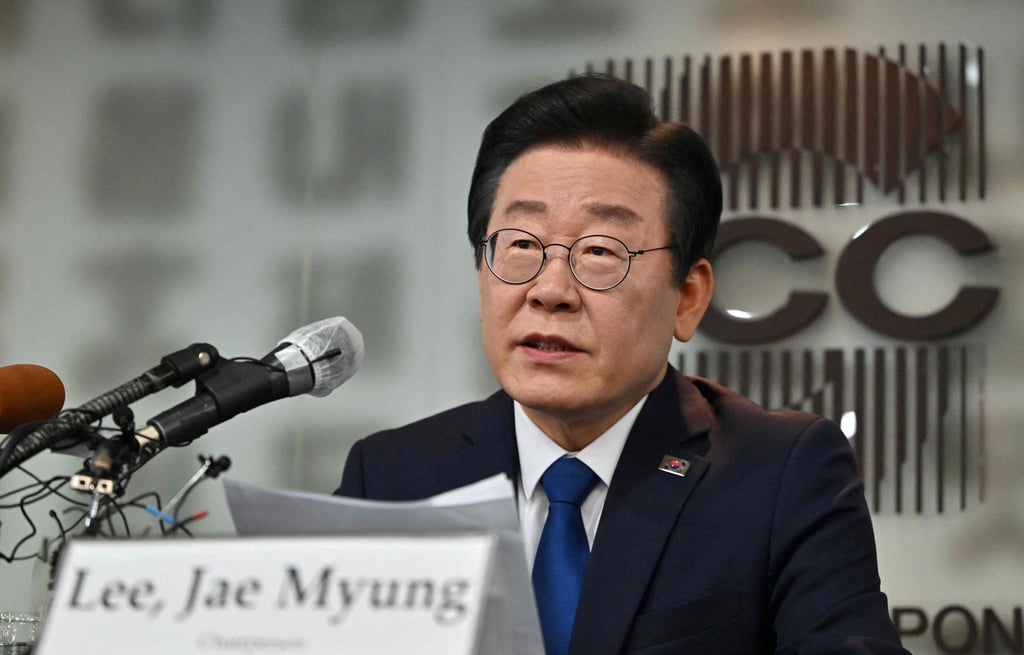
South Korea’s top opposition leader Lee Jae-myung has challenged Japanese officials to make good on their safety assertions by drinking treated radioactive water that is scheduled to be released from the crippled Fukushima nuclear power plant into the ocean.
Lee made the remarks as a team of South Korean experts plan to visit the Fukushima plant to hopefully evaluate the safety of the treated water, sparking allegations that the trip could wind up being used to build up justification for its release.
When President Yoon Suk-yeol and Japanese Prime Minister Fumio Kishida met in Seoul earlier this month for their second summit in less than two months, the leaders agreed to allow a group of South Korean experts to visit Japan next Tuesday and Wednesday to inspect the planned release of radioactive water.
Advertisement
Yoon has made it a top priority to mend relations with neighbour and former colonial master Japan, even if it means a unilateral concession on the highly sensitive issue of compensating the Korean victims of Japan’s wartime forced labour.
South Korea has suggested a Seoul-based fund pay reparations to Korean victims to resolve an issue that has rekindled animosities over Japan’s 1910-45 occupation of the peninsula, sparking outrage among some victims and critics.
Advertisement
Advertisement
Select Voice
Select Speed
1.00x