-
Advertisement
Pakistan
This Week in AsiaPolitics

China’s belt and road expansion in Pakistan at risk as terrorist attacks surge

  • The attacks in western Pakistan coincide with ongoing celebrations for the 10th anniversary of the China-Pakistan Economic Corridor
  • Analysts warn Pakistan could ‘further aggravate the situation’ if it were to step up action against the insurgents’ bases in Afghanistan

Reading Time:3 minutes
Why you can trust SCMP
10
A billboard for the 10th anniversary celebrations of the China-Pakistan Economic Corridor pictured in Islamabad on Sunday. Photo: EPA-EFE
Tom Hussain
An upsurge in terrorist attacks in western Pakistan highlights the risks involved in expanding China’s Belt and Road Initiative in the country even as Chinese firms are “learning the ropes” on how to cope with the rise in violence, analysts say.
Amid ongoing celebrations to commemorate the 10th anniversary of the China-Pakistan Economic Corridor (CPEC), attacks in July by insurgents of the Pakistani Taliban movement, or TTP, spread to areas of Balochistan province considered vital to the expansion of connectivity between Xinjiang and the Chinese-operated port of Gwadar on the Arabian Sea.

Chinese companies have built some US$25 billion worth of mostly power generation and logistical infrastructure since work on the CPEC began in earnest in 2016. The overall value of projects scheduled for completion by 2030 is estimated at US$62 billion.
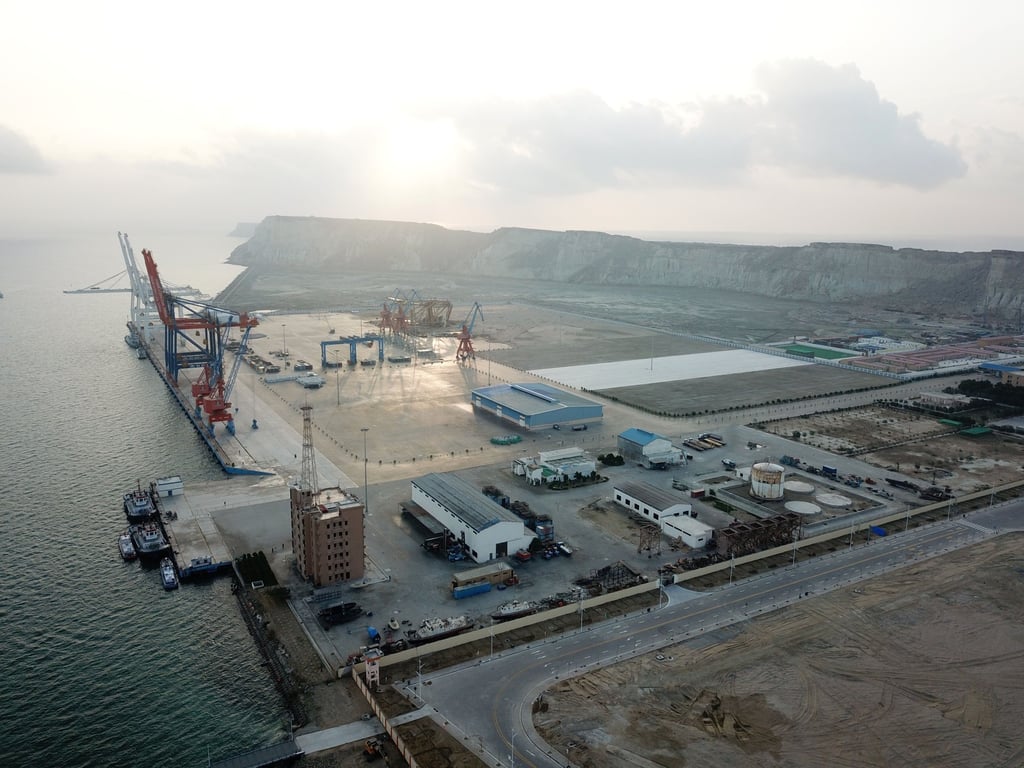
The Gwadar port in Pakistan in 2018. Chinese companies have built some US$25 billion worth infrastructure over the past decade. File photo: Xinhua

Nine Pakistani soldiers were killed while repulsing a July 12 attempt by a TTP suicide squad to storm a garrison in the remote town of Zhob, a vital link in roads being built to provide a shorter new route along the country’s western axis to Gwadar.

Advertisement

Another three Pakistani troops were killed on the same day in a battle with TTP militants in the Sui area of Balochistan, leading security officials to conclude that the Pakistani Taliban had been provided logistical support by ethnic Baloch separatists, who have been fighting security forces since 2004.

“The Zhob attack was connected to CPEC. That’s why the [Pakistani] army chief of staff reacted by rushing to Quetta”, the administrative capital of Balochistan, and issued a statement saying “foreign” nationals were involved, said Afrasiab Khattak, a former member of Pakistan’s Senate.

Advertisement
The high command of Pakistan’s army, which dominates national politics, subsequently issued several statements blaming the attacks on TTP insurgents who enjoy “safe havens and liberty of action” in Afghanistan, and demanded that the Taliban regime live up to its commitment to prevent the export of terrorism from the war-torn country.
Advertisement
Select Voice
Select Speed
1.00x