Cambodia’s Hun Manet likely to lead cabinet of ‘princelings’, in move of ‘stability over democracy’
- Little reason to expect that the younger politicians would produce any significant changes in Cambodia’s domestic and foreign policies, say analysts
- While these younger leaders are mostly Western-educated, there was ‘no guarantee’ they would be open and undertake reforms

Cambodia’s king on Monday appointed army chief Hun Manet, 45, to succeed prime minister Hun Sen, 70, who ended his 38-year rule following a walkover election in July that gave his Cambodian People’s Party (CPP) another landslide win.
Hun Manet, who was educated at the United States’ West Point military academy, will have to prepare the composition of the government for approval by Cambodia’s parliament, which convenes for a vote on August 22 to finalise the transition.
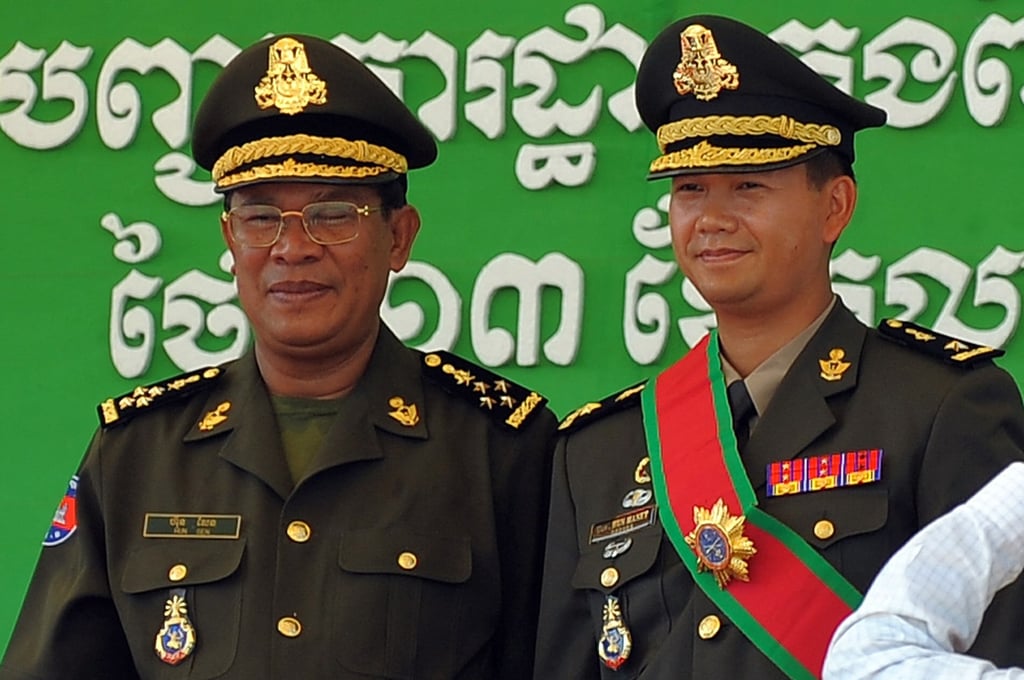
Charles Dunst, an adjunct fellow at the Washington-based Center for Strategic and International Studies, said Hun Manet’s government would comprise the children of senior leaders of the CPP, including the sons of Interior Minister Sar Kheng and Defence Minister Tea Banh.
Noting that National Bank of Cambodia Governor Chea Serey recently succeeded her father as governor of the country’s central bank, Dunst said that these children were elevated to counter internal party rivalries.
“[It’s also] to placate those officials who may want the premiership for their own, or for their progeny,” he said. “This generational succession could further undermine the new government in the eyes of some younger Cambodians who want to choose their next leader, although older Cambodians will likely prioritise stability over democracy.”
Dunst added that there was little reason to expect that the younger politicians would produce any significant changes in Cambodia’s domestic and foreign policies.