Advertisement
China and Mekong states boost data sharing as climate change shows river is ‘no place for rivalry’
- Just a few years ago, real-time data exchanges on operations at the Mekong River’s major dams would have been a ‘no-go zone’, a top official said
- But China has become more ‘receptive’ to working with international partners on Mekong issues, which could lead to some ‘truly transformative’ changes
5-MIN READ5-MIN
1

China and the five other countries who share Southeast Asia’s longest river have all agreed to begin real-time information exchanges on storage levels and hydropower operations at major dams along the Mekong by the end of this year, a move described by analysts as “a step in the right direction” in dealing with future hydrological changes.
And despite perceptions of a growing power rivalry in the Mekong, the two regional institutions tasked with managing the river are currently working on a joint study that aims to, among other things, look into helping communities mitigate the impact of climate change and hydropower dams.
Such a scenario would not have been possible just years ago, said Anoulak Kittikhoun, chief executive officer of the Mekong River Commission (MRC) Secretariat, in a wide-ranging interview with This Week in Asia in Hong Kong.
Advertisement
“All the six countries are now committed to working on this. If you talk about this three to four years ago, this is a no-go zone,” Kittikhoun said. “China is increasingly on board.”
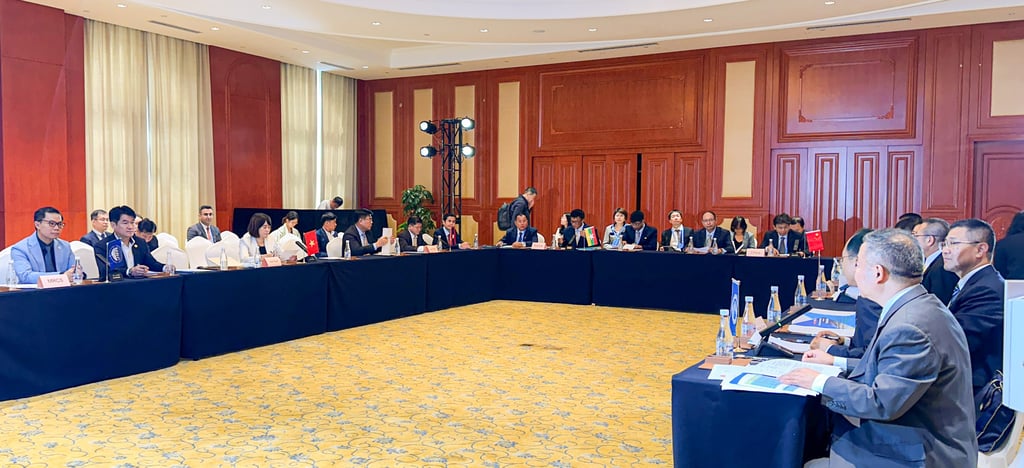
The 4,350km river is shared by Cambodia, China, Laos, Myanmar, Thailand and Vietnam. In recent years, Chinese dams have been accused of causing downstream droughts along the Mekong, which supports some 70 million people. The lower Mekong’s inland capture fisheries are the largest on Earth, with the world’s third most-diverse fish population after the Amazon and Congo river basins, and a total fish catch estimated at 2.3 million tonnes – or US$11 billion – per year.
Advertisement
The United States has previously called out China for “manipulating” water flows in the Mekong. Beijing responded that it had provided timely updates about the reduced water flow to its downstream neighbours.
Advertisement
Select Voice
Select Speed
1.00x